Best Full-Body PEMF Systems

Choosing among the best full-body PEMF systems requires careful evaluation because these devices vary widely in size, intensity range, programmability, and intended use environments. Unlike localized PEMF accessories that target a single area, full-body systems are designed to expose large portions of the body simultaneously to low-frequency pulsed electromagnetic fields. This broader exposure is often associated with whole-body relaxation routines, recovery protocols, or general wellness applications.
This guide focuses on conservative, evidence-aligned evaluation criteria. It does not frame PEMF systems as medical treatment devices. Instead, it explains how full-body systems differ, what credible options look like, and how to compare them safely. For a complete overview of PEMF categories, visit the Best PEMF Devices & Mats (2026 Buyer’s Guide).
Because “full-body” can mean different things across brands, this roundup prioritizes practical definitions: coverage length, coil layout, control flexibility, and real ownership considerations. The goal is not to claim that a single device is “best for everyone,” but to outline a credible decision framework and highlight a conservative starting point for comparison.
What Defines a Full-Body PEMF System
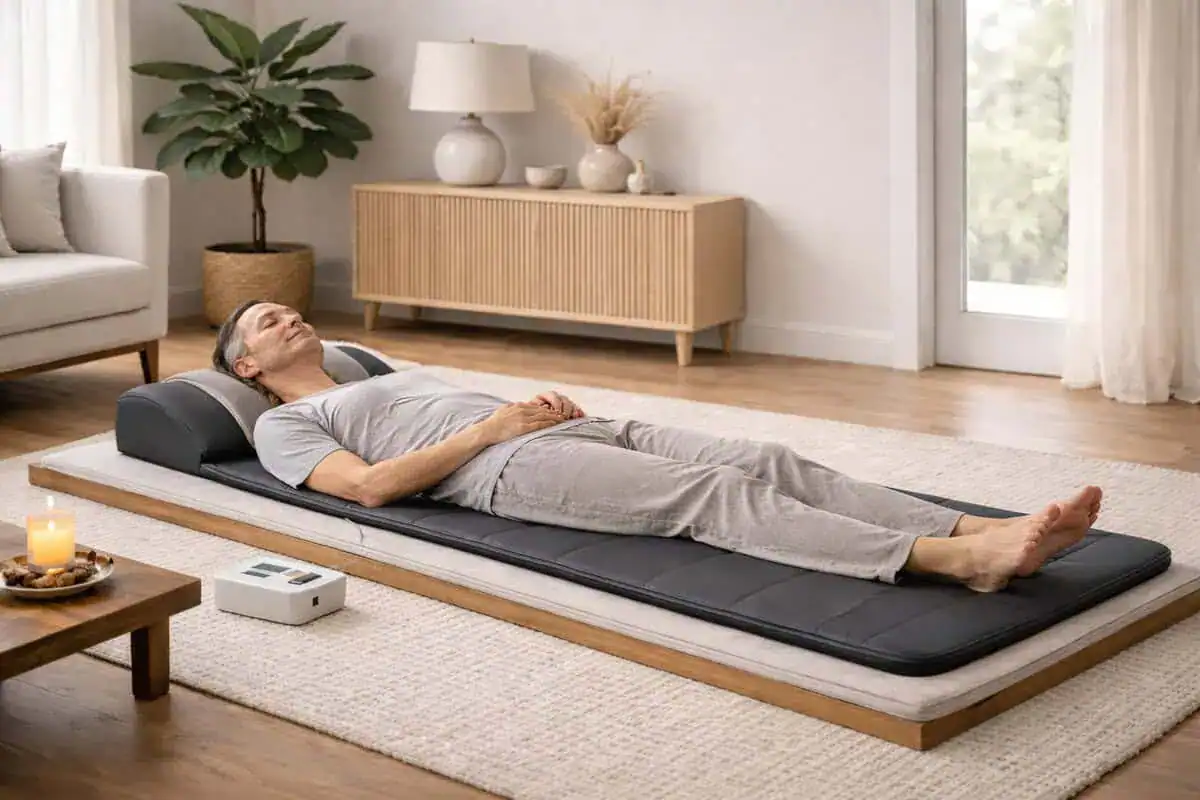
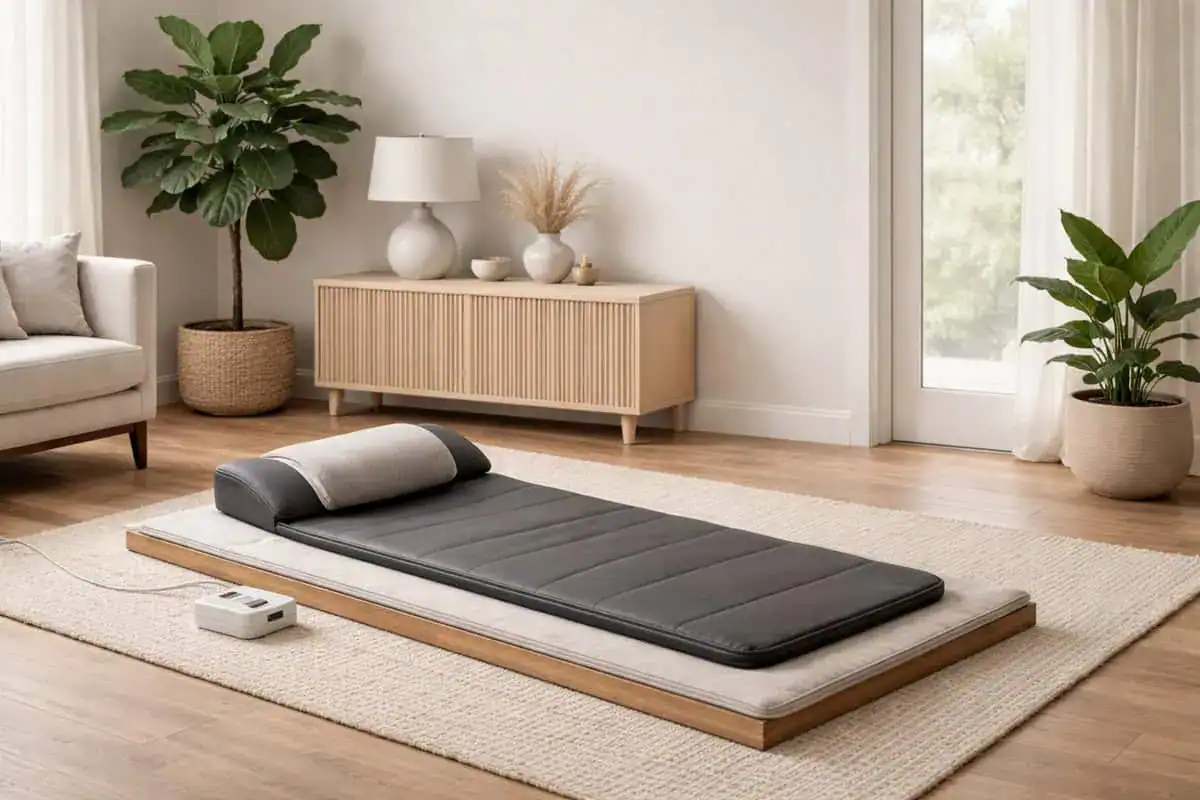
A full-body PEMF system typically consists of a flexible mat embedded with electromagnetic coils that generate controlled pulsed fields across a broad surface area. These mats are designed so the entire body—from shoulders to legs—can remain within the field exposure zone during a session.
Key structural features usually include:
- Multiple electromagnetic coil arrays distributed across the mat
- Programmable control units that adjust frequency and intensity
- Flexible or padded construction for comfort during sessions
- Session timers to regulate exposure duration
- Low-frequency ranges typically measured in Hertz (Hz)
Unlike localized devices, full-body systems are designed for systemic exposure rather than targeted placement. This broader coverage aligns with general wellness routines rather than site-specific stimulation.
In practical terms, “full-body” is best evaluated by usable coverage length rather than marketing labels. A mat may be described as full-body, but if coil zones are concentrated in the midsection, the experience can feel more “torso-focused” than truly head-to-toe. Credible systems usually describe coil placement or coverage zones clearly so users can understand where the field is generated.
Full-body systems also tend to differ from smaller pads in how sessions are structured. Because the user’s whole body is positioned on the mat, the device becomes part of a routine—often paired with quiet rest, breathing, or a consistent evening wind-down. This is one reason comfort, mat thickness, and control simplicity can matter as much as technical settings.
Finally, it helps to separate three related concepts that are often blended together:
- Coverage: how much of the body is within the coil zones during use
- Control: how easily frequency, intensity, and session duration can be adjusted
- Consistency: how reliably the system supports repeatable sessions over time (build quality, usability, support)
Another structural characteristic of full-body systems is that coil zones are typically fixed in place rather than dynamically moving. This means exposure patterns remain stable from session to session as long as body positioning remains consistent. For conservative users, this stability can be beneficial because it removes uncertainty. The user is not trying to “target” anything actively; instead, the system provides a repeatable exposure environment that supports routine-based use.
It is also important to understand that full-body systems do not generate uniform electromagnetic exposure across every inch of space above the mat. Field strength is highest closest to coil locations and decreases with distance. This is a normal physical property of electromagnetic fields, not a defect. Credible systems are designed so that normal lying positions keep major body regions within predictable proximity to coil zones, supporting consistent session conditions.
How Full-Body Exposure Interacts With Biological Systems

PEMF therapy is theorized to interact with cellular signaling pathways by influencing electrically sensitive structures such as ion channels and membrane potentials. According to research indexed in PubMed, pulsed electromagnetic fields may affect calcium ion movement across cell membranes, which plays a role in signaling cascades and metabolic regulation.
When exposure occurs across larger portions of the body simultaneously, the interaction is distributed rather than localized. This broader exposure pattern is one reason full-body systems are commonly used during structured relaxation routines.
The Cleveland Clinic notes that electromagnetic fields interact with biological systems through electrical gradients present in cells and tissues. These interactions occur at very low energy levels in wellness-oriented PEMF systems.
A conservative way to think about PEMF mechanisms is that the body already uses electrical signaling as part of normal physiology. Cells maintain membrane potentials, ion gradients, and electrically sensitive transport processes. Pulsed electromagnetic fields are investigated as a non-invasive stimulus that may influence these electrically related processes under certain conditions, without implying disease-specific effects.
At a high level, mechanism discussions often fall into a few overlapping categories:
- Ion exchange and membrane behavior: potential influences on calcium handling or membrane-associated signaling
- Microcirculation context: how local blood flow dynamics and tissue oxygen delivery are regulated
- Cellular energy framing: how energy-demanding tissues manage signaling and recovery processes
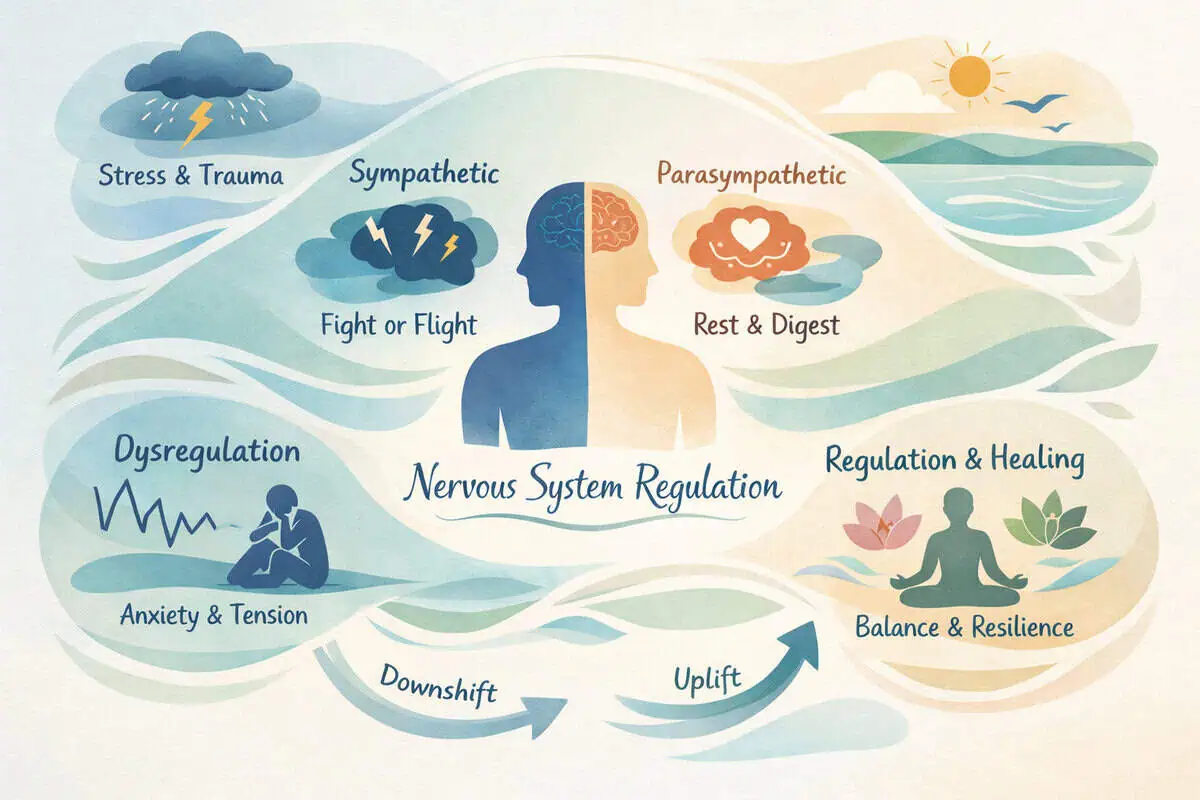
- Nervous system regulation: how relaxation routines may support downshifting into calmer states, depending on the individual
It is also important to keep expectations grounded: mechanistic hypotheses are not the same as clinical outcomes, and “possible interactions” do not automatically translate into predictable results for any specific person. That is why PEMF Sage emphasizes conservative language and encourages readers to focus on safe routines and realistic use cases.
For broader context on PEMF categories and how claims should be interpreted conservatively, see the Best PEMF Devices & Mats (2026 Buyer’s Guide), which explains where device differences matter most.
Typical Usage Patterns for Full-Body Systems

Most users incorporate full-body PEMF systems into structured routines lasting between 10 and 30 minutes. Sessions are typically performed while lying still, allowing uniform exposure across the entire mat surface.
Common usage environments include:
- Home wellness routines
- Evening relaxation periods
- Post-exercise recovery environments
- Structured daily relaxation practices
For safety and foundational understanding of exposure considerations, refer to the PEMF Therapy Benefits (Science-Backed Overview), which explains mechanisms and conservative expectations.
A practical ownership reality is that most people use full-body systems in one of two ways:
- Consistency-first routines: lower or moderate settings used regularly (often daily or several times per week), prioritizing comfort and repeatability
- Protocol-based routines: more structured programs (still conservative), where settings and session times change over weeks, tracked like any other wellness habit
In both cases, the details that tend to drive real-world adherence are not always the most “exciting” technical specs. Quiet operation, an intuitive controller, and a mat that feels comfortable for the user’s body type often determine whether the device is used consistently over months.
It can also help to standardize the session context. Many users choose a predictable window—such as after work or before bed—so the mat becomes part of a stable wind-down routine rather than a sporadic “tool.” Conservative consistency is often more realistic than chasing complex settings, especially for first-time owners.
Editor’s Pick: PEMF Supply Full-Body Mat
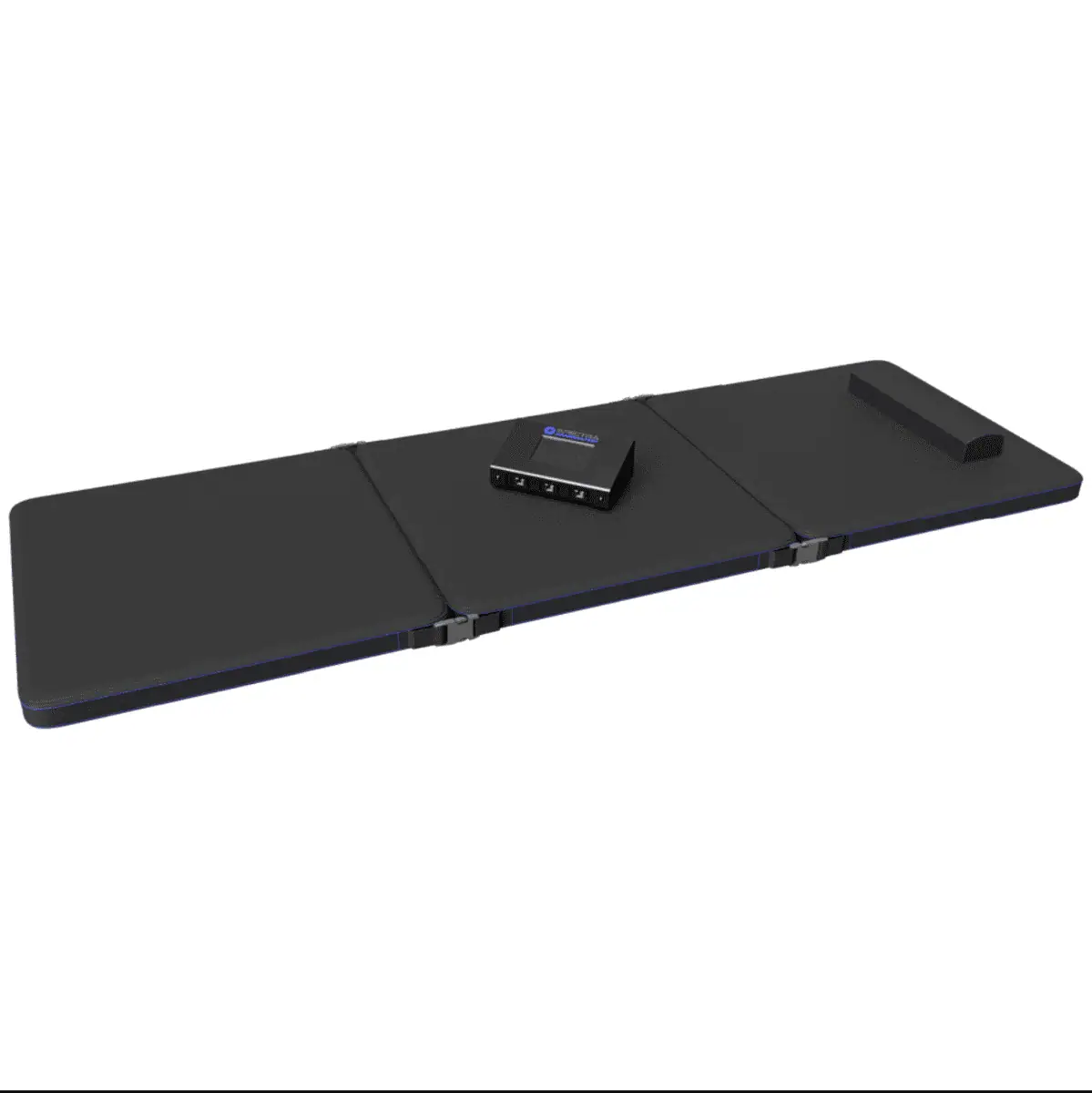
The PEMF Supply full-body mat represents a credible example of a programmable system designed for full-length exposure. It includes multiple embedded coils and adjustable settings, allowing exposure parameters to be modified conservatively.
- Full-body coil coverage
- Programmable frequency ranges
- Structured session timing controls
- Flexible mat construction
- Designed for home environments
As a conservative “editor’s pick” format, the goal is not to declare superiority across every possible category, but to identify a system that appears to meet baseline credibility standards for full-body use: clear product positioning, full-length coverage intent, and practical session controls suitable for home routines.
When evaluating any full-body system, it helps to confirm a few “boring but important” details that often predict long-term satisfaction:
- Ease of setup: how quickly the mat can be rolled out, connected, and stored without frustration
- Controller clarity: whether settings are easy to understand and repeat without guesswork
- Session repeatability: whether a user can follow the same routine consistently (timer, saved programs, predictable controls)
- Support and documentation: whether instructions and troubleshooting are accessible and realistic for a home owner
If you prefer a broader category comparison before focusing on a single pick, start with the PEMF Sage Blog, then return to the Buyer’s Guide for device-type context.
Compare Full-Body PEMF Options
View specifications and current availability of full-body PEMF systems. View PEMF Supply systems →
Note: PEMF Supply is currently the only monetized brand in the PEMF Sage affiliate registry. Other brands may be discussed editorially (without CTAs, pricing language, or Offer/Product schema) until a verified affiliate URL is available.
From an ownership standpoint, one of the most practical advantages of a full-body mat format is that it does not require active placement during sessions. Once positioned, the user remains still while the controller manages timing and pulse delivery automatically. This reduces user error and makes routines easier to repeat consistently, which is often more important than pursuing highly customized settings.
Over time, ease of use tends to matter more than initial feature lists. A system that can be deployed quickly, operated without confusion, and stored safely is more likely to become part of a stable routine. This is one reason PEMF Sage prioritizes usability and repeatability when identifying credible full-body system formats.
Coverage Area and Coil Distribution

Coil placement determines how evenly electromagnetic fields are distributed across the body. Systems with more coils typically provide more uniform exposure patterns.
Uniform distribution is important because PEMF exposure strength decreases rapidly with distance from the coil source. Full-body systems attempt to maintain relatively consistent field strength across the mat surface.
According to NIH-indexed research, field strength and waveform characteristics influence how electromagnetic fields interact with cellular environments, though mechanisms remain an area of ongoing study.
In a practical comparison, coverage is less about “how long the mat is” and more about how the coils are arranged. Some systems use larger coil zones with broader fields; others use multiple smaller zones to distribute exposure more evenly. Neither approach automatically guarantees a better experience, but the design can affect how consistent the exposure feels across the body.
When reviewing coverage claims, consider simple user-positioning questions:
- Where do the main coil zones sit relative to shoulders, hips, and legs?
- Does the system provide exposure across the full torso and lower body, or mainly the core?
- Is the mat long enough for the intended user height without “off-mat” areas?
If you want to read broader NIH health information and research framing policies, the NIH main portal can be a helpful starting point: National Institutes of Health (NIH). This does not validate any specific commercial device, but it supports conservative reading habits around health-related claims.
From an ownership standpoint, coil distribution also interacts with comfort: thicker padding can improve comfort but may slightly increase distance between coils and the body. For most home users, comfort and consistency typically matter more than chasing marginal differences in proximity, especially when using conservative settings.
Programmability and Frequency Range
Programmable systems allow adjustment of frequency and session duration. Most wellness-oriented systems operate within low-frequency ranges commonly associated with physiological electrical signaling.
Adjustable settings allow gradual exposure introduction, which aligns with conservative usage practices recommended by general wellness organizations such as the Mayo Clinic.
For first-time owners, programmability is most useful when it supports simple, repeatable routines. A controller with dozens of modes may sound impressive, but many users benefit more from a small set of understandable options that can be repeated without confusion.
A conservative selection mindset often looks like this:
- Start low and simple: choose a basic program or lower setting that feels comfortable
- Track tolerance: note how you feel during and after sessions without assuming cause-and-effect
- Adjust gradually: change one variable at a time (duration or intensity, not everything at once)
- Prioritize consistency: choose settings that you can realistically use several times per week
Frequency ranges are often discussed as if they map neatly to outcomes, but the evidence base does not support simplistic “one frequency equals one result” claims. A safer approach is to evaluate whether the system offers reasonable flexibility while keeping usage conservative and non-medical.
If you want deeper background on terms like frequency (Hz), waveform, and intensity—without relying on marketing language—this topic is covered in the broader device framework found in the Best PEMF Devices & Mats (2026 Buyer’s Guide).
Comfort, Build Quality, and Reliability
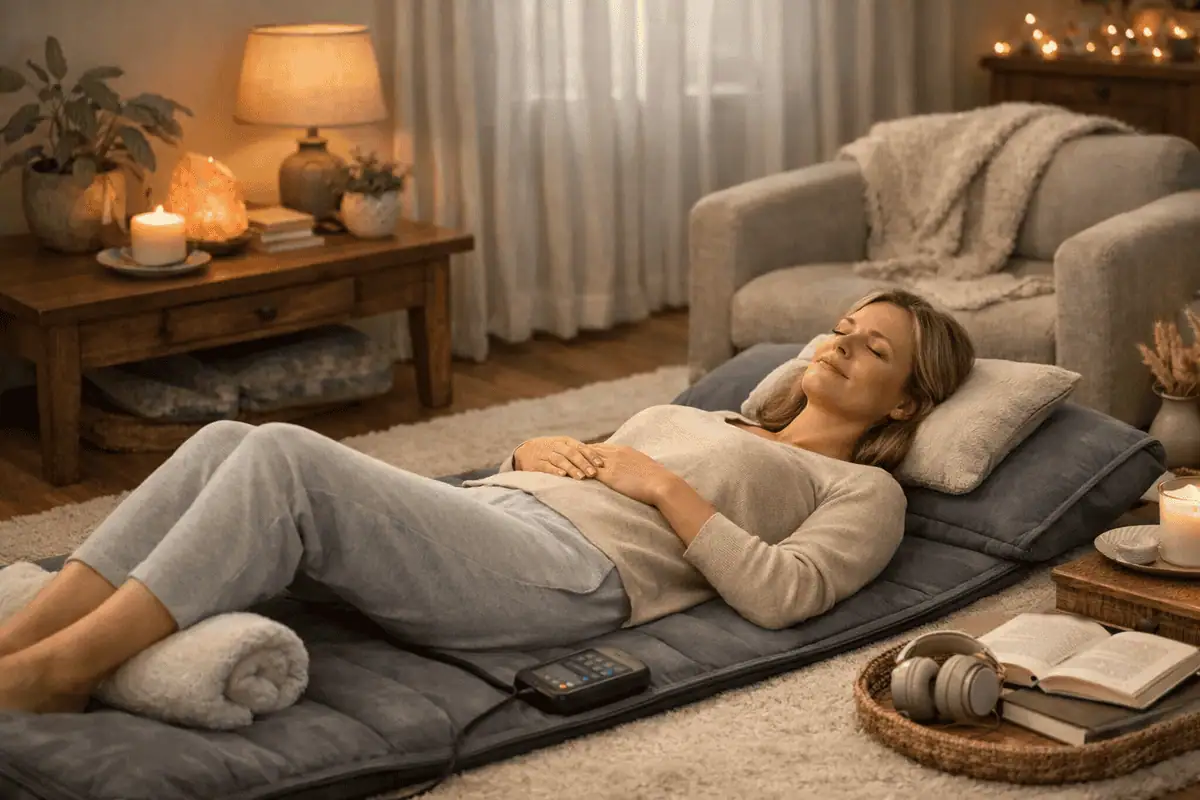
Comfort and durability play major roles in long-term usability. Since sessions involve remaining still for extended periods, padded surfaces and flexible construction improve usability.
Reliability factors include:
- Control unit durability
- Coil integrity
- Consistent signal generation
- Stable electrical components
It is also reasonable to consider “friction points” that can quietly reduce use over time:
- Storage and portability: whether the mat can be rolled or stored without damaging wiring
- Cable strain: whether connectors feel stable and protected during normal handling
- Cleaning practicality: whether surface materials can be wiped down safely and easily
- Noise and heat: whether the control unit is quiet enough for evening routines
If you have questions about site methodology, brand eligibility, or how PEMF Sage handles monetized vs editorial-only mentions, you can reach the team via Contact PEMF Sage.
Safety Considerations and Contraindications

PEMF exposure at wellness-oriented levels is generally considered low-risk when used appropriately. However, individuals with implanted electrical devices such as pacemakers should consult qualified professionals before exposure.
For a full review of safety considerations, see the PEMF Sage Blog, which explains safe usage patterns and limitations conservatively.
Safety is also an ownership topic, not just a disclaimer. A full-body system changes the exposure context because it typically involves longer, more consistent contact time and a larger exposure area. That does not automatically create higher risk, but it does mean conservative practices are especially relevant:
- Read device guidance carefully and follow default conservative settings when starting
- Avoid stacking new variables (for example, do not combine multiple new wellness tools at once and assume you can interpret results)
- Pause if something feels off, and restart with shorter sessions rather than pushing through discomfort
- Maintain realistic expectations: a calm routine is a reasonable goal; disease-specific claims are not
A conservative contraindication mindset is to treat PEMF like other non-invasive wellness modalities: it may be inappropriate for certain populations or circumstances. People who are pregnant, have implanted medical devices, or have complex medical conditions should seek qualified guidance before use, especially with full-body systems.
Long-term considerations matter here as well. A reliable control unit, stable wiring, and predictable operation reduce “unknowns” during use. Equipment that intermittently malfunctions or behaves unpredictably is not just inconvenient—it can undermine confidence in safe, consistent routines.
For a deeper safety framework, including special populations and risk boundaries, review the dedicated safety resource: PEMF Therapy Safety, Risks & Contraindications.
Consistency and predictability are also part of safe long-term ownership. Using the same mat orientation, session duration, and basic settings helps reduce variability and makes routines easier to evaluate conservatively. Frequent, large changes in exposure settings can make it difficult to interpret whether a routine is comfortable or appropriate for continued use.
As with any electrically powered wellness equipment, conservative operation includes basic care: keeping liquids away from the controller, avoiding damaged cables, and discontinuing use if the system behaves unpredictably. These practical precautions support both equipment longevity and safe, repeatable operation.
Comparison Overview
| System | Coverage | Programmability | Environment |
|---|---|---|---|
| PEMF Supply Full-Body Mat | Full-body | Adjustable | Home use |
This table is intentionally minimal because PEMF Sage does not invent or assume specifications. As additional full-body systems become eligible for monetized inclusion (verified affiliate URLs and registry approval), comparison rows can expand to include practical fields such as:
- Control style (simple presets vs more granular programming)
- Mat dimensions and usable coverage
- Warranty/support considerations
- Session timing and usability features
For now, the strongest comparison approach is to use this roundup as a framework and cross-check device categories in the Best PEMF Devices & Mats (2026 Buyer’s Guide).
Who Should Consider Full-Body PEMF Systems

Full-body systems may be appropriate for individuals interested in structured relaxation routines, general wellness exposure, or recovery-oriented environments.
In practical terms, full-body systems tend to fit best when at least one of the following is true:
- You value routine: you want a consistent, repeatable session format that supports a daily or weekly habit
- You prefer broad exposure: you are not looking for spot-treatment behavior, but rather a whole-body relaxation context
- You want a “set and rest” modality: you prefer a tool that can be used quietly without active effort once you begin a session
- You care about simplicity: you would rather follow conservative presets than learn complicated settings
Full-body systems may be less suitable for people who only want occasional, highly targeted use on a single area, or for those who do not have a stable place to set up and store a mat without frequent handling.
If you are still deciding between full-body mats, smaller pads, and other form factors, browsing the Blog can help you explore conservative educational posts before moving into product-style comparisons.
How Full-Body Systems Compare to Other PEMF Devices

Compared to localized systems, full-body systems emphasize broad exposure patterns rather than targeted placement.
For a complete comparison of system categories, visit the Best PEMF Devices & Mats (2026 Buyer’s Guide).
A simple conservative comparison can be summarized like this:
- Full-body mats: designed for whole-body routines, comfort, and consistency; often used during rest periods
- Localized pads: intended for smaller areas and more flexible placement; often used for convenience
- Wearables/accessories: portability-focused but often more variable in credibility and outcomes claims
Because this roundup focuses on full-body systems specifically, it avoids ranking unrelated device types. Instead, it encourages readers to choose the form factor that matches their lifestyle, then compare within that category using conservative selection criteria.
If you want to understand how evidence is discussed on PEMF Sage (including why the site avoids disease-specific outcome framing), you can review the methodology page: Editorial Standards & Review Process.
Conclusion: Choosing the Best Full-Body PEMF System
Full-body PEMF systems represent one of the most comprehensive device formats available, emphasizing broad exposure, programmable settings, and structured relaxation routines. Evaluating coil distribution, programmability, comfort, and reliability helps identify credible options aligned with conservative wellness practices.
To compare additional systems and see the full range of PEMF device categories, visit the Best PEMF Devices & Mats (2026 Buyer’s Guide).