Best PEMF Devices for Pain & Recovery

Searching for the best PEMF devices for pain and recovery requires careful interpretation. Many product pages use broad language around relief and performance, but the practical questions users face are more grounded: how PEMF interacts with biological signaling, what device configurations exist, and which systems support consistent, structured routines.
Pulsed electromagnetic field (PEMF) devices generate low-frequency electromagnetic pulses designed to interact with cellular electrical activity. These pulses are not felt as heat or vibration. Instead, they operate at a physiological signaling level, where cells rely on electrical gradients, ion exchange, and membrane potentials to maintain normal function.
Research in this area is ongoing, and PEMF is best understood as a supportive modality rather than a treatment. Some users incorporate PEMF into routines focused on muscle recovery, joint mobility, and general physiological regulation. Understanding which devices support consistent use—and how they differ—is essential before making a decision.
This guide is intentionally conservative. It does not treat PEMF as a cure or medical intervention. The goal is to help you compare device styles, understand what “recovery support” can realistically mean in this category, and choose a system that fits long-term, repeatable use.
How PEMF Relates to Recovery Physiology

Recovery is fundamentally a cellular process. When tissues undergo stress—from exercise, repetitive motion, or general daily activity—cells rely on coordinated signaling systems to restore equilibrium. These include ion channel regulation, mitochondrial energy production, and microcirculatory dynamics.
PEMF devices generate electromagnetic pulses that can interact with these electrical gradients. According to research indexed in PubMed, PEMF exposure has been investigated for its influence on cellular signaling pathways and ion transport. These mechanisms are part of the broader regulatory environment cells use to maintain structural and functional stability.
It is important to understand that PEMF devices do not directly “repair” tissues. Instead, they interact with the signaling systems cells already use. This makes device consistency, coverage area, and usability more important than raw intensity alone.
For a deeper explanation of physiological interactions, see our science-based overview of PEMF therapy benefits.
To make this practical, it helps to define what “recovery physiology” usually includes in conservative terms. After physical stress, the body coordinates a sequence of normal processes: cellular energy demand rises, local signaling increases, and tissues rely on circulation and nervous system regulation to return toward baseline. None of this is unique to PEMF, and PEMF does not replace these processes. The relevant question is whether pulsed electromagnetic exposure can interact with signaling systems in a way that supports a consistent recovery routine.
One reason PEMF is discussed in recovery contexts is that biology is inherently electrochemical. Cells maintain membrane potentials, regulate ion gradients (such as sodium, potassium, calcium, and chloride), and use electrical activity to coordinate communication. In conservative framing, PEMF is sometimes studied as an external input that may influence parts of that electrochemical environment—particularly where ion channels and membrane dynamics play a role in signaling.
In many PEMF studies, the measured outcomes vary widely based on settings, device design, exposure duration, and population. For readers, the most useful takeaway is not a single “result,” but the idea that device selection should prioritize repeatability and safe, controlled exposure. If a device is difficult to use, uncomfortable, or inconsistent, it becomes hard to evaluate whether it is contributing meaningfully to a routine at all.
Device Categories Used for Pain & Recovery
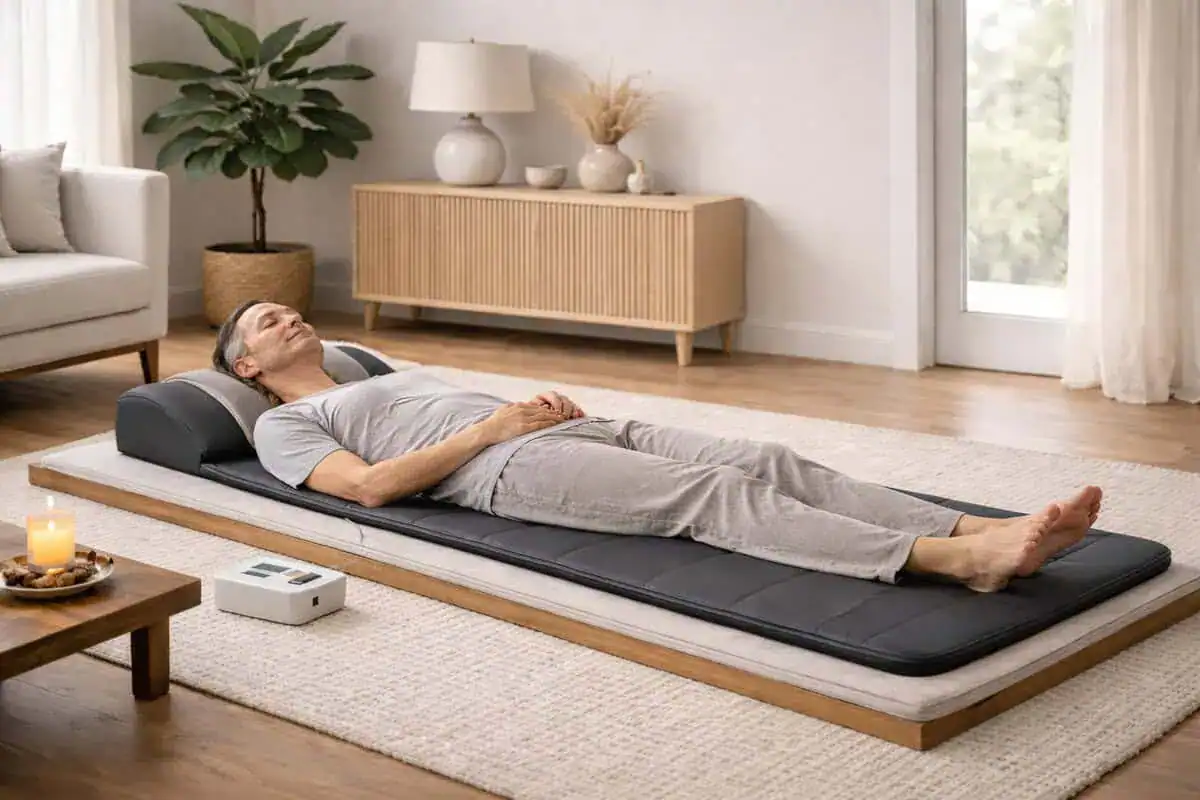
PEMF devices vary widely in structure and intended use. For recovery-focused routines, most devices fall into three functional categories:
- Full-body mats — Provide broad coverage and are commonly used during rest or relaxation.
- Localized applicators — Designed for targeted exposure to specific areas.
- Professional systems — Used in structured settings and may include additional control parameters.
Full-body mats are often the most practical for home use. They allow consistent positioning and exposure without requiring precise placement. This consistency is important because cellular signaling responses depend more on repeated exposure than isolated high-intensity sessions.
The Cleveland Clinic notes that electromagnetic therapies are studied for their interactions with biological electrical processes, emphasizing the importance of controlled exposure rather than intensity extremes (Cleveland Clinic).
From a buyer’s perspective, “category” matters because it determines day-to-day usability. A full-body mat is typically used while lying down, reading, or winding down. A localized applicator may require active placement and re-positioning, which can reduce consistency if the routine becomes inconvenient. Professional systems may be powerful and configurable, but they may also be less practical for home ownership depending on cost, training, and maintenance requirements.
Full-body mats are often chosen for recovery routines because they reduce decision fatigue. You do not need to decide where to place an applicator each session, and you can keep session parameters more standardized. That standardization is useful if your goal is to evaluate whether PEMF is a supportive addition to a broader routine that also includes sleep hygiene, mobility work, and training recovery practices.
Localized applicators can still make sense in certain contexts, especially when a user prefers shorter, targeted sessions. However, targeted routines introduce additional complexity: placement consistency, session mapping (which area on which day), and the risk of inconsistency if the device requires more setup time. For many home users, convenience strongly influences adherence.
If your main goal is pain and recovery support in a conservative framework, the most defensible selection logic usually begins with coverage and consistency first, then considers adjustability and comfort second. In other words: a device that supports repeatable, comfortable use is often easier to justify than a device selected primarily for high output claims.
Editor’s Pick: PEMF Supply Full-Body Mat
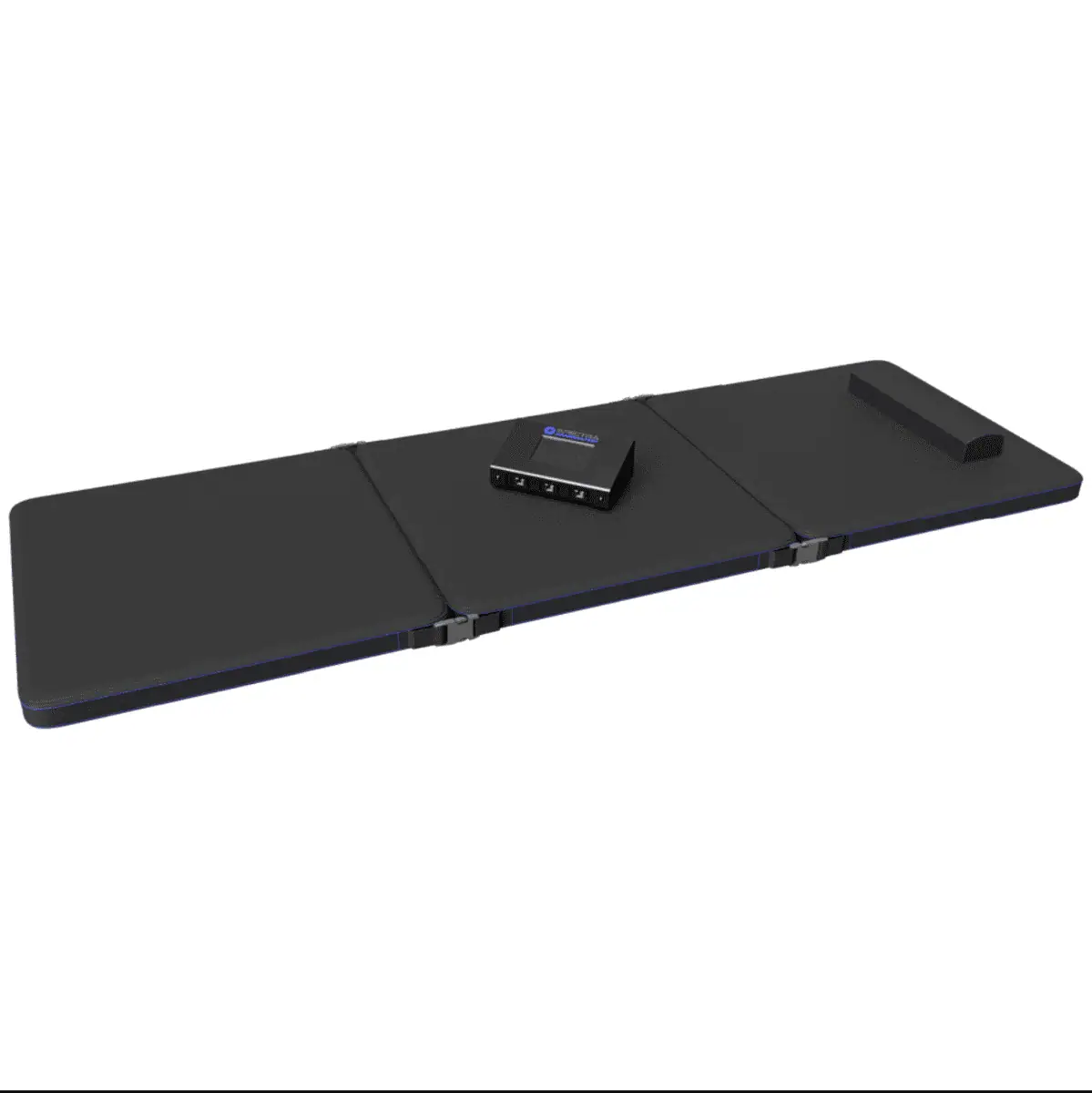
The PEMF Supply full-body mat provides broad, uniform exposure across the entire body. This configuration supports recovery routines where consistent positioning and session repeatability are priorities.
- Full-body coverage for consistent exposure
- Multiple adjustable frequency settings
- Designed for home use environments
- Structured interface supporting repeatable routines
Full-body mats like this allow users to integrate PEMF into daily routines without needing to reposition applicators frequently. Consistency often matters more than isolated intensity, especially when routines are used over longer periods.
A practical way to evaluate an editor’s pick in this category is to look at “routine fit.” Does the device support a predictable setup process? Can you use it without rearranging your entire living space? Are the controls simple enough that you can run the same session repeatedly without friction? These factors matter because PEMF is typically used as an additive tool—something that should be easy to layer into an existing recovery plan rather than requiring a complete lifestyle overhaul.
Another factor is coverage uniformity. In full-body systems, coil layout and design can influence how exposure is distributed across the body. Buyers do not need to become engineers to make a good decision, but it is reasonable to prefer devices that are designed for predictable, repeatable sessions rather than devices that rely on unclear placement or inconsistent coverage.
For recovery-oriented users, comfort is not a luxury feature—it is a consistency feature. If a mat is uncomfortable to lie on, too loud, or difficult to store, sessions become sporadic. Over time, sporadic use makes it harder to evaluate whether PEMF is contributing meaningfully to your routine. A device that supports calm, repeatable use is often the more conservative and defensible purchase.
View Full Specifications and Current Offer
Explore full-body coverage and structured recovery routines with the PEMF Supply mat. View PEMF Supply →
If you are deciding between “mat first” versus “targeted device first,” a conservative approach is to start with the category that is easiest to use consistently. For many people, full-body mats win on adherence: you can schedule sessions at the same time each day, keep settings stable, and track usage without complex placement decisions. That makes full-body mats a strong default for home recovery routines where the goal is consistency over time.
Best for Consistent Daily Use

Consistency plays a central role in any PEMF routine. Devices that integrate easily into daily schedules are more likely to be used regularly, which is essential for evaluating physiological responses over time.
Features that support consistent use include:
- Simple controls and repeatable settings
- Comfortable positioning during sessions
- Quiet operation
- Full-body coverage to reduce repositioning
PEMF exposure is subtle, and most users do not feel strong sensations during use. Instead, routines often involve relaxed positioning while electromagnetic pulses interact with cellular electrical activity.
A realistic “daily use” framework is less about intensity and more about scheduling. Many users choose a consistent time window—morning, midday reset, or evening wind-down—because routine adherence improves when sessions are anchored to existing habits. The simplest version is a short session that is easy to repeat. Over time, consistency is what allows you to observe whether the routine feels supportive for recovery and comfort.
It can also be useful to keep expectations grounded. “Daily use” does not mean you should escalate settings aggressively. A conservative approach is to begin with shorter sessions and moderate settings, then maintain consistency before making any changes. This reduces confounding variables and helps you evaluate the routine itself rather than chasing novelty.
From a practical standpoint, consider how the device will live in your home. If it requires a complicated setup, it may get used less frequently. If it is easy to unroll, plug in, and run a consistent program, it is more likely to become part of a sustainable recovery plan. In this category, ease of use is often a primary performance factor because it drives adherence.
Finally, “consistent daily use” often includes basic tracking. This does not need to be complicated. Many users simply note session length, time of day, and settings used. The goal is not to create a medical log, but to support a stable routine and reduce guesswork when evaluating what seems to work best for comfort and recovery support.
Biological Systems Involved in Recovery

Several physiological systems are involved in recovery processes:
- Microcirculation
- Mitochondrial energy production
- Nervous system signaling
- Cellular ion exchange
The National Institutes of Health has studied electromagnetic interactions at the cellular level, particularly regarding signaling pathways and electrical gradients (National Institutes of Health).
PEMF devices are designed to interact with these existing systems, supporting regulatory processes rather than overriding them.
To keep this conservative and useful, it helps to clarify what these systems represent in everyday recovery terms. Microcirculation relates to how well blood flows through smaller vessels, influencing oxygen and nutrient delivery and the removal of metabolic byproducts. In recovery contexts, many modalities focus on supporting normal circulatory dynamics through movement, hydration, sleep, and other lifestyle factors. PEMF is sometimes explored as an additional input that may interact with signaling environments related to circulation, but outcomes vary and should not be overstated.
Mitochondrial energy production is relevant because recovery requires energy. Cells use ATP to restore gradients, build and reorganize structural proteins, and maintain normal function. PEMF is sometimes studied in relation to mitochondrial signaling and cellular energy environments. The key consumer takeaway is not a guarantee, but that recovery-oriented devices should support repeatable sessions that align with how slow biological processes generally operate over time.
Nervous system signaling matters because the body’s regulatory systems influence recovery perception and behavior. Stress load, sleep quality, and parasympathetic activity can shape how recovery feels subjectively. Some users incorporate PEMF sessions into relaxation routines, pairing them with breathing practices or wind-down time. This can be a practical approach because it supports consistency and reduces the temptation to treat PEMF as a stand-alone intervention.
Cellular ion exchange is a technical way of describing how cells maintain electrical gradients and regulate signaling. Ions such as calcium act as messengers inside cells, and ion channels influence membrane behavior. PEMF research has investigated how electromagnetic exposure could influence aspects of ion transport and signaling in certain models. This does not mean a device “fixes” anything. It means the modality is studied in relation to the electrochemical environment that already exists in the body.
For many readers, the most helpful conclusion is selection logic: if PEMF is subtle and signaling-oriented, then device comfort, usability, and repeatability become the primary decision variables. If the device supports consistent use, it is easier to evaluate whether it is a supportive addition to a recovery routine.
Coverage Area vs Targeted Exposure

Device coverage area significantly affects usability. Full-body mats allow broad exposure, while localized applicators target specific areas. Each approach has advantages depending on the routine structure.
Full-body exposure is often easier to maintain consistently, while localized applicators require feeling confident about placement accuracy.
For comparison across multiple systems, visit the complete PEMF device buyer’s guide.
Coverage area also changes how you think about “dose” in a practical sense. With a full-body mat, the exposure is distributed across a larger surface area, and the session becomes more standardized: same body position, same program, same duration. This reduces complexity and often supports a calmer routine. For many home users, that simplicity is the main reason mats are favored.
Targeted exposure can be useful when a user wants shorter sessions or prefers focused placement. The tradeoff is that targeted routines require more intentionality. If the applicator moves slightly each session, or if you target different areas inconsistently, it becomes harder to keep the routine stable. That instability is not inherently “bad,” but it makes evaluation less clear and may reduce adherence if sessions become cumbersome.
Another practical consideration is posture and comfort. Full-body mats typically require lying down, which can be ideal for relaxation but may not fit every schedule. Targeted devices can sometimes be used while seated, but may require straps, supports, or careful alignment. Buyers should consider their likely usage environment—bedroom, living room, office—and choose a category that fits realistic daily behavior.
A conservative approach is to pick the category that you are most likely to use consistently. For many people, that means selecting broad coverage first and treating targeted exposure as optional later. If your routine becomes inconsistent, the value of any supportive modality decreases regardless of its theoretical mechanisms.
Safety and Practical Considerations

PEMF devices operate at low electromagnetic intensities and are generally used in controlled settings. However, safety considerations still apply.
- Follow manufacturer usage guidelines
- Avoid use near implanted electronic medical devices unless approved by a physician
- Use conservative session durations initially
The Mayo Clinic emphasizes caution when using any electromagnetic therapy device near implanted electronics (Mayo Clinic).
It is also reasonable to treat “safety” as a routine design choice, not just a contraindication list. Conservative users typically start with shorter sessions, avoid aggressive changes, and prioritize comfort. If a session produces discomfort or unusual sensations, the prudent step is to pause and reassess rather than increasing intensity or duration.
What to Look for in a PEMF Recovery Device

When comparing PEMF devices for recovery routines, focus on:
- Coverage area
- Ease of use
- Consistency of settings
- Device durability
Avoid selecting devices based solely on extreme intensity claims. Physiological signaling processes depend on structured exposure patterns, not maximal output.
Beyond the shortlist above, long-term ownership reality matters in this category. High-ticket wellness devices are not impulse purchases, and a “good” device is one you can realistically use for months and years, not just the first week. That means thinking about storage, daily setup time, cable management, and how the device fits into your home routine without becoming a burden.
Maintenance and durability are often underestimated. A mat that is difficult to clean, easy to crease, or sensitive to being rolled and unrolled can lead to shorter product lifespan. Consider how you will store the device, whether it needs a dedicated area, and whether the materials feel suited for frequent use. These practical details influence how consistently the device gets used.
Warranty and support policies also matter because PEMF devices often have electronics and control units. If you are investing in a system for long-term routine use, it is reasonable to prefer brands with clear support channels, conservative documentation, and straightforward troubleshooting guidance. Reliability reduces friction and makes consistent use more likely.
Another ownership consideration is lifestyle alignment. If you travel frequently, a large full-body mat may be less compatible with your routine unless you are comfortable taking breaks. If you have limited floor space, a device that stores easily may be a better fit. If you plan to use PEMF while reading or winding down, comfort becomes the deciding factor, not feature lists.
For some households, the “electromagnetic” framing can also create anxiety. In a conservative approach, it helps to separate marketing from reality: PEMF devices are designed for controlled, low-frequency pulsed exposure. You still should follow manufacturer guidance, keep the device away from implanted electronics unless a physician approves, and avoid DIY modifications. But you do not need to chase extreme specifications to make a responsible decision.
If you want a structured comparison framework, the most defensible order of operations is:
- First: Choose a device category that fits your routine (full-body vs targeted).
- Second: Confirm usability (comfort, controls, repeatable programs).
- Third: Evaluate durability and ownership practicality (storage, warranty, materials).
- Fourth: Consider adjustability as a bonus, not the foundation of the decision.
This approach keeps the selection logic grounded and reduces the risk of buying a device that looks impressive on paper but is hard to use consistently in real life.
How PEMF Fits Into Recovery Routines

Many users incorporate PEMF into recovery routines alongside other wellness practices such as stretching, sleep optimization, and structured rest periods.
PEMF sessions are typically performed in relaxed positions, allowing consistent exposure without requiring active participation.
A conservative routine design principle is to treat PEMF as “stackable” rather than primary. If you already have recovery pillars—sleep, nutrition, mobility, training load management—PEMF can be scheduled as a quiet, consistent session that supports relaxation and routine discipline. This framing avoids unrealistic expectations and keeps decision-making grounded.
Editorial Transparency and Device Selection

This roundup focuses on devices that meet structured usability and physiological alignment criteria. Devices are selected based on consistency, usability, and safety—not marketing claims.
Learn more about our methodology in the PEMF Sage blog index.
Transparency also includes acknowledging limitations. Evidence varies, user response varies, and many benefits discussed online are overstated. For that reason, the selection emphasis here is on conservative criteria that remain valid regardless of emerging claims: usability, repeatability, and routine fit. If a device meets those standards, it can be evaluated fairly as part of a broader recovery plan.
Comparing Devices Across Recovery Goals

Different recovery goals may emphasize different device characteristics. Full-body mats prioritize consistency, while localized applicators emphasize targeting.
Understanding how PEMF interacts with biological signaling systems allows more informed comparisons.
If your recovery goal is primarily “routine support,” broad coverage devices often win because they make it easier to stay consistent. If your goal is “targeted experimentation,” localized devices may be appealing, but the routine may require more planning. In both cases, a conservative approach favors stable session parameters and realistic expectations over rapid escalation.
Conclusion: Choosing a PEMF Device for Pain & Recovery
The best PEMF devices for pain and recovery are those that support consistent, structured use rather than relying on extreme intensity claims. Full-body mats often provide the most practical combination of coverage, usability, and repeatability for home routines.
PEMF interacts with cellular electrical processes involved in recovery and regulation. Devices that allow comfortable positioning and consistent session repetition align best with these physiological principles.
For a complete comparison across all device categories, visit the Best PEMF Devices & Mats Buyer’s Guide.
If you keep your expectations conservative and prioritize a device you will actually use, you will be in the best position to evaluate PEMF as a supportive addition to your long-term recovery routine.