HigherDOSE PEMF Mat Review

This HigherDOSE PEMF mat review provides a conservative, physiology-aligned evaluation of the device’s design, intended use, and practical considerations. Rather than focusing on bold outcomes, we examine how low-intensity pulsed electromagnetic fields are theorized to interact with cellular signaling, circulation, and nervous system regulation.
HigherDOSE is known primarily for wellness-oriented recovery tools. Their PEMF mat is positioned as a lifestyle-friendly device designed for home relaxation sessions rather than high-intensity clinical output. In this review, we’ll clarify where it may fit — and where expectations should remain realistic.
Because PEMF is a signaling-style modality, it is also easy for marketing language to outpace what is reasonable to conclude from general research. When you see claims that sound disease-specific or guaranteed, treat them as red flags and return to safer evaluation criteria: the device’s design goals, how consistently you will use it, and how well it fits your home routine.
What the HigherDOSE PEMF Mat Is Designed For
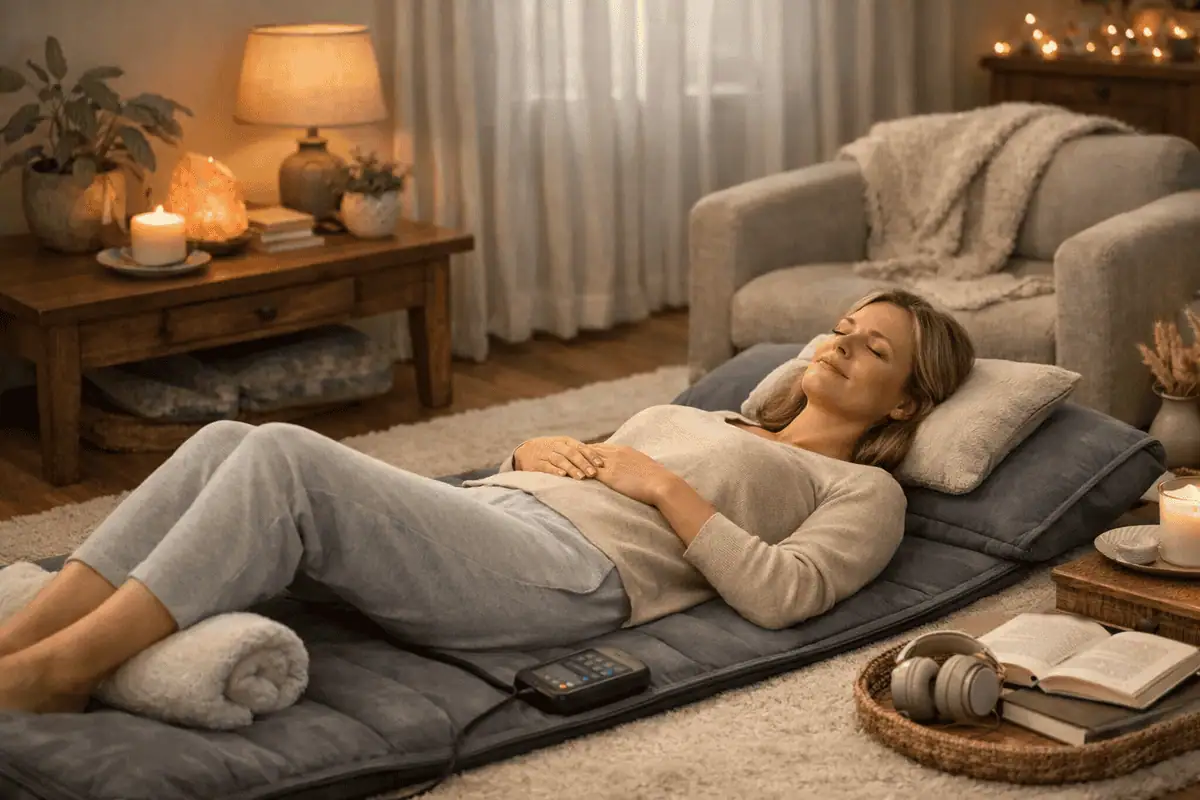
The HigherDOSE PEMF mat is generally marketed for:
- Relaxation support
- Post-exercise recovery routines
- Stress-regulation practices
- General wellness integration
Unlike larger, programmable full-body PEMF systems, lifestyle mats typically operate at lower intensities and simplified preset programs. Users often describe sessions as subtle, with a mild pulsing sensation or simply a structured time for guided rest.
If you are new to PEMF therapy, reviewing our broader Best PEMF Devices & Mats (2026 Buyer’s Guide) can help you understand how lifestyle mats compare to professional-grade systems.
To interpret “designed for” more clearly, it helps to translate the marketing categories into realistic outcomes you can verify without overreaching. For many users, the measurable benefit of a wellness mat is not a dramatic change in a single symptom, but a higher likelihood of consistent recovery behaviors: lying down, breathing slowly, reducing stimulation, and creating a repeatable routine that supports rest.
This category often appeals to people who want a simple daily pattern rather than a complex protocol. A mat session may be used after exercise, during a quiet evening routine, or as a structured break on high-stress days. In those contexts, the device is best understood as a tool that supports habit consistency and perceived relaxation rather than a device that “does the work” by itself.
Another practical framing is the difference between “performance” goals and “routine” goals. If your goal is performance-style experimentation (testing settings, adjusting frequencies, comparing protocols), a simplified mat may feel limiting. If your goal is simply to make recovery time easier to schedule and more pleasant, a simplified approach can be a strength.
How PEMF Mats Interact With the Body
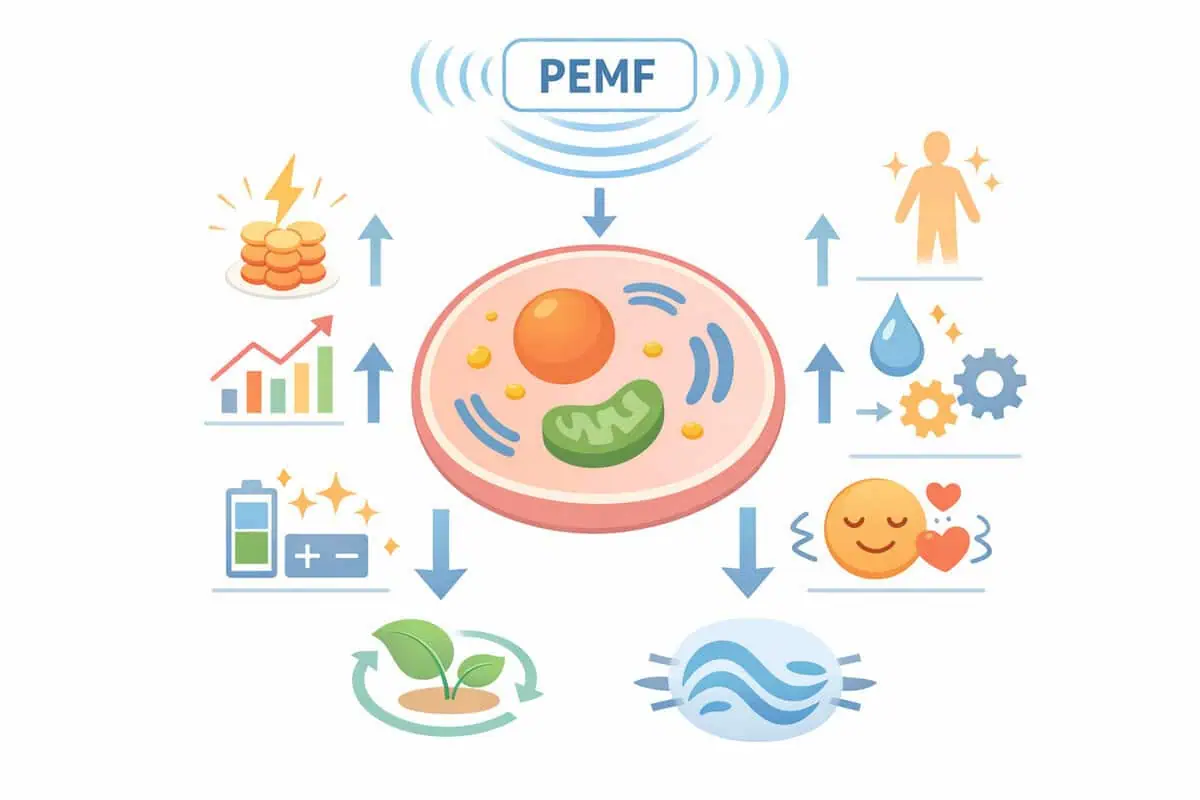
PEMF therapy is theorized to influence cellular communication through low-frequency electromagnetic pulses. Research published on PubMed explores how pulsed fields may affect ion exchange, membrane potential stability, and intracellular signaling cascades.
At a cellular level, PEMF exposure is associated in laboratory contexts with:
- Modulation of ion channel activity
- Microcirculatory dynamics
- Mitochondrial energy processes
Importantly, most consumer devices operate at lower output levels than clinical systems. That distinction matters when setting expectations.
A conservative way to think about PEMF is as patterned electromagnetic input that may influence signaling pathways rather than forcing a direct, immediate mechanical change. The proposed pathways typically involve membrane behavior and ion movement across cell membranes, which in turn can influence downstream signaling. This is why PEMF is often described in terms of “support” and “regulation” rather than in terms of direct symptom elimination.
In consumer contexts, two variables come up repeatedly: frequency (how often pulses occur) and intensity (how strong the field is at the body). Devices can use similar wellness language while delivering different outputs and different levels of control. For a lifestyle mat, the main practical question is whether it delivers a consistent experience that you can repeat safely and comfortably.
It also helps to separate “biological plausibility” from “consumer claims.” The existence of research exploring PEMF mechanisms does not automatically mean a specific consumer mat will replicate those conditions. Differences in coil design, intensity, and protocol length can make consumer use meaningfully different from controlled study setups. Because of that, the most responsible approach is to treat mechanism explanations as context, not as guarantees.
If you want to read directly from the research landscape rather than relying on summary claims, PubMed indexing can help you see the diversity of PEMF protocols and outcomes that have been studied: PubMed. Looking at protocol differences (frequency ranges, exposure time, and device type) is often more informative than scanning conclusions alone.
Output Intensity & Program Simplicity

HigherDOSE’s mat typically features preset frequencies rather than highly customizable waveforms. For users who prefer simplicity, this can be appealing. However, it also means less control over:
- Frequency ranges
- Intensity scaling
- Session variability
For individuals seeking advanced programmability or higher magnetic flux density, larger systems reviewed in our PEMF Sage Blog may offer additional flexibility.
When evaluating “simplicity,” it helps to clarify what kind of simplicity you prefer. Some users want fewer decisions and a predictable session. Others want a device that is simple to operate but still allows adjustments as they learn. Preset-only designs can be excellent for adherence, but they can also be limiting for users who want to explore settings more deeply over time.
From an ownership perspective, there is often a trade-off between control and friction. More control can mean more complexity: additional settings to learn, more time spent deciding what to use, and more “tinkering” that can reduce consistency. A simpler mat can become a default habit because there are fewer barriers to starting a session.
Intensity is also a place where conservative evaluation matters. “Stronger” is not always better in wellness applications, especially for people who are sensitive to stimulation or who primarily want relaxation support. If your goal is a calming routine, a lower-intensity, preset-based approach may be sufficient and easier to tolerate.
Nervous System Regulation & Relaxation
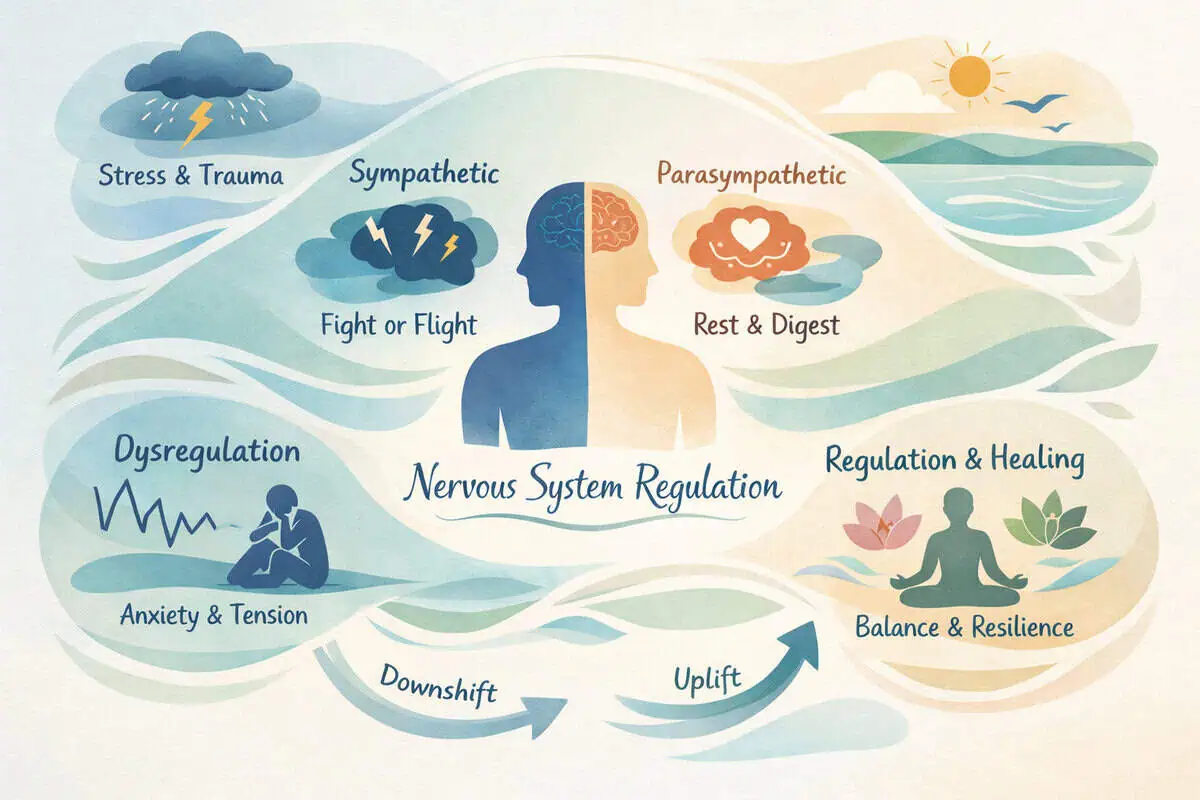
Low-frequency PEMF is often discussed in relation to autonomic balance. Some early research cited by institutions such as the NIH examines electromagnetic field exposure and neuroregulatory pathways.
Users commonly pair mat sessions with breathwork or meditation. The combination of structured rest and subtle stimulation may support perceived stress balance, though it should not be interpreted as treatment for anxiety or neurological conditions.
In real-world home use, the most conservative interpretation is that a mat session can support a “downshift routine.” Many people find it difficult to rest without feeling like they should be doing something else. A device session can provide a time boundary and structure that makes rest more consistent, which may indirectly support perceived calm.
Because PEMF sensations are often subtle, it can be hard to isolate the specific effect of the electromagnetic pulses from the effect of lying down quietly. A conservative approach is to treat the session as a combined practice: reduced stimulation, slower breathing, and consistent rest time. If perceived relaxation improves, it may be due to the routine as a whole rather than the device alone.
If you want a practical method to evaluate this category, standardize your use for 2–3 weeks: same time of day, similar session length, and a consistent environment (lighting, noise, phone off). Track a simple, non-medical metric such as “ease of winding down” or “perceived tension level” before and after. This keeps the evaluation grounded and avoids over-interpreting normal day-to-day fluctuations.
Circulation & Microcirculatory Support

Some studies suggest pulsed electromagnetic fields may influence nitric oxide pathways and local circulation dynamics. The Cleveland Clinic notes that healthy circulation is central to tissue recovery and oxygen delivery.
However, consumer-level PEMF mats are not medical vascular devices. Any circulation-related benefits should be viewed as supportive and indirect rather than therapeutic.
When consumer PEMF products reference circulation, it is often shorthand for several related concepts: microcirculation at the capillary level, oxygen and nutrient delivery, and recovery-related comfort. Research contexts may explore these mechanisms in controlled settings, but consumer mats should be evaluated with restraint because the exact exposure profile can differ from study conditions.
A conservative way to frame this is that PEMF may be discussed as a potential supportive input that interacts with signaling and vascular dynamics, but it should not be treated as a direct method to correct a circulation problem. If you have a clinical circulation concern, that should be evaluated medically rather than managed through a wellness device.
For routine wellness use, it can be more helpful to focus on the behaviors that reliably support circulation: regular movement, hydration, sleep quality, and stress management. A mat may fit into that broader routine by encouraging stillness and recovery time, but it should not replace foundational habits.
Build Quality & User Experience
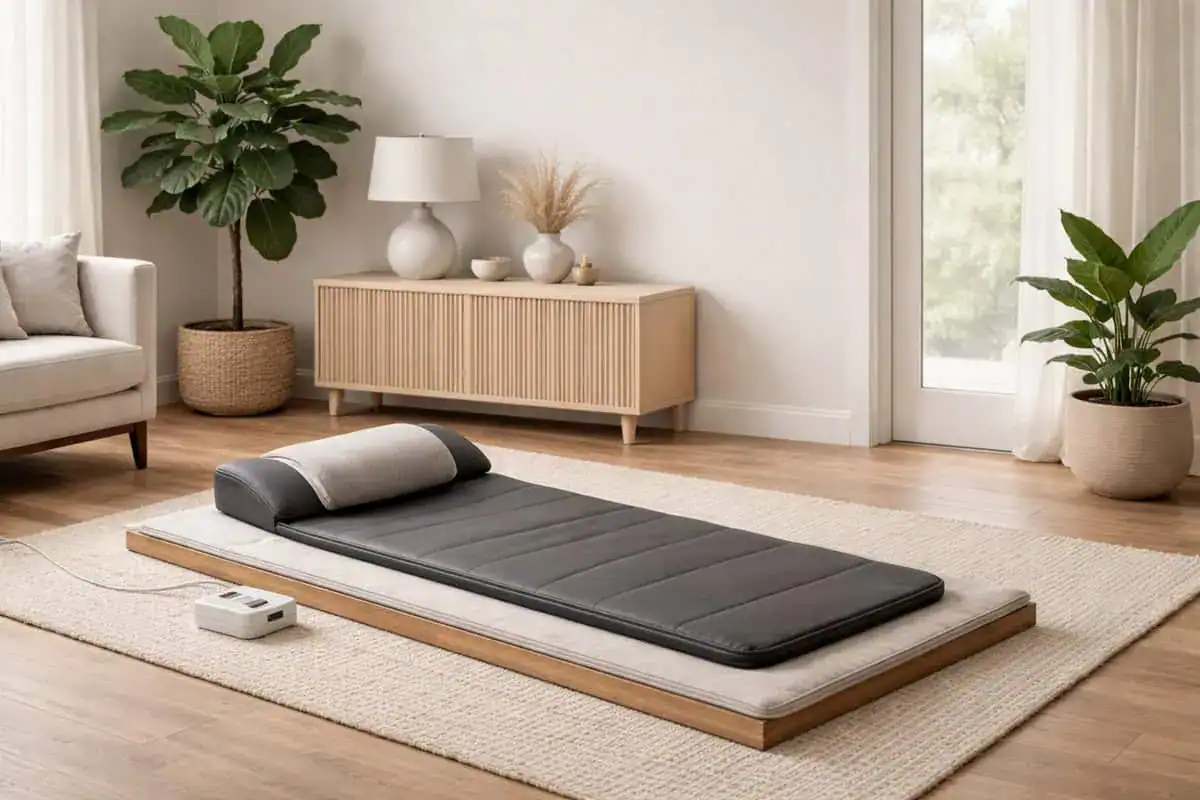
HigherDOSE emphasizes aesthetic design and home integration. The mat is typically lightweight, easy to store, and designed for living-room or bedroom use.
Users often report:
- Quiet operation
- Simple remote control interface
- Comfortable surface padding
These usability features can increase consistency — and consistent, moderate use is generally more realistic than sporadic high-intensity sessions.
Build quality matters most in daily friction points: how easy the mat is to unroll and re-store, whether the controls feel durable, and whether the surface is comfortable for typical session lengths. If a device is annoying to set up or uncomfortable, it is less likely to be used consistently, regardless of its theoretical capability.
A conservative “real life” checklist can help:
- Space reality: Can you lie flat without moving furniture every session?
- Storage reality: Does it store easily without tight folding that could stress internal components?
- Noise reality: Is it quiet enough for wind-down use?
- Comfort reality: Do you need an additional thin layer (towel, yoga blanket) for pressure points?
It is also worth considering that the “best device” is often the one that is used. If the mat fits naturally into your home and routine, it can support adherence. If it requires frequent setup effort or conflicts with your living space, the likelihood of long-term use drops.
Safety Considerations
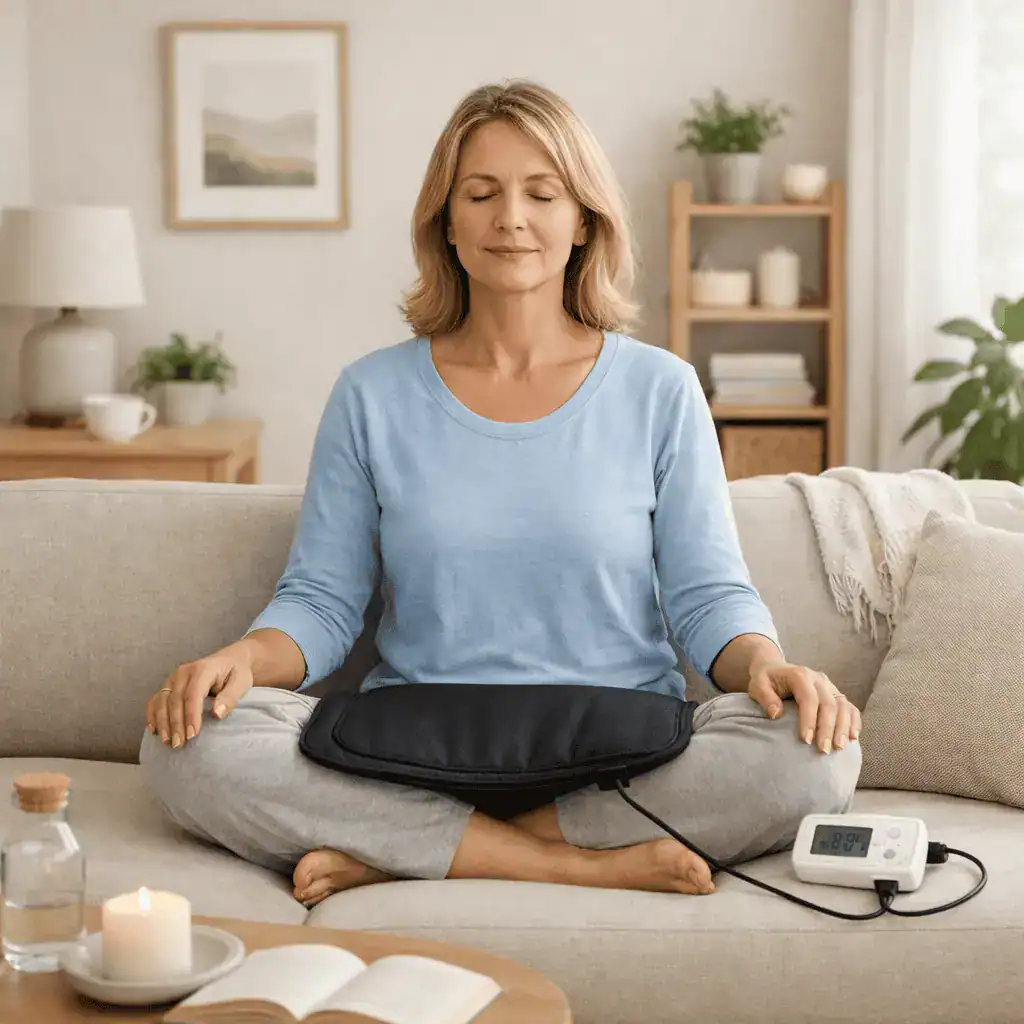
PEMF therapy is generally considered low-risk for healthy adults when used as directed. That said, contraindications may include:
- Implanted electronic devices
- Pregnancy (consult physician)
- Acute unmanaged medical conditions
For a deeper breakdown of precautions, see our PEMF Therapy Safety, Risks & Contraindications page.
A conservative onboarding approach is to start with shorter sessions and a comfortable setting, then increase gradually if you tolerate the routine well. If you notice persistent discomfort, headaches, unusual sensations, or sleep disruption that does not resolve quickly, it is reasonable to pause and reassess rather than pushing through.
It can also be helpful to avoid stacking many new recovery modalities at once during your first week of use. If you add PEMF plus intense heat plus major training changes simultaneously, it becomes hard to know what is driving your response. A simpler rollout makes evaluation more reliable.
How It Compares to Full-Body Systems
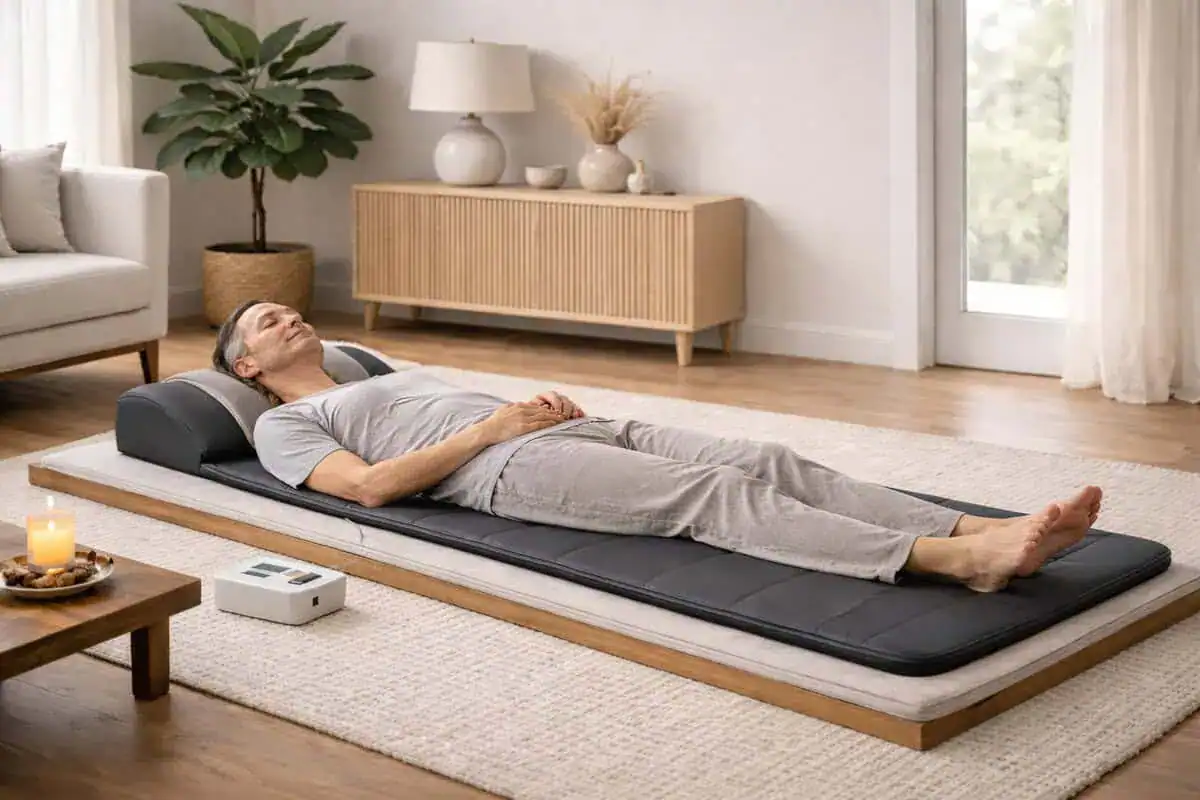
Compared to full-body programmable systems, lifestyle mats like HigherDOSE typically:
- Offer lower output intensity
- Provide fewer frequency options
- Emphasize simplicity over customization
If output range and waveform control are priorities, systems highlighted in our 2026 Buyer’s Guide may better align with those goals.
Beyond technical differences, there is an ownership reality difference. Lifestyle mats tend to be lower friction: store, unroll, press start, rest. Full-body systems can introduce more variables: heavier components, more complex controls, and more time spent deciding which protocol to use. For some users, that control is worth it; for others, it reduces adherence.
A conservative comparison can be organized into practical decision criteria:
- Coverage: How much of the body is exposed at once, and how evenly?
- Control: Are you choosing simple presets or building a protocol with adjustable parameters?
- Consistency: Which device are you realistically going to use week after week?
- Support: How reliable is customer service, and how clear are warranty terms?
- Upgrade path: If you outgrow the device, is it still useful as a “baseline routine” tool?
Maintenance and long-term care also matter, even for simple mats. To reduce wear over time, owners often benefit from:
- Storing the mat in a way that avoids tight bends and sharp folds
- Keeping cords and connectors protected from strain
- Using a consistent cleaning routine appropriate for the surface material
- Maintaining a dedicated area so setup does not become a barrier
This is where compliance and expectations overlap: a device that is easy to care for and easy to use tends to remain part of a routine. A device that is constantly moved, tightly folded, or stored awkwardly is more likely to suffer wear and more likely to be used inconsistently.
If you are comparing categories and want a broader view of device types and how they differ, the PEMF Sage Blog can help you see common selection logic and use cases before you make a purchase decision.
Who the HigherDOSE Mat May Suit
This device may be appropriate for individuals who:
- Want an entry-level PEMF experience
- Prefer a guided, preset structure
- Value aesthetics and simplicity
- Use PEMF primarily for relaxation routines
It may be less suitable for users seeking high-intensity exposure or advanced protocol experimentation.
In practical terms, this category often suits people who want a low-friction “recovery window” built into their week. If you are the type of user who benefits from a scheduled rest practice but struggles to make time for it, a mat can provide structure. If you are the type of user who wants to experiment with settings and compare protocols in detail, you may prefer a more programmable category.
A conservative decision rule is to prioritize adherence. If you believe you will use a simple mat consistently because it is easy, comfortable, and fits your home, that may be more meaningful than choosing a more complex device that you rarely use.
Research Context & Evidence Limits
Clinical literature on PEMF spans orthopedic recovery, bone density, and cellular signaling research. For example, summaries available via Mayo Clinic highlight the importance of evidence-based evaluation when considering electromagnetic therapies.
Most consumer devices have not undergone large-scale randomized controlled trials. Therefore, expectations should be calibrated around supportive wellness use rather than disease treatment.
It is also important to recognize that “PEMF research” is not one uniform body of evidence. Studies vary by device type, output intensity, frequency range, exposure duration, and the outcomes measured. Because of that variability, it is not responsible to assume that a consumer wellness mat replicates clinical protocols simply because both use pulsed electromagnetic fields.
If you explore research, an evidence-aligned approach is to look for protocol details and to avoid extrapolating disease-specific conclusions to consumer wellness products. When in doubt, treat the research as background context and evaluate consumer devices based on design goals, safety, and practical long-term use.
Pricing & Value Considerations
Because HigherDOSE is currently approved but pending an active affiliate partnership, we do not provide direct pricing links or promotional language.
When evaluating value, consider:
- Output specifications
- Warranty terms
- Return policies
- Customer support responsiveness
Comparing specifications side-by-side with active affiliate-supported systems in our Buyer’s Guide can provide additional clarity.
A conservative way to evaluate value is to think in terms of cost-per-session and long-term consistency rather than marketing promises. A device that is used reliably becomes part of a routine; a device that sits unused becomes expensive quickly. For many buyers, the most honest question is: “Will I use this three times per week for the next three months?”
It can also be helpful to compare the mat to other recovery supports you might actually use: mobility work, guided relaxation routines, or other non-medical wellness tools. In many cases, the best “value” is the option that you will stick with, not the option with the most impressive feature list.
Final Verdict: A Lifestyle-Oriented PEMF Entry Option
This HigherDOSE PEMF mat review reflects a conservative perspective. The device appears designed for simplicity, relaxation support, and accessible home use rather than high-output protocol customization.
If you’re exploring PEMF for the first time, start by understanding the fundamentals and comparing categories in our Best PEMF Devices & Mats (2026 Buyer’s Guide). Education first — expectations second — purchase decisions last.
For most users, the most realistic success metric is comfortable, consistent use paired with supportive habits like sleep hygiene, stress reduction practices, and reasonable training recovery.