PEMF Therapy Frequencies Explained: What Hz and Waveforms Mean for Healing

Pulsed Electromagnetic Field (PEMF) therapy systems operate by generating carefully controlled electromagnetic pulses that interact with the body’s natural electrical signaling. One of the most commonly discussed technical aspects of PEMF therapy is frequency — often measured in Hertz (Hz).
Understanding PEMF therapy frequencies can help clarify how these systems are designed and why different devices may use different pulse patterns, waveforms, and intensity levels. These parameters influence how electromagnetic fields interact with cellular signaling pathways and tissue environments.
This guide explains PEMF therapy frequencies in practical terms, including what Hertz means, how waveforms function, and how these settings are used in modern PEMF systems.
Want to see how PEMF systems apply these frequencies?
Our full comparison explains how different devices implement PEMF technology. Compare PEMF devices →
If you’re new to PEMF technology, you may also want to review the broader overview of science-backed PEMF therapy benefits to understand the physiological context behind these signals.
What Frequency Means in PEMF Therapy
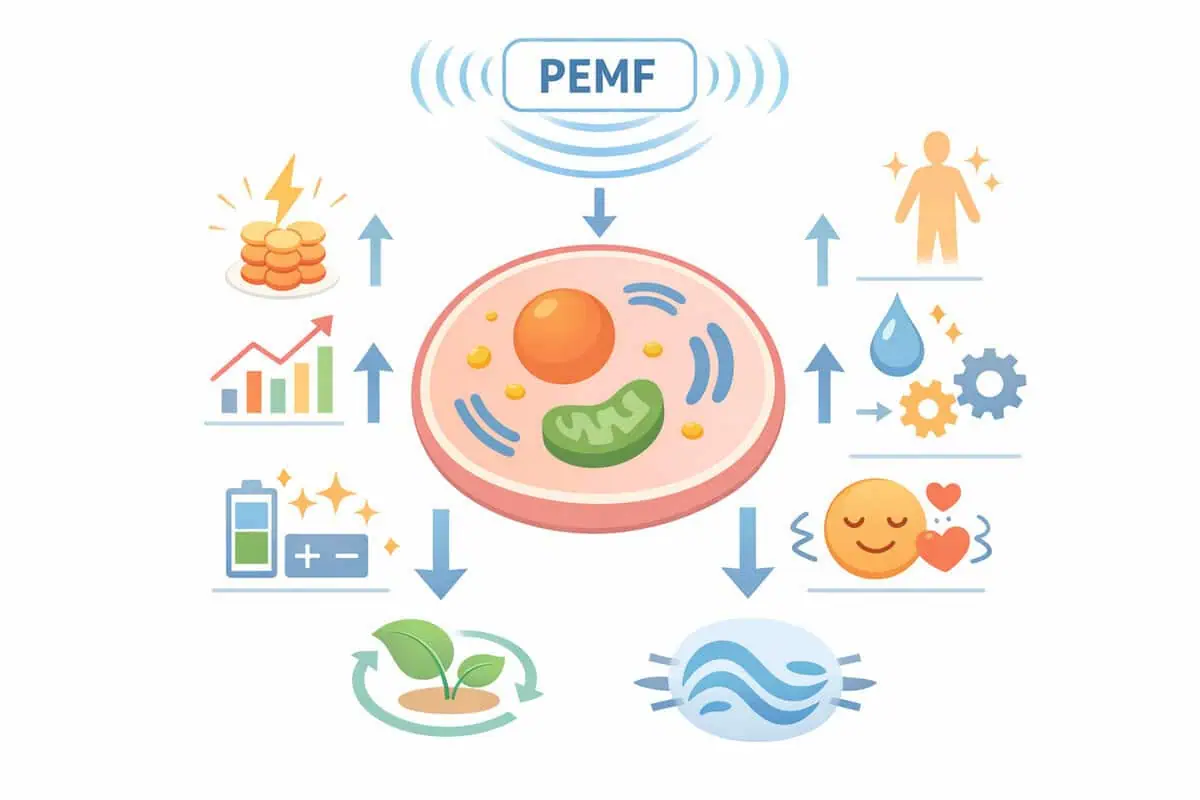
In PEMF therapy, frequency refers to how many electromagnetic pulses are delivered per second. This measurement is expressed in Hertz (Hz).
For example:
- 1 Hz = 1 pulse per second
- 10 Hz = 10 pulses per second
- 100 Hz = 100 pulses per second
Most PEMF therapy devices operate within the low-frequency range, typically between 1 Hz and 1000 Hz. These low-frequency signals are chosen because they interact more closely with biological electrical processes already present in the body.
Human physiology depends on subtle electrical gradients across cell membranes. These gradients regulate processes such as ion transport, signaling pathways, and cellular communication. PEMF systems are designed to generate external pulses that may interact with these natural processes.
According to research indexed in PubMed, pulsed electromagnetic fields have been studied for their potential influence on cell signaling and microcirculatory dynamics.
Another way to interpret frequency is to view it as the rhythm of signal delivery. Lower frequencies create slower pacing between pulses, while higher frequencies produce more rapid electromagnetic cycles. This pacing can influence how a signal pattern unfolds during a session.
However, frequency alone does not describe how strong a signal is or how it spreads across tissue. Those characteristics depend on waveform design, magnetic field intensity, and coil structure within the device.
Low Frequency vs High Frequency Electromagnetic Fields
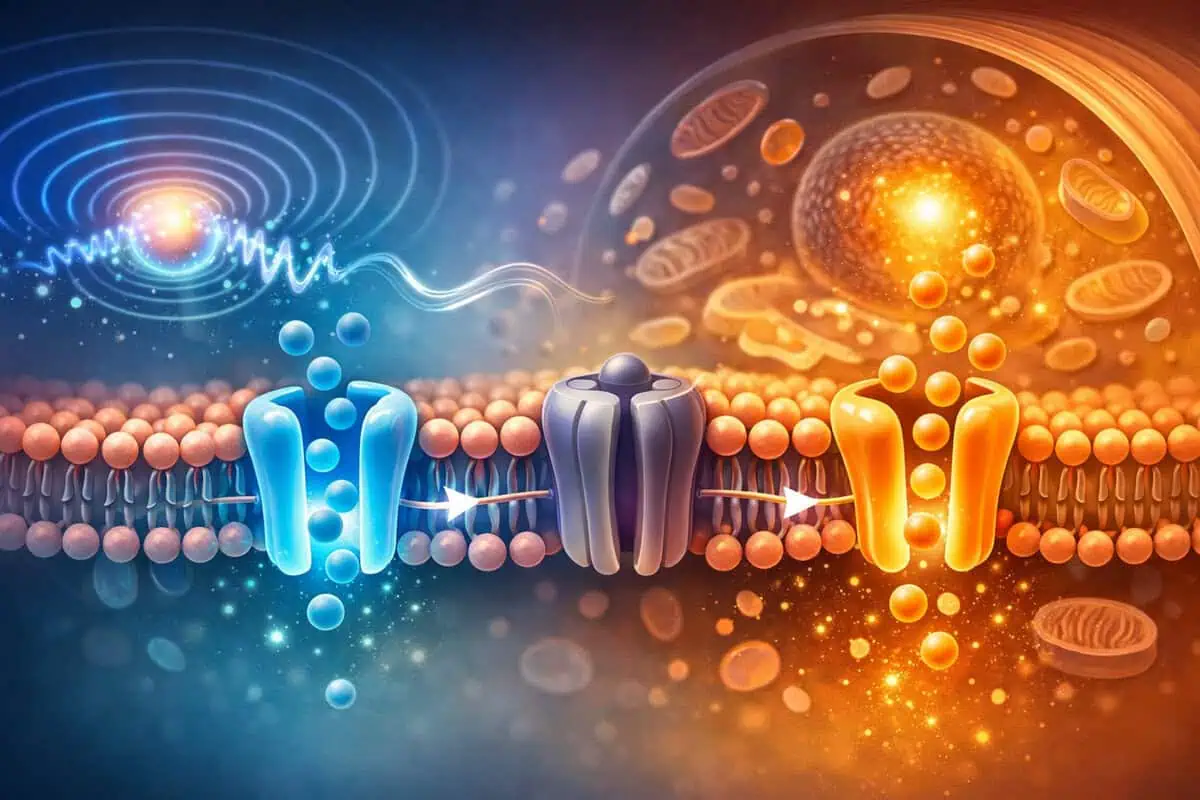
Electromagnetic technologies exist across a wide frequency spectrum. PEMF systems use extremely low-frequency (ELF) electromagnetic fields compared with many other technologies.
Examples of frequency ranges:
- Radio signals: thousands to millions of Hz
- Microwaves: billions of Hz
- Visible light: trillions of Hz
- PEMF therapy: typically 1–1000 Hz
Low-frequency electromagnetic fields are often studied because they interact differently with biological tissue compared to high-frequency radiation. Rather than generating heat, these lower frequencies primarily influence electrical gradients and field interactions.
The National Institutes of Health notes that electromagnetic signaling plays a role in cellular communication and tissue regulation. PEMF systems attempt to replicate similar low-intensity electromagnetic conditions.
This is why most consumer PEMF systems emphasize pulse patterns rather than high power.
These differences also explain why PEMF devices are typically used in passive wellness routines. Instead of relying on heat or high energy output, they deliver repeated electromagnetic pulses designed to interact with the body’s electrical environment.
How PEMF Pulses Interact with Cellular Signaling
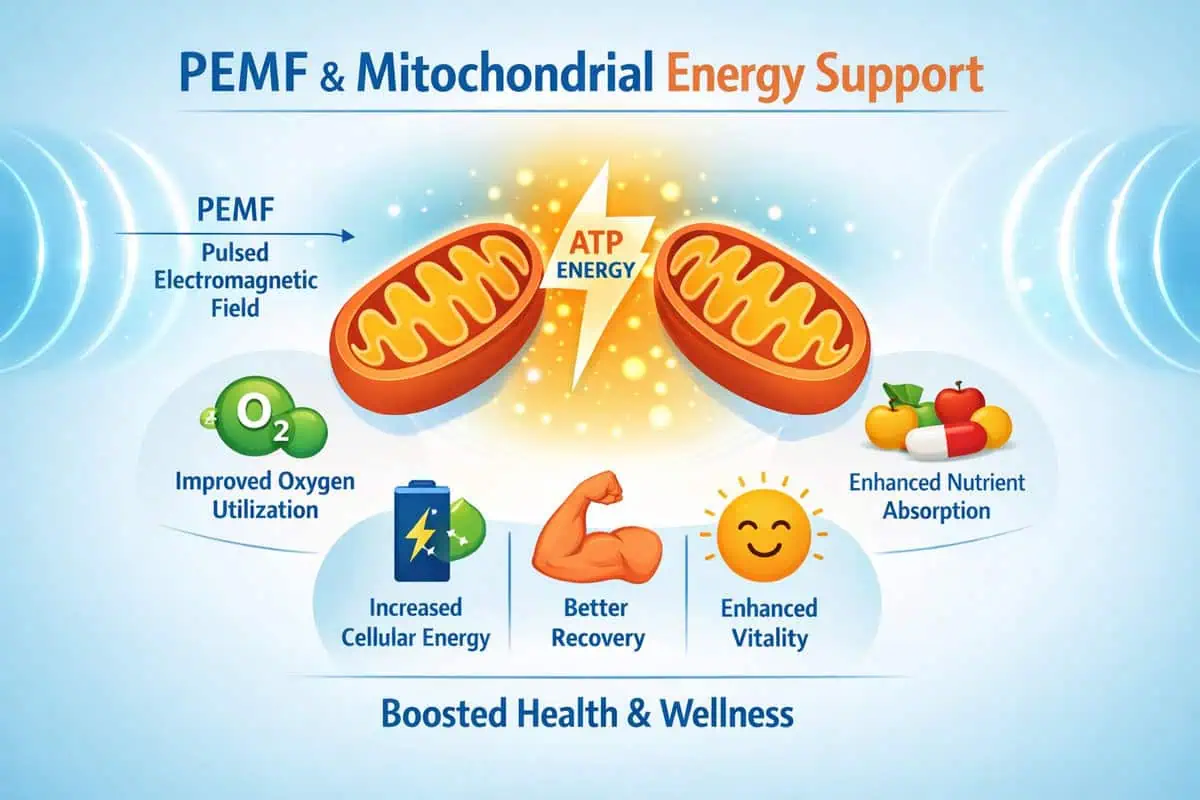
Every cell in the human body maintains an electrical charge across its membrane. This electrical potential regulates key biological processes including:
- Ion exchange
- Nutrient transport
- Cellular communication
- Mitochondrial energy regulation
PEMF therapy systems generate pulsed magnetic fields that briefly induce tiny electrical currents in nearby tissues. These signals are sometimes described as electromagnetic signaling cues.
Some research suggests that pulsed electromagnetic fields may influence processes such as microcirculation and cellular signaling cascades, though the degree and consistency of these effects vary depending on device parameters and study conditions.
The Cleveland Clinic notes that the body’s electrical systems play a role in multiple physiological functions, including nerve signaling and tissue communication.
PEMF technology attempts to work within these natural electrical environments rather than overwhelming them with stronger fields.
Because cellular communication depends on electrical gradients, small changes in electromagnetic exposure patterns may influence signaling environments under certain conditions. Researchers often explore this interaction when studying PEMF technologies.
Understanding Waveforms in PEMF Systems
Frequency describes how often pulses occur, but it does not describe the shape of those pulses. That shape is known as the waveform.
Different PEMF systems may use waveforms such as:
- Sine waves
- Square waves
- Triangular waves
- Complex pulsed waveforms
Each waveform changes how electromagnetic energy rises and falls during each pulse.
For example:
- Sine waves create smooth, continuous oscillations
- Square waves switch rapidly between on/off states
- Pulsed waveforms produce short bursts of energy separated by pauses
Modern PEMF systems often combine frequency and waveform variations to produce distinct signal patterns.
Waveform design is important because biological tissues may respond differently depending on how quickly signals rise, peak, and fall during each pulse cycle.
The Role of Pulse Intensity

Another important variable in PEMF therapy is intensity, sometimes measured as magnetic flux density.
Intensity determines the strength of each electromagnetic pulse. Consumer PEMF systems typically use low-intensity fields compared with industrial electromagnetic technologies.
Intensity levels are carefully balanced because:
- Too little signal may have minimal interaction with tissue
- Too much signal may exceed the intended design parameters of low-frequency PEMF systems
Most modern devices combine:
- Frequency
- Waveform pattern
- Pulse intensity
These variables work together to define how a PEMF system operates.
Intensity must also be considered alongside distance and placement. Magnetic fields weaken as they move away from the source, which is why device design and coil placement influence how signals reach surrounding tissues.
Why Different PEMF Devices Use Different Frequencies

Different PEMF systems may use different frequency ranges because manufacturers design their devices around specific signal profiles.
These profiles are sometimes based on:
- Engineering design choices
- Research models used during development
- Targeted usage environments
- User comfort and signal delivery patterns
Some devices offer multiple programs with varying pulse frequencies and waveforms, allowing users to adjust settings depending on their routine or environment.
If you’re comparing devices, it can be helpful to review the broader system design factors covered in our PEMF device buyer’s guide.
Program variation also allows manufacturers to create different pacing patterns during sessions. Instead of delivering the same pulse repeatedly, devices may cycle through signal changes that vary rhythm and waveform.
Common Frequency Ranges Used in PEMF Systems

Although each device has its own signal profile, many PEMF systems operate within similar frequency ranges.
- 1–10 Hz — very low-frequency pulses
- 10–50 Hz — commonly used general signal range
- 50–200 Hz — moderate pulse frequency range
- 200+ Hz — higher-frequency PEMF signals used by some devices
These ranges are selected because they remain within the extremely low-frequency electromagnetic spectrum, which interacts differently with biological systems compared with higher-frequency radiation.
Research on electromagnetic field interactions with biological tissues is ongoing, and different studies examine how various signal parameters influence cellular responses.
Why Frequency Alone Doesn’t Define PEMF Therapy

One common misconception is that PEMF therapy effectiveness depends only on frequency. In reality, multiple design factors influence how PEMF systems operate.
Important variables include:
- Pulse intensity
- Waveform shape
- Duty cycle
- Coil design
- Magnetic field distribution
These factors determine how electromagnetic pulses interact with surrounding tissues and how consistently signals are delivered.
Because of this complexity, frequency values alone rarely provide a complete picture of how a PEMF system functions.
Long-term ownership also highlights practical considerations such as durability, usability, and program clarity. A well-designed system should deliver its signal patterns consistently over time.
Practical Use of PEMF Frequencies in Home Devices

Many home PEMF devices include preset programs that combine multiple frequencies and waveforms automatically.
These preset modes simplify the process for users by managing the signal parameters internally.
Typical device features may include:
- Pre-programmed pulse sequences
- Timed session lengths
- Adjustable intensity levels
- Multiple waveform patterns
This allows users to focus on consistent routines rather than manually configuring signal parameters.
If you want to explore the range of consumer PEMF systems available today, you can review the current overview of PEMF mats and devices.
Research on Electromagnetic Field Frequencies

Scientific research continues to explore how electromagnetic field parameters influence biological systems.
Studies indexed through PubMed examine topics such as:
- Electromagnetic signaling and cell membrane activity
- Effects of pulsed fields on microcirculation
- Interactions between electromagnetic fields and mitochondrial signaling
While findings vary across different studies, researchers generally emphasize that PEMF technology operates within complex biological environments where multiple variables interact.
Because of this complexity, PEMF systems are typically designed using controlled low-frequency signals rather than relying on a single parameter such as frequency alone.
How to Interpret Frequency Claims When Comparing Devices

When comparing PEMF systems, frequency specifications are often listed alongside other technical details. However, frequency values should be interpreted in context.
Important considerations include:
- How the device generates pulses
- The waveform design used
- Magnetic field strength
- Overall system architecture
Rather than focusing on one technical number, it is usually more helpful to evaluate the overall system design and how consistently signals are delivered.
You can explore this broader comparison framework in the PEMF Sage blog, where multiple aspects of PEMF technology are explained in greater detail.
PEMF Therapy Frequencies Explained
PEMF therapy frequencies describe how often electromagnetic pulses are delivered during a session. These pulses are measured in Hertz and typically fall within the extremely low-frequency electromagnetic spectrum.
However, frequency is only one part of how PEMF systems function. Waveforms, pulse intensity, and signal timing also play important roles in determining how electromagnetic fields interact with biological tissues.
Understanding these factors can help clarify why PEMF devices use different signal patterns and why frequency alone does not define how a system operates.
To see how these technologies are implemented in real consumer systems, explore our full guide comparing today’s leading PEMF devices.
Explore PEMF Devices
See how modern PEMF mats and systems apply frequency, waveform, and pulse design in real products. View the PEMF buyer’s guide →