
Understanding PEMF Therapy Safety
Pulsed electromagnetic field (PEMF) therapy is widely discussed as a non-invasive wellness technology used in home and professional settings. Safety considerations are central to responsible PEMF education, especially because electromagnetic exposure can interact with biological systems in subtle ways.
This page outlines known safety principles, potential risks, and commonly cited contraindications based on publicly available research and clinical guidance. It is designed to help readers make informed, conservative decisions and understand when additional professional guidance may be appropriate.
Because device specifications and user contexts vary, responsible safety guidance emphasizes two practical principles: use the lowest effective setting recommended by the manufacturer and increase exposure gradually, if at all, while monitoring for comfort. Conservative decision-making also means recognizing where evidence is limited and where caution is appropriate for particular populations.
General Safety Profile of PEMF Therapy

Low-intensity PEMF systems intended for wellness use are generally described in the literature as having a favorable safety profile when used according to manufacturer instructions. Unlike ionizing radiation, PEMF devices operate at field strengths designed to remain within non-thermal exposure ranges.
- No heat generation during normal operation
- Non-invasive and externally applied
- Sessions typically limited in duration and frequency
Ongoing research continues to examine how electromagnetic fields interact with cellular signaling and nervous system regulation, reinforcing the importance of conservative usage parameters.
“Non-thermal” is an important framing term in PEMF safety. It refers to exposures that are not intended to heat tissues. Many consumer PEMF products are positioned around gentle, time-limited sessions, which is part of why usage instructions typically emphasize duration caps, incremental adjustments, and avoiding extended, unbroken exposure.
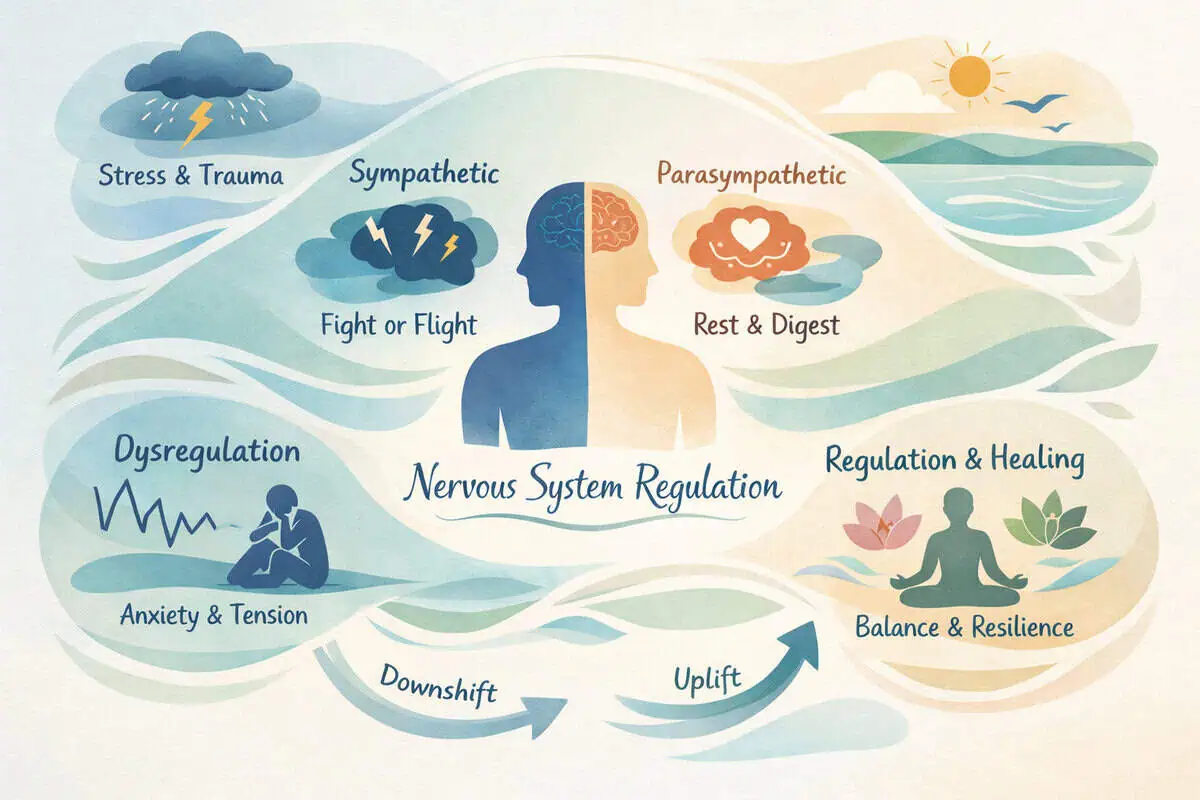
From a physiology-aligned perspective, safety and comfort are often linked to how a person’s nervous system responds to stimulus. Some people describe PEMF sessions as subtle and relaxing, while others notice a stronger sensory awareness at higher settings. This variability is one reason many manufacturers recommend starting low, keeping early sessions shorter, and avoiding multiple sessions in a single day until a consistent baseline response is established.
Practical safety factors also include device build quality, consistent output, and clear documentation. Devices that provide transparent specifications and user instructions reduce guesswork and support more consistent exposure patterns, which is generally preferable to erratic settings or uncontrolled experimentation.
Commonly Reported Side Effects

Reported side effects associated with PEMF sessions are generally mild and temporary. These responses are often discussed as part of the body’s short-term adjustment to electromagnetic stimulation.
- Transient fatigue or low energy
- Temporary lightheadedness
- Subtle sensory awareness during or after sessions
If discomfort persists or intensifies, users are typically advised to discontinue use and consult a qualified professional.
In conservative wellness guidance, “side effects” are often framed as tolerance signals rather than expected outcomes. For example, a person may feel unusually tired after a first session, which can be interpreted as a cue to shorten the next session, reduce the intensity, or space sessions farther apart. The goal is comfort and consistency, not intensity for its own sake.
Many reports of short-term discomfort occur when a new user starts at an aggressive setting, stacks multiple sessions close together, or uses a device for longer than recommended. For this reason, gradual ramp-up is commonly advised, and some users choose to keep a simple session log (time, setting, and how they felt) during the first few weeks to identify what is comfortable and repeatable.
It is also reasonable to separate PEMF sessions from other strong stimuli when establishing a baseline. For example, some users prefer not to combine a first PEMF session with late-night stimulation or other intense wellness interventions on the same day. This is not a medical rule, but it can make it easier to interpret what a person is noticing and adjust settings conservatively.
Contraindications and Precautions
Certain populations are routinely cited in clinical guidance as requiring additional caution with PEMF exposure. These considerations are based on device interactions rather than confirmed adverse outcomes.
- Implanted electronic devices such as pacemakers
- Implanted drug infusion pumps
- Uncontrolled seizure disorders
- Pregnancy, as a precautionary measure
Individuals in these categories are typically advised to seek medical guidance before considering PEMF use.
The main concern with implanted electronic devices is electromagnetic interference. Even if a PEMF device is low-intensity, the field is still an electromagnetic signal delivered close to the body. Because implanted devices are designed to sense and respond to electrical activity, conservative guidance typically treats “avoid use unless medically cleared” as the safest default.
It is also common for device manuals to include broader caution language for individuals with implanted metal hardware, recent surgeries, or complex medical histories. This does not necessarily mean PEMF is unsafe in every such situation, but it does mean independent, individualized guidance may be appropriate—especially when the device will be used frequently or at higher settings.
Pregnancy is often listed as a precautionary category because safety evidence is limited, not because harm is established. When evidence is uncertain, conservative wellness education emphasizes avoiding unnecessary exposures and deferring to medical professionals who understand an individual’s context.
Device Quality and Responsible Use

Safety outcomes depend heavily on device quality and adherence to published usage instructions. Well-manufactured PEMF systems clearly define intensity ranges, session durations, and placement guidance.
Readers interested in comparing devices with transparent specifications may reference our Best PEMF Devices & Mats (2026 Buyer’s Guide) for an overview of established options.
From a safety standpoint, “device quality” is not just about comfort features—it includes consistent signal delivery, reliable controls, and clear labeling. If a device does not clearly specify intensity ranges, time limits, or recommended placement, a user may have difficulty applying conservative, repeatable sessions. In contrast, devices that make operating parameters easy to understand support a more cautious approach.
Responsible use also includes basic environmental and operational checks. For example, using a device on a stable surface, avoiding exposure near water sources, ensuring cords and controllers are in good condition, and following manufacturer guidance for cleaning and storage are simple steps that reduce preventable problems.
A conservative “start low and build slowly” approach is common across many electromagnetic and neuromodulation-adjacent wellness tools. Early sessions are often shorter than the maximum recommended duration, and intensity is typically kept near the lower end of the range until the user has a clear comfort baseline.
Children and Special Populations

Research involving PEMF exposure in children and medically complex populations remains limited. As a result, conservative recommendations emphasize professional oversight and cautious decision-making.
Additional context on physiological considerations can be found on our PEMF Therapy Benefits (Science-Backed Overview) page.
“Special populations” can include older adults with multiple medications, individuals with cardiovascular complexity, those with neurological conditions, or people using implanted or wearable medical technologies. In these contexts, the most conservative approach is to treat PEMF as an optional exposure that should be cleared through appropriate medical channels if there is any uncertainty.
For older adults, comfort, stability, and ease of use can be as important as device parameters. Devices that are complicated to operate or require frequent adjustments may increase the chance of accidental misuse. Conservative decision-making favors simple controls, clear session timers, and a routine that is easy to repeat consistently.
For children, the combination of limited evidence and developing physiology is one reason many PEMF manufacturers either discourage use or recommend medical supervision. Even when a device is low intensity, a conservative stance is to avoid routine exposure unless a qualified professional is involved and device guidance supports the use case.
Research Context and Evidence Limits
PEMF safety discussions are informed by a combination of laboratory studies, clinical observations, and regulatory guidance. While many studies suggest low risk at conservative exposure levels, research continues to evolve.
Authoritative sources such as the National Institutes of Health and peer-reviewed literature emphasize the importance of clearly defined parameters and cautious interpretation of findings.
See related discussions in PubMed-indexed research and summaries from organizations like the Cleveland Clinic and Mayo Clinic for broader electromagnetic exposure context.
A key limitation in PEMF research is variability: different studies may use different frequencies, intensities, waveforms, session durations, and treatment schedules. This makes broad safety generalizations difficult. Conservative education focuses on what is consistent across guidance—clear parameters, cautious ramp-up, and avoiding use in higher-risk categories without medical clearance.
Another practical limitation is that many published studies examine clinical or therapeutic contexts that do not perfectly match consumer wellness devices. That does not invalidate the research, but it does mean readers should be careful when mapping findings from one context onto a different device category. The most conservative approach is to prioritize transparent device specifications and published instructions over assumptions based on loosely related study designs.
When evaluating claims, it is reasonable to favor sources that explain exposure parameters and acknowledge uncertainty. For broader context on electromagnetic exposure and health, readers may consult references from NIH, PubMed, Cleveland Clinic, and Mayo Clinic, and interpret PEMF claims within those conservative boundaries.
Next Steps for Informed Decision-Making
PEMF therapy safety is best approached with balanced expectations, careful device selection, and awareness of individual health circumstances. Educational resources are intended to support informed conversations rather than replace professional guidance.
For ongoing updates, educational articles, and research summaries, visit the PEMF Sage Blog or reach out through our Contact PEMF Sage page.
If you are unsure whether PEMF is appropriate for your situation, a conservative next step is to review manufacturer contraindication lists, consider any implanted devices or complex health conditions, and discuss questions with a qualified professional who understands your context. This is especially relevant if you plan to use PEMF frequently or at higher settings.
For readers comparing home-use options, it can help to focus on devices that publish clear specifications, include built-in timing controls, and provide conservative usage guidance. You can also use our buyer’s guide as a navigation tool to understand common device categories and how reputable manufacturers describe safe operation.