PEMF Therapy for Energy & Fatigue

PEMF therapy for energy and fatigue is often discussed in the context of cellular signaling, circulation support, and nervous system regulation. While it is not a stimulant and does not function like caffeine or medication, pulsed electromagnetic field therapy is frequently explored as a non-invasive wellness tool that may support how efficiently the body manages and restores energy.
This guide explains how PEMF therapy relates to fatigue from a physiology perspective — including mitochondrial function, microcirculation, and autonomic balance — while maintaining a conservative, evidence-aligned approach.
Explore Device Options
For an overview of structured systems and home-use formats, see our Best PEMF Devices & Mats Buyer’s Guide →
Energy Production Begins at the Cellular Level
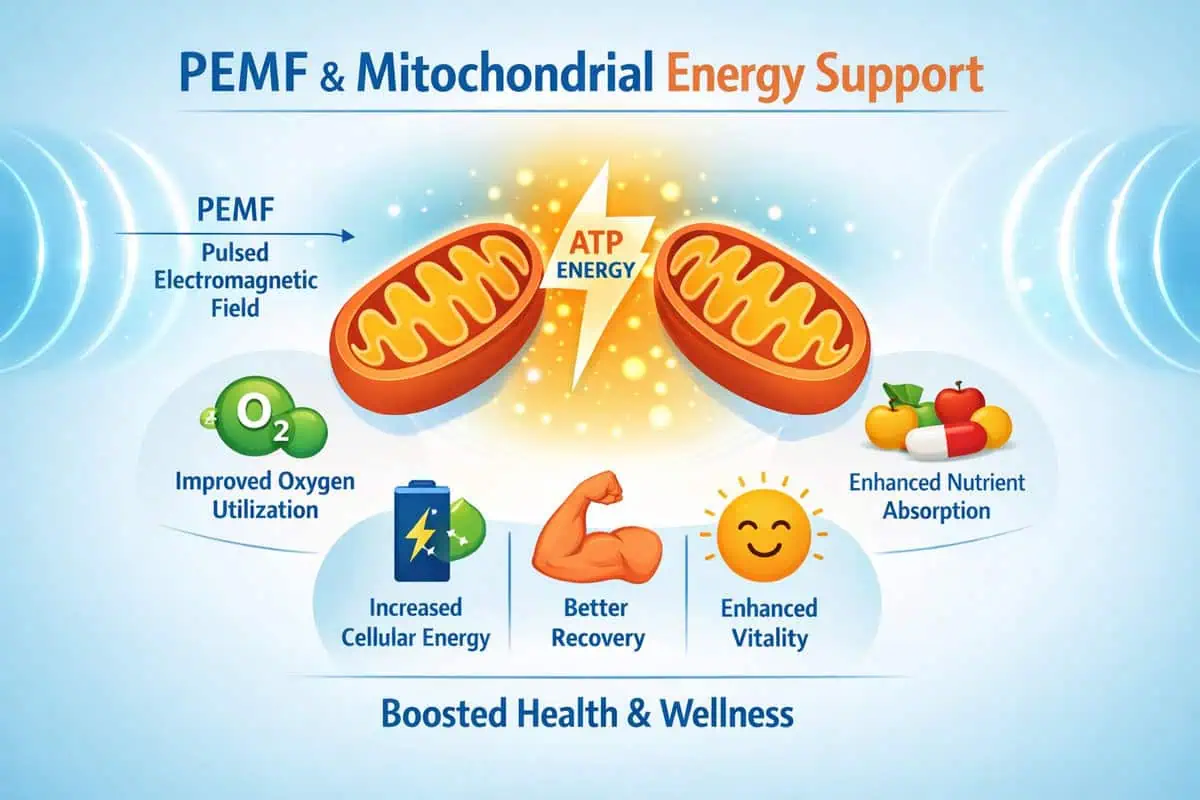
Human energy is largely dependent on mitochondrial activity. Mitochondria are responsible for producing ATP (adenosine triphosphate), the molecule that fuels cellular processes. When mitochondrial efficiency declines — due to stress, aging, or recovery demands — subjective fatigue may increase.
ATP is sometimes described as the “energy currency” of the cell because it helps power basic functions such as muscle contraction, nerve signaling, and active transport across membranes. Even small shifts in how efficiently cells produce or use ATP can influence how “energized” someone feels, particularly during periods of high demand (training blocks, poor sleep cycles, or sustained stress). This framing is not a diagnosis and does not explain every type of fatigue, but it is a useful physiology-based lens.
It can also help to separate energy capacity from energy perception. A person may have adequate caloric intake yet still feel depleted if recovery systems are overtaxed (sleep debt, persistent stress physiology, or reduced movement and circulation). Conversely, someone may experience brief “energized” periods due to adrenaline or stimulation despite being under-recovered. PEMF discussions typically fit better in the “recovery systems and regulation” category than the “stimulation” category.
Research published in PubMed-indexed studies has explored how electromagnetic signaling may influence mitochondrial membrane potential and ATP production under controlled conditions. While findings vary, the relationship between cellular signaling and mitochondrial activity remains an area of active investigation.
When interpreting this research, it is important to keep expectations modest. Laboratory outcomes may measure cellular markers or short-term physiologic responses, while real-world “energy” is influenced by many interacting variables. A conservative interpretation is that PEMF may be relevant to energy physiology because mitochondrial function and cellular signaling are foundational, not because PEMF functions as a direct “energy enhancer.”
PEMF therapy is thought to interact with cells through low-frequency electromagnetic pulses that may influence ion exchange and membrane dynamics. It is not an energy “boost” in the traditional sense, but rather a potential support for cellular processes that underlie energy production.
In practical terms, this means that if PEMF is helpful for some users, it may show up as better tolerance for daily demands, steadier energy across the day, or a more “recovered” feeling after rest — not as an immediate surge in energy. Individual responses vary, and any benefits should be evaluated in the context of sleep, stress, movement, and overall health.
Microcirculation and Oxygen Delivery

Another factor in perceived fatigue is circulation. Efficient microcirculation supports oxygen and nutrient delivery to tissues. According to educational resources from the Cleveland Clinic, cellular oxygenation is fundamental to metabolic efficiency.
Microcirculation refers to blood flow through the smallest vessels (capillaries and small arterioles/venules) where oxygen, glucose, and other substrates exchange with tissues. Because mitochondria depend on oxygen to produce ATP through aerobic metabolism, circulation is one of the “upstream” factors that can influence energy production. This does not imply that circulation is the cause of fatigue in any individual case, but it helps explain why circulation is frequently discussed alongside recovery and vitality.
Day-to-day factors that influence microcirculation include movement (even light walking), hydration status, ambient temperature, and prolonged sitting. When the body is under stress or deconditioned, circulation patterns can also shift as part of autonomic regulation. A wellness approach to energy often emphasizes consistent activity and sleep first, with modalities like PEMF framed as optional supports.
PEMF therapy has been studied in relation to microvascular dynamics and blood flow patterns. Some controlled environments have observed measurable effects on circulation markers, though outcomes depend on frequency, waveform, and exposure duration.
When considering these findings, it can be useful to think in terms of “circulation support” rather than “circulation correction.” PEMF use at home is generally short and intermittent, so any measurable effect — if present — may be modest and dependent on consistent routines. In energy discussions, the conservative claim is that circulation support may help the body’s normal recovery processes operate efficiently.
Improved circulation does not equate to medical treatment of fatigue conditions. However, better oxygen and nutrient exchange may support recovery processes that influence overall vitality.
Nervous System Regulation and Energy Balance
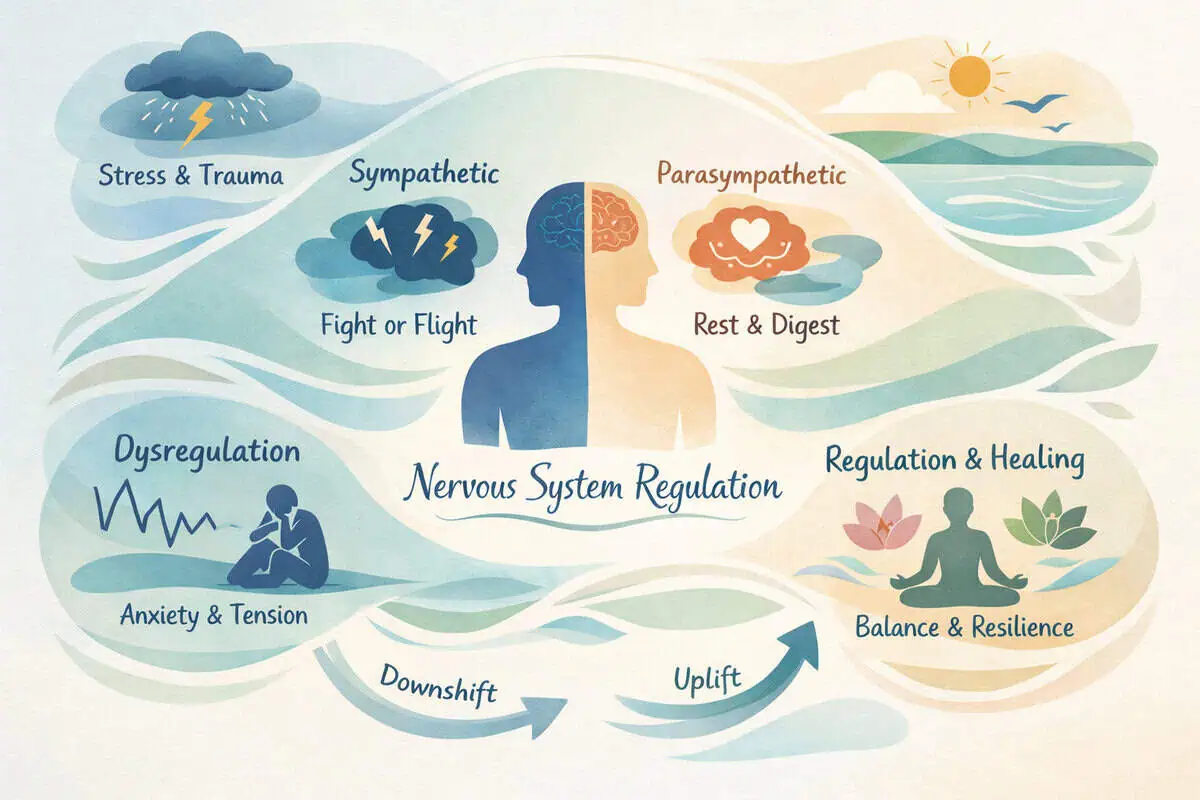
Energy levels are closely linked to the autonomic nervous system. Chronic sympathetic dominance (“fight-or-flight”) may contribute to mental and physical exhaustion over time.
One reason autonomic balance matters is that “high stress physiology” can change sleep depth, appetite signaling, and perceived effort during daily tasks. Over time, a body that struggles to downshift into parasympathetic (“rest-and-digest”) patterns may feel wired yet tired — alert but not truly restored. This is a general physiology concept and not a diagnosis.
Educational materials from the National Institutes of Health (NIH) describe how stress physiology influences hormonal signaling, sleep quality, and metabolic regulation.
PEMF therapy is commonly explored for its potential influence on nervous system balance. Users often describe subtle pulsing sensations and relaxation during sessions. While subjective reports vary, regulation — rather than stimulation — appears to be the more common theme.
A practical, conservative way to evaluate this is to observe “downshift signals” after sessions: easier transition into rest, calmer breathing, or reduced sense of agitation. These are subjective outcomes and can be influenced by many variables (room environment, time of day, expectations). Still, the nervous system framing helps explain why PEMF sessions are often used in quiet, low-stimulus contexts rather than as a “pre-workout” energy tool.
PEMF Therapy and Perceived Fatigue

Fatigue can be multifactorial: sleep disruption, stress load, recovery demands, and metabolic inefficiencies all play a role. PEMF therapy does not directly “treat” fatigue. Instead, it may support systems that influence how energy is restored.
A helpful way to think about perceived fatigue is as a “signal” influenced by both biology and context. For example, poor sleep quality can increase perceived effort the next day, even if physical capacity is similar. High cognitive load can also reduce motivation and focus, which people may describe as low energy. When PEMF is discussed in this space, it is typically positioned as a recovery-oriented input that may support regulation and comfort.
In wellness settings, sessions are often incorporated during recovery periods — after physical exertion or during high-stress cycles — as part of a structured routine.
In practice, users often integrate sessions during:
- Late afternoon or evening “downshift” windows
- Post-workout recovery routines (on rest days or lighter training days)
- Periods of sustained desk work where movement is limited
None of these patterns imply that PEMF is necessary or universally effective. They simply reflect common, low-risk ways people attempt to support recovery and restore steadier energy.
For a broader overview of potential systemic effects, see our science-backed overview of PEMF therapy benefits.
Mitochondrial Signaling and Research Context
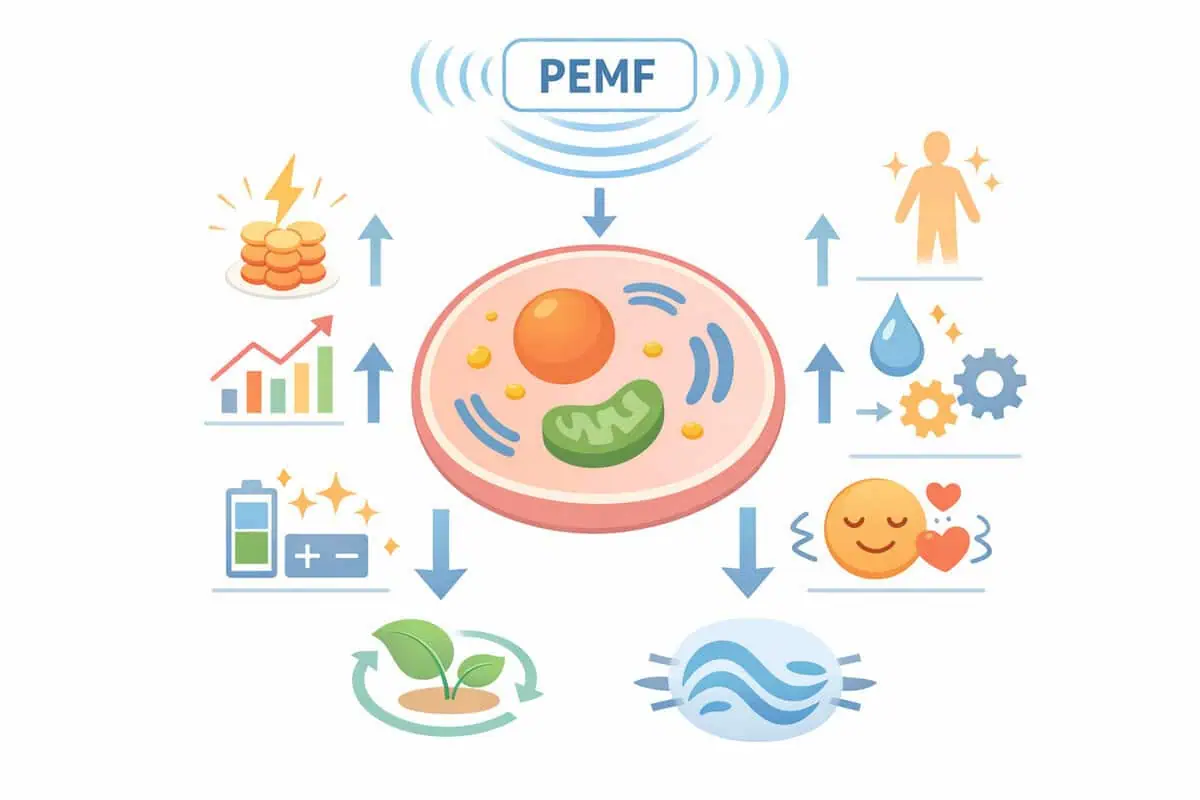
Laboratory research has explored how pulsed electromagnetic fields may influence ion channel behavior and intracellular signaling cascades. Some models suggest that electromagnetic exposure at controlled intensities may interact with voltage-gated ion channels, which play a role in cellular communication.
A common physiology framing involves membrane potential and ion gradients. Cells maintain electrical differences across membranes (including gradients of sodium, potassium, calcium, and chloride), and these gradients influence signaling, transport, and metabolic activity. In theory, a pulsed field could interact with electrochemical dynamics, but real-world outcomes depend heavily on dose parameters and context. This is why cautious interpretation is essential.
Some research discussions also reference nitric oxide (NO) and vascular signaling as potential mediators, since NO plays a role in vessel tone and blood flow regulation. However, these pathways are complex, and outcomes are not consistent across studies. For an informational post, the responsible approach is to acknowledge the plausible mechanisms without presenting them as settled conclusions.
It is important to distinguish laboratory findings from clinical outcomes. While mitochondrial and signaling pathways are relevant to energy metabolism, translation to real-world fatigue experiences requires cautious interpretation.
If readers want to engage with PEMF research responsibly, a practical approach is to look for:
- Clear device parameters (frequency, intensity, session duration)
- Measured outcomes (objective markers vs purely subjective endpoints)
- Replication across multiple studies rather than single findings
- Conservative conclusions that match the strength of the evidence
This mindset helps keep expectations aligned with what can reasonably be supported, especially in a topic as broad as “energy.”
Session Structure and Consistency

Typical home sessions range from 10–30 minutes, depending on device specifications. Consistency appears to be more important than intensity. Many structured routines emphasize:
- Moderate frequency settings
- Comfortable positioning on a full-body mat
- Regular weekly use
A conservative “start low and observe” approach is often appropriate for new users. If a device offers multiple programs or intensity levels, some people begin with shorter sessions and lower settings to assess comfort and sleep response. Because energy and fatigue are strongly tied to sleep and stress, it can be helpful to track whether sessions feel more calming or activating, and adjust timing accordingly.
From an implementation standpoint, a few practical variables commonly affect how sessions feel:
- Time of day: some people prefer earlier sessions if evening sessions feel too activating, while others use PEMF as part of a wind-down routine.
- Positioning: full-body mats are often used supine (lying on the back) for comfort and relaxation.
- Environment: low light, quiet room, and reduced screen exposure can support a regulation-focused outcome.
- Consistency: smaller sessions repeated weekly may be more informative than sporadic, high-intensity experimentation.
If the goal is energy support, many users focus on how they feel the next day rather than immediately after a session. That can include steadier attention, less “crash” feeling in the afternoon, or improved tolerance for routine tasks. These are subjective observations and should be evaluated cautiously.
For practical setup considerations, see our guide on navigating the PEMF Sage blog library for related educational topics.
Physical vs Mental Fatigue

Physical fatigue often relates to muscular recovery and metabolic output. Mental fatigue may be associated with cognitive load, stress hormones, and sleep disruption.
While PEMF research has explored musculoskeletal recovery and circulation, cognitive energy is influenced by additional factors including sleep hygiene and lifestyle patterns.
Educational content from Mayo Clinic emphasizes that persistent fatigue warrants professional evaluation to rule out underlying medical causes.
What PEMF Therapy Is Not

PEMF therapy is not:
- A stimulant
- A substitute for sleep
- A treatment for chronic fatigue syndromes
- A replacement for medical evaluation
It is a non-invasive wellness modality that may support physiological systems associated with recovery and regulation.
It is also not a “set-and-forget” solution. Like many wellness modalities, results — if any — tend to depend on consistent routines, realistic expectations, and attention to fundamentals (sleep, movement, nutrition, stress management). PEMF may be easier to evaluate when other variables are relatively stable, because fluctuating sleep or high stress periods can overwhelm subtle effects.
From an ownership perspective, users should expect normal long-term considerations such as:
- Following manufacturer instructions for session length and intensity
- Keeping the device clean and stored properly
- Understanding warranty terms and support channels
- Avoiding “DIY” modifications or unverified electromagnetic products
Because PEMF interacts with electromagnetic signaling, it is also reasonable to take a compliance-minded approach: use reputable devices with clear specifications, avoid exaggerated claims, and treat PEMF as an adjunct to healthy routines rather than a primary solution for persistent fatigue.
Safety Considerations

PEMF therapy is generally considered low-risk when used according to manufacturer guidelines. However, individuals with implanted electronic devices, pregnancy, or specific medical conditions should consult healthcare professionals before use.
For a comprehensive review of risks and contraindications, see our PEMF therapy safety page.
Integrating PEMF into a Broader Energy Strategy

Energy management typically includes:
- Sleep consistency
- Stress regulation
- Physical activity
- Nutritional support
PEMF therapy may function as one supportive component within this broader framework, rather than a standalone solution.
A conservative implementation strategy is to treat PEMF as a “supportive layer” that complements core habits. For example, pairing PEMF use with a short walk, light stretching, and a consistent bedtime routine may make it easier to assess whether PEMF is contributing to a steadier recovery pattern. This does not imply causation; it simply creates a stable context for observation.
When to Seek Professional Evaluation

Persistent or worsening fatigue should not be self-managed exclusively through wellness tools. If fatigue interferes with daily functioning, professional assessment is recommended to evaluate potential underlying causes.
PEMF therapy can complement — but not replace — medical guidance.
As a general rule, fatigue that is new, severe, or progressively worsening is worth evaluating sooner rather than later. This is especially true if fatigue is accompanied by symptoms such as shortness of breath, chest discomfort, unexpected weight change, or significant sleep disruption. A clinician can help determine whether testing, lifestyle changes, or targeted support is appropriate.
Conclusion: A Supportive, Not Stimulatory, Approach
PEMF therapy for energy and fatigue centers on regulation rather than stimulation. By interacting with cellular signaling, circulation pathways, and nervous system balance, it may support processes that influence how efficiently the body restores energy.
For those exploring structured systems designed for home use, review our Best PEMF Devices & Mats Buyer’s Guide for a conservative comparison of formats and features.