PEMF Therapy and Mitochondrial Health

PEMF therapy and mitochondrial health is a topic of growing interest among those exploring non-invasive wellness technologies. Mitochondria are often described as the “energy producers” of the cell, responsible for generating adenosine triphosphate (ATP), the molecule that powers nearly every biological process.
This guide explains how pulsed electromagnetic field therapy may interact with cellular signaling pathways that influence mitochondrial function. We will explore what mitochondria do, how energy production works, and where PEMF therapy fits within a broader physiologic context — using conservative, evidence-aligned language throughout.
Looking for device comparisons?
Explore our structured overview of available systems in the Best PEMF Devices & Mats (2026 Buyer’s Guide) →
What Mitochondria Actually Do
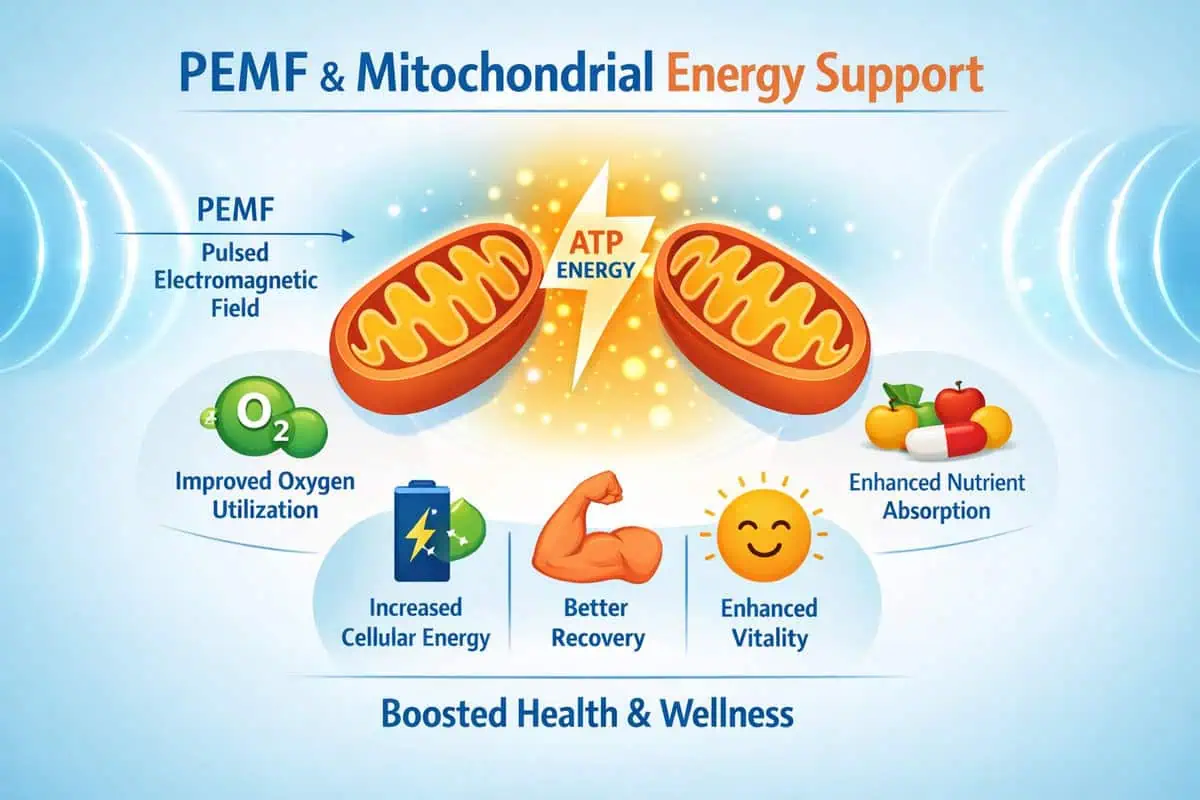
Mitochondria are membrane-bound organelles located inside nearly every human cell. Their primary role is energy production through oxidative phosphorylation — a multi-step process that converts nutrients into ATP.
According to the National Institutes of Health overview of mitochondrial function, mitochondria regulate:
- ATP production
- Reactive oxygen species (ROS) balance
- Calcium homeostasis
- Apoptotic signaling (programmed cell processes)
Because these organelles are involved in both energy generation and cellular communication, subtle changes in mitochondrial efficiency can influence how energized or resilient tissues feel — without implying disease treatment or reversal.
From a physiology standpoint, mitochondria are more than “energy factories.” They act as cellular hubs that integrate fuel availability, oxygen delivery, and signaling inputs into a usable energy output. This is one reason mitochondrial function is often discussed in wellness contexts like recovery capacity, day-to-day stamina, and how the body adapts to routine stressors.
Mitochondria also vary across tissues. High-demand tissues (like muscle and the nervous system) tend to have higher mitochondrial density because their baseline energy needs are higher. This does not imply that a single intervention “targets” mitochondria everywhere equally; rather, it helps explain why people may be curious about supportive tools that align with normal cellular processes.
Another important concept is mitochondrial adaptability. Mitochondria are dynamic — they can change shape, number, and function in response to the cellular environment. Common terms used in the science include “biogenesis” (new mitochondria formation) and “fusion/fission” (structural changes that help maintain mitochondrial quality). In a conservative framing, these processes are influenced most strongly by foundational lifestyle inputs such as activity patterns, sleep, and nutrition, while device-based modalities are typically discussed as adjuncts.
Cellular Signaling and Electromagnetic Fields
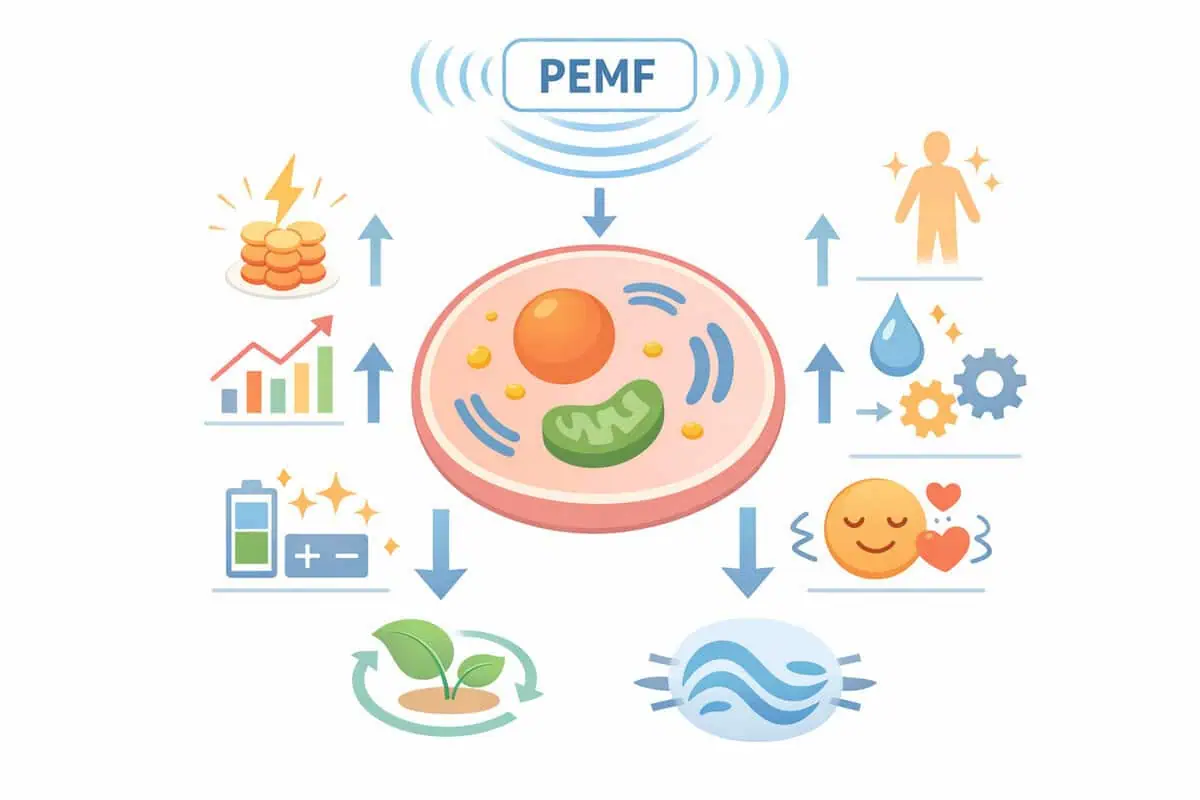
Cells communicate using electrical gradients and ion exchange across membranes. PEMF therapy delivers low-frequency pulsed electromagnetic signals designed to interact with these bioelectrical processes.
Research indexed in PubMed suggests that electromagnetic stimulation may influence membrane potential and ion channel activity under controlled conditions. These mechanisms are thought to affect intracellular signaling pathways associated with mitochondrial efficiency.
Importantly, this does not mean PEMF therapy “boosts” mitochondria in a direct or mechanical way. Instead, it may support the signaling environment that allows normal cellular processes to operate more efficiently.
A practical way to think about this is that cells rely on gradients — differences in electrical charge and ion concentration — to run many routine functions. Ion channels act like regulated gates, helping the cell maintain a stable internal environment while responding to changing demands. When those signaling systems are well-regulated, mitochondria can receive clearer “inputs” about energy demand and cellular conditions.
Mitochondria themselves maintain a membrane potential across the inner mitochondrial membrane. That gradient is central to ATP production. In conservative discussions of PEMF therapy and mitochondrial health, the hypothesis is not that PEMF “creates ATP,” but that it may influence upstream signaling (including ion movement and membrane behavior) that helps support normal mitochondrial work.
PEMF parameters can vary by device, including frequency (Hz), waveform, session timing, and intensity. Because devices differ, it is generally more conservative to focus on documented specifications and manufacturer guidance rather than assuming that “more” exposure produces “better” results. If you want structured context for how devices differ, the Best PEMF Devices & Mats (2026 Buyer’s Guide) is designed to organize those comparisons clearly.
ATP Production and Energy Balance

ATP production occurs along the inner mitochondrial membrane through the electron transport chain. This process depends on:
- Oxygen availability
- Nutrient input
- Intact membrane gradients
- Efficient ion flow
When discussing PEMF therapy and mitochondrial health, researchers often focus on how electromagnetic pulses may influence membrane permeability and ion exchange. Subtle shifts in these processes may support more balanced energy production at the cellular level.
For a broader explanation of systemic effects, see our overview of PEMF therapy benefits.
To add helpful context, the electron transport chain is often described as a sequence of steps that transfers electrons and pumps protons to create an electrochemical gradient. That gradient is then used by ATP synthase to convert ADP into ATP. This is normal physiology, and it is tightly regulated by oxygen availability, substrate availability (nutrients), and cellular demand.
Because this process is gradient-dependent, discussions about electromagnetic stimulation often emphasize membrane behavior and ion handling. The key point is that mitochondria are sensitive to the broader cellular environment. If signaling inputs (including calcium handling and membrane potential) are more stable, mitochondrial energy conversion can be better aligned with demand — without making any claims of treatment or guaranteed outcomes.
Energy balance is also about timing. People often evaluate “energy” by how they feel day to day, but cellular energy production fluctuates with sleep patterns, stress load, and activity. In a conservative, real-world approach, PEMF therapy is typically positioned as a routine-based modality: consistent sessions, stable settings, and patient tracking of subjective tolerance over time rather than immediate performance expectations.
Microcirculation and Oxygen Delivery

Mitochondrial efficiency depends partly on oxygen delivery. Microcirculation — the movement of blood through the smallest vessels — plays a role in ensuring tissues receive adequate oxygen and nutrients.
The Cleveland Clinic overview of microcirculation highlights how capillary function influences cellular health. Some research suggests electromagnetic stimulation may influence local circulation patterns, which could indirectly support mitochondrial processes.
These relationships remain an area of ongoing research and should be viewed as supportive, not curative.
It can be helpful to distinguish between “big” circulation (heart and large vessels) and microcirculation (capillaries and small vessels where exchange happens). Mitochondria rely on oxygen and nutrient delivery at the tissue level, so the microcirculation layer is often discussed when people explore recovery, comfort, and routine wellness inputs.
In conservative device discussions, any circulation-related framing should avoid overpromising. A more appropriate expectation is that some individuals may perceive localized warmth or “loosening” sensations during relaxing sessions, which may reflect shifts in autonomic state and local tissue dynamics rather than a guaranteed physiologic change.
Oxidative Stress and Cellular Balance

Mitochondria generate reactive oxygen species (ROS) as a byproduct of energy production. While ROS play signaling roles, excess accumulation can disrupt cellular balance.
Preliminary studies referenced through PubMed-indexed research explore whether electromagnetic exposure under controlled parameters influences oxidative stress markers. Results vary, and conclusions remain conservative.
PEMF therapy is not a replacement for lifestyle factors such as sleep, nutrition, and movement — all of which significantly affect oxidative balance.
A balanced view of ROS is important. Not all oxidative signaling is “bad.” Many normal adaptation processes (including exercise recovery signaling) involve transient increases in oxidative activity that the body then resolves through regulatory systems. In wellness education, the practical focus is supporting the body’s overall balance rather than eliminating normal signaling.
For most people, the most impactful levers remain foundational: sleep consistency, adequate protein and micronutrients, hydration, and gradually progressive movement. PEMF therapy is typically framed as a supportive routine layered on top of those fundamentals, especially for individuals who value structured recovery time or relaxation-based practices.
Nervous System Regulation and Energy Perception
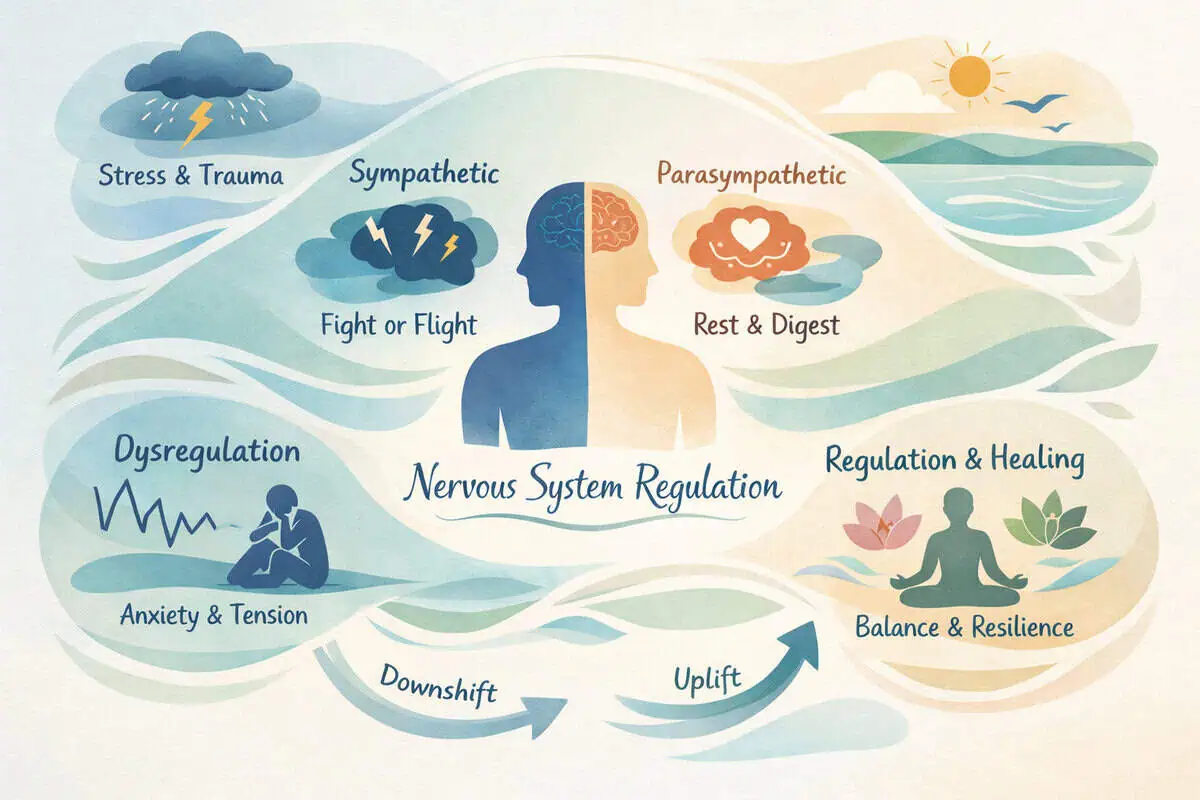
Energy perception is influenced not only by ATP production but also by nervous system signaling. The autonomic nervous system regulates stress responses, circulation, and metabolic balance.
Some individuals describe subtle pulsing sensations or relaxation during sessions. While subjective, these experiences align with the idea that PEMF therapy may interact with neuro-electrical pathways.
You can explore related mechanisms in our article on PEMF therapy and the nervous system.
From a conservative standpoint, one plausible reason people associate PEMF sessions with “better energy” is that relaxation and downshifting the stress response can change how the body experiences fatigue. When the nervous system is in a calmer state, breathing patterns may normalize, muscle tension may decrease, and recovery behaviors (like earlier bedtime or more consistent routines) can become easier to maintain.
This is also why session timing matters. Some people prefer sessions earlier in the day as a structured wellness break, while others prefer evening sessions paired with lower light exposure and reduced stimulation. The best choice is the one that supports consistent adherence and feels tolerable and steady over time.
Aging and Mitochondrial Efficiency

Mitochondrial efficiency tends to shift over time. According to Mayo Clinic discussions on aging, cellular resilience changes gradually with age.
Interest in PEMF therapy and mitochondrial health often centers on maintaining normal cellular communication and supporting physiologic balance over time. These goals align with a wellness-oriented perspective rather than disease intervention.
In practical terms, aging-focused wellness routines often prioritize consistency and tolerance. Devices that fit into a calm, repeatable schedule (rather than demanding complex protocols) are typically easier to maintain long-term, which is often the most realistic path to any supportive benefit a person might experience.
Lifestyle Foundations for Mitochondrial Support

Before considering device-based technologies, foundational habits remain central:
- Consistent sleep patterns
- Balanced nutrient intake
- Regular physical movement
- Stress management
PEMF therapy is best understood as a complementary tool within this broader context.
Ownership reality matters here. A device can be technically impressive, but long-term value depends on whether it becomes a sustainable habit. Many people benefit most from choosing a simple routine they can repeat: a set time of day, a comfortable setup, and a session length they can consistently tolerate.
A conservative approach is to track a few neutral indicators over several weeks, such as session consistency, perceived relaxation, and whether the routine supports better sleep hygiene or recovery behaviors. Avoid assuming that a single session should produce a dramatic change. In wellness technology, consistency is often the more realistic variable than intensity.
Maintenance and long-term considerations are also practical: device storage space, durability, cleaning instructions, and whether the device is easy to use without friction. For many households, “easy to set up and easy to repeat” is a bigger driver of outcomes than a complex feature set.
Typical Usage Patterns

Users commonly report sessions lasting 15–30 minutes, often integrated into morning or evening routines. Full-body mats allow broad exposure, while localized systems may target specific areas.
For practical guidance, visit our overview of all PEMF Sage educational articles.
When building a routine, it can help to keep variables stable at first (same time of day, same settings) and make adjustments gradually. This reduces confusion about what is helping and supports safer, more measured experimentation within a non-medical wellness framework.
Safety and Contraindications

PEMF therapy should not be used by individuals with implanted electronic medical devices unless cleared by a qualified healthcare professional. Pregnant individuals and those with complex medical conditions should consult a provider before beginning any electromagnetic exposure.
For a full review of considerations, see PEMF therapy safety, risks, and contraindications.
If you have questions about whether PEMF is appropriate for your situation, a conservative step is to review your device’s documentation and discuss electromagnetic exposure with a qualified clinician who understands your personal history and any implanted devices or special considerations.
Choosing a Device Thoughtfully

If you are exploring devices for home use, focus on:
- Clear frequency specifications
- Transparent intensity ranges
- Manufacturer documentation
- Realistic marketing language
Our structured comparison in the Buyer’s Guide provides an organized starting point.
It can also be useful to match device category to your intended routine. Full-body mats are typically chosen for broad, passive sessions, while smaller localized applicators are often used for shorter, targeted sessions. In either case, conservative evaluation emphasizes specs, safety guidance, return policies, and the practicality of using the device consistently.
If you’d like to reach our team with a question about site methodology, corrections, or editorial standards, you can contact us at Contact PEMF Sage.
Conclusion: A Balanced View of PEMF Therapy and Mitochondrial Health
PEMF therapy and mitochondrial health intersect at the level of cellular signaling, membrane potential, and energy regulation. While research continues to evolve, current understanding suggests electromagnetic stimulation may interact with biologic communication pathways that influence ATP production and physiologic balance.
PEMF therapy is best approached as a supportive wellness tool — not a cure, treatment, or replacement for medical care. If you are evaluating options, begin with foundational education and structured comparisons in our Best PEMF Devices & Mats (2026 Buyer’s Guide).