What Is PEMF Therapy?

What is PEMF therapy? Pulsed Electromagnetic Field (PEMF) therapy is a non-invasive wellness technology that uses low-frequency electromagnetic pulses to interact with the body’s natural electrical and cellular processes. It has been studied for decades in both clinical and consumer contexts and is commonly discussed in relation to circulation, cellular signaling, and nervous system regulation.
In this guide, we’ll explain PEMF therapy in clear, conservative terms—what it is, how it works at a physiological level, how it’s typically used, and what current research does (and does not) support.
If you want a science-first overview of how PEMF may be discussed in relation to circulation, recovery routines, and relaxation habits, you can also read our PEMF therapy benefits overview for a conservative, evidence-aligned framing.
What PEMF Therapy Actually Is
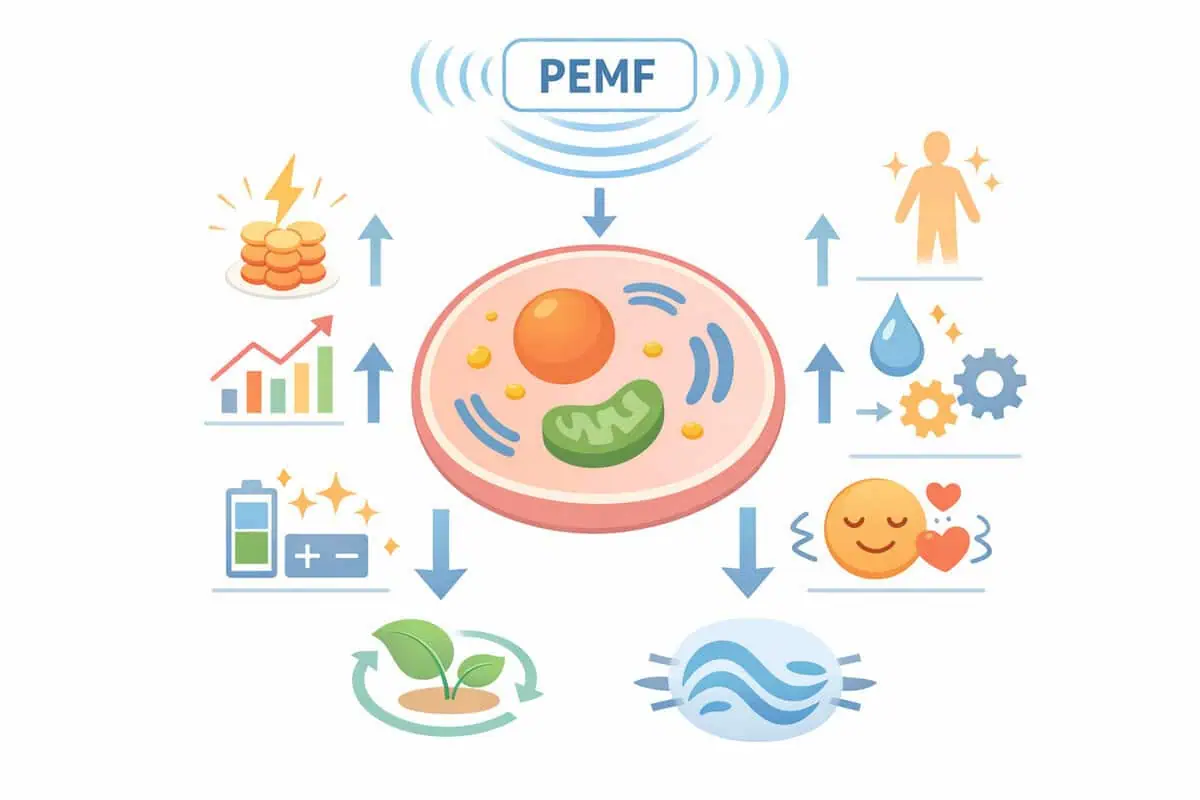
PEMF therapy involves exposing the body to pulsed electromagnetic fields generated by a device. These fields are not constant; they turn on and off in controlled pulses, which differentiates PEMF from static magnets or everyday electromagnetic exposure.
- Uses low-frequency electromagnetic pulses
- Non-thermal and non-invasive
- Designed to interact with biological electrical activity
Unlike pharmaceutical or mechanical interventions, PEMF does not introduce chemicals or force movement—it provides an external signal that the body may respond to.
Practically, a PEMF system is a signal generator (the “controller”) paired with an applicator (often a mat, pad, or coil). The controller determines the pulse characteristics, while the applicator determines how the field is delivered to the body (full-body exposure on a mat versus localized exposure with a smaller pad).
Most consumer PEMF devices operate in low-frequency ranges and are described using a few key parameters:
- Frequency (Hz): how often pulses repeat per second
- Waveform: the shape of the signal pulse (how it turns on/off)
- Intensity: the strength of the field at a given distance from the applicator
- Duty cycle: how long the pulse is “on” versus “off” within a cycle
These settings matter because “PEMF” is a category label, not a single standardized protocol. Two devices can both be called PEMF while delivering meaningfully different signals and experiences.
For readers who want a purely educational reference point on how low-frequency electromagnetic fields are studied in biological systems, the National Institutes of Health (NIH) provides research access and background material across many related domains.
If you want to browse our PEMF education library by topic before choosing what to read next, start at the PEMF Sage blog index.
A Brief History of PEMF Research

PEMF research dates back to the mid-20th century. Early investigations focused on bone healing and post-surgical recovery, particularly in orthopedic settings. Over time, research expanded into cellular communication, circulation, and neuromuscular signaling.
Institutions such as the National Institutes of Health have published research exploring how electromagnetic fields interact with biological systems, particularly at low intensities.
PubMed research on electromagnetic field biology
It’s also important to recognize that “PEMF research” spans multiple device categories and research designs. Some studies use clinical-grade equipment under supervision; others explore consumer devices used in home settings. The strength of evidence depends on how closely a study’s device settings and population match real-world use.
When reviewing PEMF literature, you’ll often see terms like “low frequency,” “pulsed electromagnetic fields,” or “electromagnetic stimulation.” These aren’t always interchangeable, and they can reflect different technologies or regulatory contexts. A conservative approach is to treat each study as device- and protocol-specific rather than assuming results generalize across all PEMF products.
For practical reading, PubMed is useful because it lets you verify the original abstract and methods. Look for details like the pulse frequency, session length, study duration, and whether the outcome was a subjective report (like comfort) or an objective measure (like functional testing).
How PEMF Therapy Works at the Cellular Level

At a basic level, cells rely on electrical gradients to function. PEMF signals are thought to interact with these gradients by influencing ion exchange across cell membranes.
Researchers have explored how pulsed fields may affect:
- Ion channel activity
- Cell membrane potential
- Microcirculation signaling
This does not mean PEMF “forces” a change—responses vary depending on frequency, intensity, and biological context.
One helpful way to think about the cellular framing is “signal input” versus “cell response.” The PEMF device provides an external electromagnetic input. A cell’s response—if any—depends on factors like tissue type, baseline physiology, and whether the signal parameters fall within a biologically relevant range for that context.
Ion channels are frequently discussed because they regulate the movement of charged particles (like sodium, potassium, calcium) across cell membranes. These ion movements help maintain membrane potential and enable signaling in nerves and muscle tissue. Research explores whether pulsed electromagnetic signals can influence ion channel behavior indirectly by affecting membrane polarization patterns.
Microcirculation is also discussed because blood flow at the capillary level is tied to nutrient delivery and metabolic byproduct clearance. In conservative terms, PEMF is studied for its potential relationship to signaling pathways that can influence vascular tone and microcirculatory dynamics—not as a guaranteed driver of circulation changes.
If you want a deeper, mechanism-first walkthrough, you can continue with our benefits overview, which frames these topics with PEMF-only, non-medical language and careful limits.
PEMF and Mitochondrial Signaling
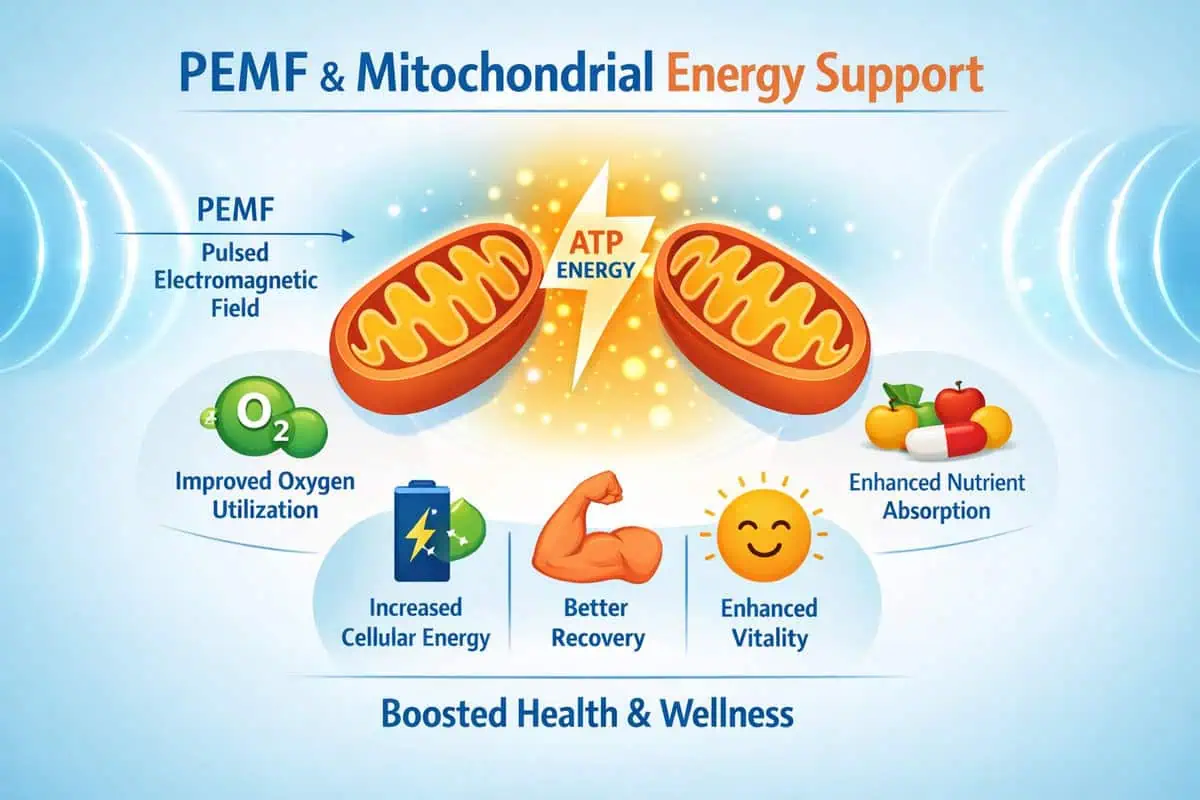
Mitochondria are responsible for cellular energy production. Some studies have examined whether electromagnetic signaling may influence mitochondrial efficiency by supporting electron transport and cellular respiration processes.
The Mayo Clinic and Cleveland Clinic emphasize that while cellular signaling research is ongoing, PEMF should be viewed as a supportive wellness modality—not a treatment.
Mayo Clinic overview of complementary therapies
In practical wellness conversations, “mitochondrial support” is often used as shorthand for normal cellular energy processes. From a conservative standpoint, the key point is that mitochondria are electrically active and sensitive to the cell’s environment, which is one reason researchers explore biophysical inputs like pulsed fields.
However, it’s easy to overstate this topic. Mitochondrial biology is complex, and findings in one experimental context may not translate directly to consumer routines. That’s why it’s best to treat mitochondrial discussions as mechanistic hypotheses rather than promised outcomes.
PEMF Therapy and the Nervous System
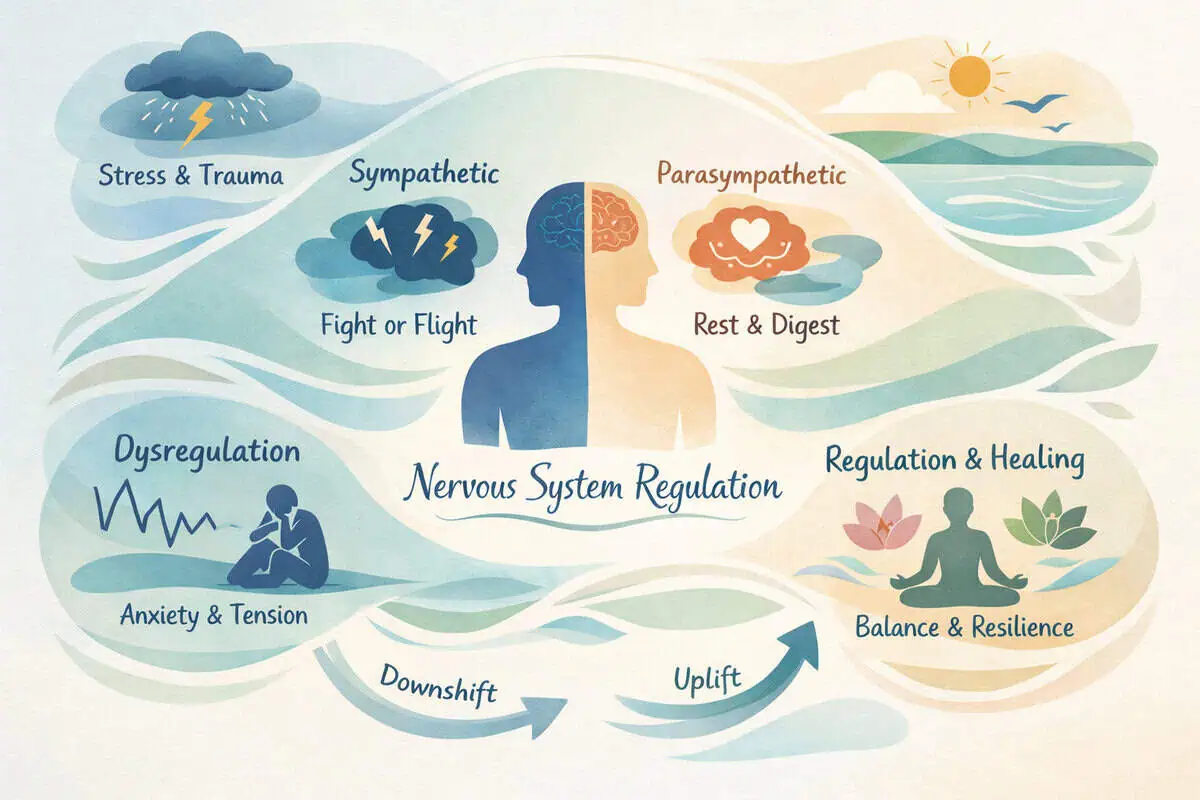
The nervous system relies on electrical signaling to regulate balance, stress responses, and muscle coordination. PEMF devices are sometimes discussed in relation to parasympathetic activation and relaxation-oriented routines.
Typical user-reported sensations include subtle pulsing, warmth-free stimulation, or a sense of calm during sessions.
From a physiology perspective, nervous system discussion usually centers on how external inputs (light, sound, breathwork, temperature, and potentially electromagnetic pulses) can influence perceived relaxation and body awareness. In this context, PEMF is often used alongside calm routines rather than as a standalone “fix.”
Some people notice no sensation at all, while others notice gentle rhythmic pulsing depending on the device and program. Sensation alone is not a reliable indicator of “effect,” because perception varies by individual and by applicator design.
A conservative best practice is to treat the nervous system angle as a routine and environment issue: quiet setting, consistent timing, comfortable posture, and gradual introduction of session length.
Common PEMF Therapy Use Contexts

PEMF therapy is used in a variety of non-clinical wellness contexts:
- At-home relaxation routines
- Post-activity recovery habits
- General wellness environments
Usage patterns typically involve lying or sitting on a mat for set time intervals.
In real-world home use, device selection often follows the “use context” rather than technical specifications alone. For example, someone who wants a simple, repeatable routine may prefer a full-body mat setup, while someone focused on targeted areas may prefer a smaller pad or coil configuration.
Common at-home contexts tend to cluster into a few patterns:
- Wind-down routines: used in quiet spaces as part of a relaxation habit
- Desk-adjacent routines: used during low-intensity tasks where stillness is realistic
- Recovery-style routines: used after training sessions as part of a broader recovery plan
If you’re building a PEMF learning path, a practical next step is to browse the blog index and choose a topic that matches your primary reason for interest (mechanisms, safety, session guidelines, or device selection).
Typical Session Length and Frequency

Session duration varies by device and program. Many consumer systems suggest sessions ranging from 20 to 60 minutes.
Frequency is often described as daily or several times per week, depending on individual comfort and routine consistency.
In practical terms, consistency usually matters more than intensity. A sustainable schedule—short sessions that can be repeated—tends to fit real life better than long, irregular sessions that are difficult to maintain.
People also vary in how they structure sessions:
- Single daily session: a straightforward routine that’s easy to track
- Shorter, more frequent sessions: used when time is limited
- Program-based rotation: alternating settings depending on the day
If you’re unsure where to start, a conservative approach is to begin with shorter sessions, assess comfort, and follow the device’s safety guidance without escalating rapidly.
Safety Considerations and Contraindications

PEMF therapy is generally considered low-risk, but it is not appropriate for everyone.
- Not recommended with certain implanted electronic devices
- Consult a qualified professional during pregnancy
- Avoid use around active medical implants unless cleared
See our PEMF therapy safety overview for more detail.
Safety is also about “ownership reality,” not just contraindications. Home-use devices require consistent setup, careful reading of manufacturer guidance, and a willingness to follow conservative defaults rather than constantly changing settings.
Long-term considerations that commonly matter for home users include:
- Device placement: ensuring the mat/pad lies flat and cables are not strained
- Power and electronics: keeping controllers away from moisture and avoiding use with damaged cords
- Cleaning and maintenance: gentle cleaning consistent with the manufacturer’s materials
- Environment: using the device in a stable, uncluttered space to reduce trip hazards
Another practical factor is sensitivity and tolerance. Some users prefer to start with lower-intensity programs or shorter sessions simply to evaluate comfort. If a session feels uncomfortable, the conservative step is to pause, reassess settings and posture, and consult the device guidance rather than “pushing through.”
For readers who want conservative, clinic-style language around safety boundaries, Cleveland Clinic’s general health resources can be useful. Start with Cleveland Clinic’s health library and compare their tone to the more promotional language often found in consumer marketing.
What PEMF Therapy Is Not

PEMF therapy is not a cure, treatment, or diagnostic tool. It does not replace medical care or clinical interventions.
Claims suggesting guaranteed outcomes or disease-specific effects are not supported by responsible evidence standards.
It’s also not accurate to treat PEMF as a single “dose” that works the same way for everyone. Different devices, different programs, and different bodies can lead to different experiences, and some people may decide PEMF does not meaningfully fit their routine.
A helpful lens is to evaluate PEMF the way you would evaluate any wellness tool: consider safety, plausibility of mechanism, quality of the device, and whether you can use it consistently without adding stress or complexity.
PEMF Therapy Compared to Other Modalities

PEMF is often compared with modalities like massage, heat therapy, or red light exposure. Each operates through different mechanisms.
PEMF’s defining feature is electromagnetic signaling rather than thermal, mechanical, or photonic input.
When comparing modalities, it can help to focus on what each one “inputs” into the body:
- Massage: mechanical pressure and movement
- Heat: thermal input that can influence comfort and circulation
- Light-based tools: photonic input used in various wellness contexts
- PEMF: pulsed electromagnetic signaling
Because the inputs differ, a meaningful comparison is less about declaring a “winner” and more about identifying what fits your goals, schedule, and comfort level. Some users combine modalities, but it’s still best to introduce one new variable at a time so you can evaluate routine fit.
Learning More About PEMF Devices

If you’re exploring PEMF further, device design, signal parameters, and safety standards matter.
Our Best PEMF Devices & Mats (2026 Buyer’s Guide) provides a structured overview of current consumer options.
When you start evaluating devices, it helps to separate “form factor” from “signal settings.” Form factor determines how the device fits into your routine (full-body mat vs localized pad), while settings determine the pulse pattern you’ll actually use.
Practical selection factors that are often overlooked include:
- Ease of setup: how quickly you can start a session without friction
- Program clarity: whether the controller explains programs in plain language
- Build quality: durability of the mat surface, cable connections, and controller housing
- Support and documentation: availability of clear safety guidance and customer support
If you want to keep exploring PEMF topics in a structured way, the blog index is the best next stop for mechanisms, safety, session guidelines, and common questions.
If you have a question that isn’t covered or you want to suggest an editorial improvement, you can reach us via the Contact PEMF Sage page.
For ongoing research reading, PubMed is the most direct way to review abstracts and methods without relying on marketing summaries: PubMed. For high-level public-health context and broader biomedical research access, see NIH.
Conclusion: Understanding PEMF Therapy Clearly
PEMF therapy is best understood as a supportive wellness technology grounded in biophysical research, not a medical intervention.
When evaluated conservatively—without exaggerated claims—it can be explored as part of a broader, informed wellness routine.
For deeper device comparisons and educational context, continue to the PEMF Buyer’s Guide.
If you have safety questions specific to your situation, it’s reasonable to review contraindications carefully and consult a qualified professional before use.