PEMF Therapy for Muscle Recovery & Performance

PEMF therapy for muscle recovery is increasingly discussed in athletic and wellness circles as a tool for supporting post-exercise recovery. Rather than positioning pulsed electromagnetic field (PEMF) therapy as a performance shortcut, this guide takes a conservative, physiology-aligned look at how it may support normal recovery processes at the cellular level.
If you are new to this technology, start with our overview of PEMF therapy benefits to understand the broader context before focusing specifically on recovery and performance.
In practical terms, “recovery” means the body is attempting to restore homeostasis after training stress: fluid balance normalizes, muscle and connective tissue adapt, and the nervous system shifts from high activation toward a steadier baseline. PEMF is often evaluated as a tool that may support these background processes, not as a replacement for training programming, mobility work, or basic sleep and nutrition habits.
What Happens to Muscle Tissue After Intense Exercise

After resistance training, sprint work, or endurance sessions, muscle tissue experiences microscopic stress. This includes:
- Mechanical strain on muscle fibers
- Temporary inflammation
- Changes in local circulation
- Altered cellular signaling
This process is not inherently negative. In fact, adaptation depends on it. Recovery is the period where the body restores balance, supports tissue repair, and recalibrates nervous system tone.
Research indexed in PubMed frequently describes recovery in terms of inflammation resolution, microcirculatory changes, and mitochondrial activity — all of which relate to the cellular mechanisms discussed in PEMF research.
A helpful way to frame muscle recovery is to separate it into several overlapping phases. Immediately after training, there is an acute stress response (mechanical strain and metabolic demand). Over the next 24–72 hours, the body coordinates repair signaling, immune cell activity, and tissue remodeling. During this window, soreness and stiffness can be influenced by training load, movement patterns, hydration status, and sleep quality.
Not all “post-workout discomfort” is the same. Normal delayed-onset muscle soreness (DOMS) tends to peak after a day or two and gradually improves, while sharp pain, swelling, or loss of function can signal a separate issue that requires professional evaluation. A conservative approach treats PEMF as a general recovery support tool rather than a solution for acute injury.
Because recovery involves multiple systems, tools that may influence circulation, nervous system tone, or cellular signaling are sometimes explored alongside common recovery strategies like gentle movement, adequate protein intake, and structured rest days.
How PEMF Therapy Interacts With Cellular Signaling
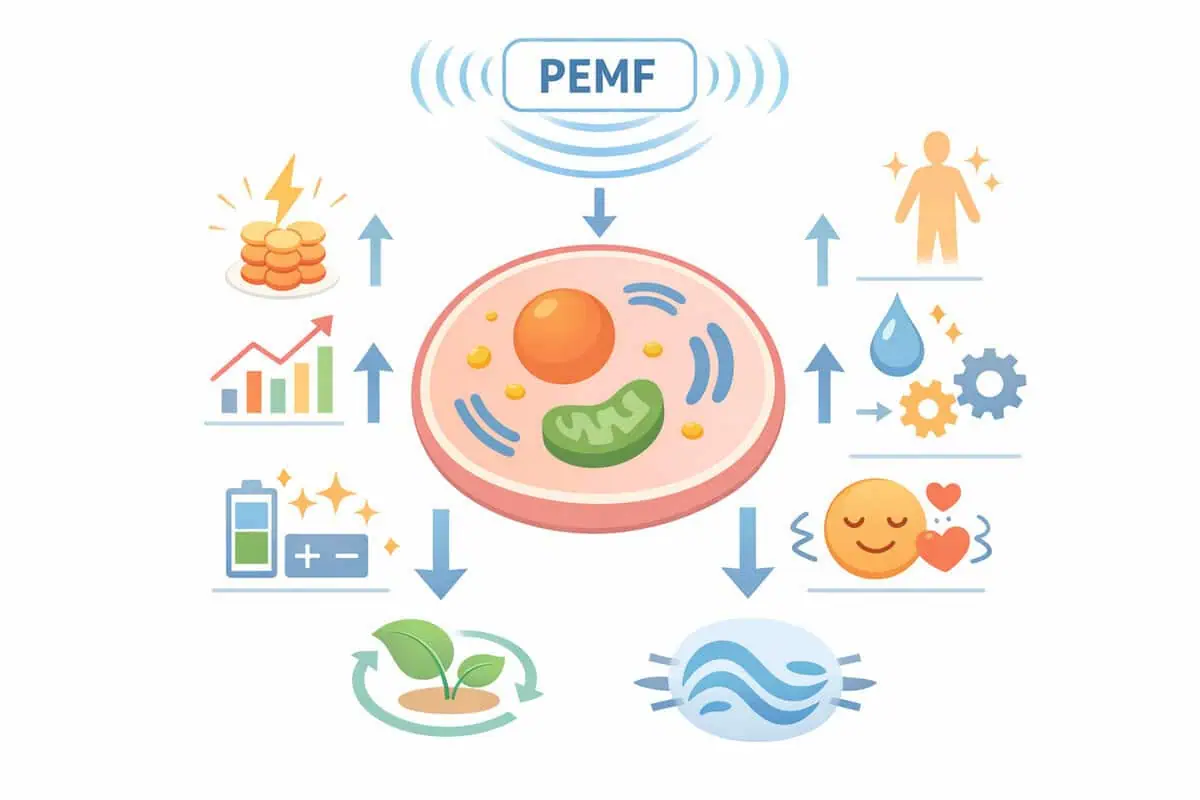
PEMF therapy delivers low-frequency electromagnetic pulses designed to interact with cellular membranes and ion channels. At a mechanistic level, research suggests PEMF may influence:
- Ion exchange across cell membranes
- Electrochemical gradients
- Cell-to-cell communication pathways
These effects are often discussed in the context of microcirculation and mitochondrial support. The National Institutes of Health (NIH) archives contain studies examining electromagnetic field exposure and biological signaling pathways, though outcomes vary by intensity, waveform, and duration.
It is important to emphasize that PEMF is not a muscle-building device. Instead, it is positioned as a supportive modality that may complement the body’s natural recovery processes.
In simple terms, PEMF devices generate a time-varying electromagnetic field. In biological tissues, many processes depend on electrically charged particles (ions) moving across membranes. Ion channels help regulate that movement, and membrane “potential” (the electrical gradient across the cell membrane) is part of normal cell communication and function.
When researchers discuss PEMF and cellular signaling, they are often describing potential downstream effects of changing electromagnetic conditions around tissues. These hypotheses can include alterations in ion channel behavior, shifts in local cellular communication, or changes in how cells respond to mechanical and metabolic stress. Importantly, the direction and magnitude of these effects can depend heavily on device settings and the biological context.
This is one reason PEMF research can look inconsistent: a low-intensity, low-frequency setting used for general wellness is not equivalent to a protocol used in a specialized clinical context. For athletic recovery, a conservative approach focuses on consistent, tolerable exposures rather than chasing aggressive settings.
If you want broader context on what PEMF is (and is not), you can also navigate from the Blog hub to foundational explainers, including intensity and frequency framing, before comparing device categories.
Microcirculation and Post-Exercise Recovery

Microcirculation refers to blood flow within the smallest vessels — capillaries and arterioles — that directly supply muscle tissue. Efficient microcirculation supports:
- Nutrient delivery
- Oxygen transport
- Removal of metabolic byproducts
Some PEMF research explores how electromagnetic stimulation may influence local circulation. The Cleveland Clinic explains that healthy circulation is central to tissue recovery and repair, reinforcing why modalities targeting circulation are often discussed in recovery contexts.
From a physiology standpoint, microcirculation matters because it is where exchange happens: oxygen and nutrients move into tissues and carbon dioxide and metabolic byproducts move out. After hard training, muscles can feel “tight” partly due to fluid shifts, inflammatory signaling, and local tissue sensitivity. Tools that may support comfortable movement and circulation are sometimes used to help athletes return to baseline more smoothly.
A conservative interpretation of the PEMF literature is that any potential circulation-related benefit is likely to be modest and dependent on consistent use. This also means PEMF should be evaluated alongside simple interventions that directly support circulation, such as low-intensity walking, mobility drills, hydration, and adequate sleep.
If you are comparing PEMF systems for home use, device design can influence exposure pattern (full-body coverage vs. localized delivery). For a structured comparison framework, see Best PEMF Devices & Mats (2026 Buyer’s Guide).
Mitochondrial Support and Energy Availability
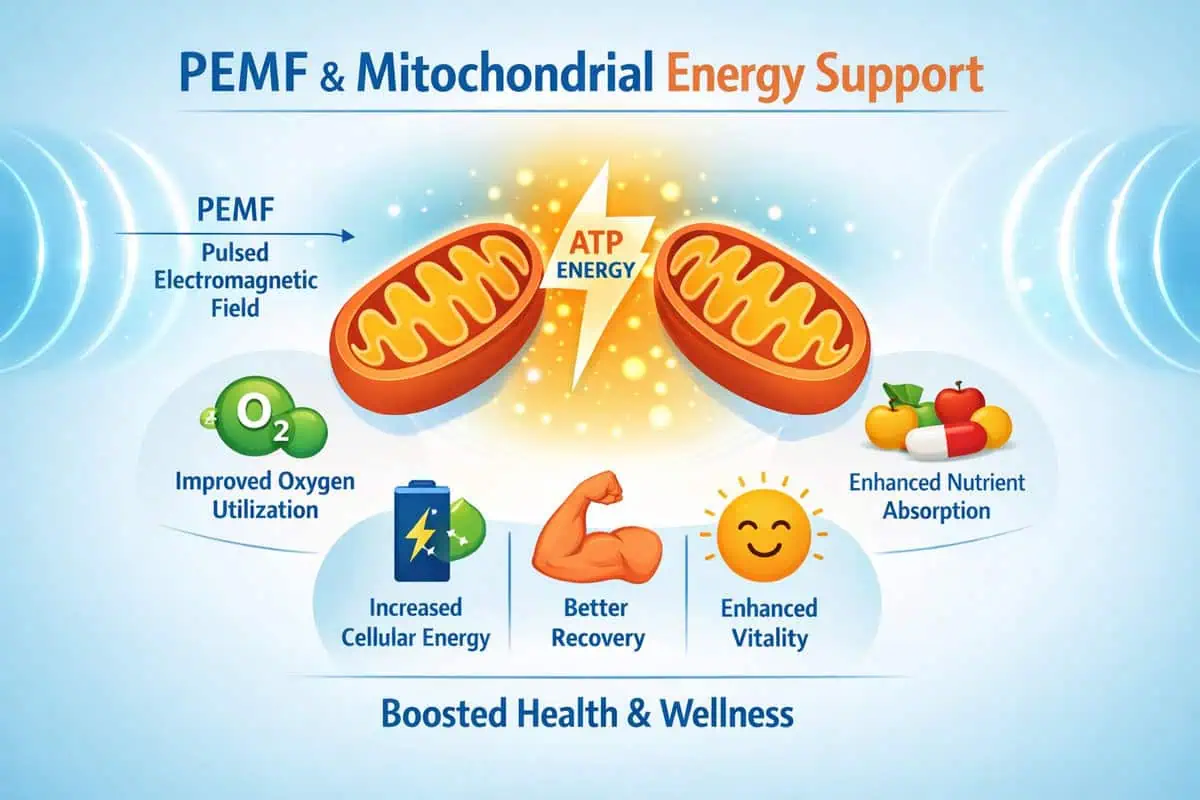
Mitochondria are responsible for cellular energy production (ATP). Post-exercise fatigue is partly related to energy depletion and metabolic stress.
Some laboratory research suggests electromagnetic stimulation may influence mitochondrial activity under certain conditions. While translating laboratory findings to real-world athletic outcomes requires caution, mitochondrial efficiency remains a key variable in recovery science.
If you want a broader breakdown of PEMF’s biological mechanisms, see our 2026 Buyer’s Guide to PEMF devices for a technical overview of waveform types and system designs.
For athletes, “energy availability” is not only about calories. It includes how effectively muscle cells can convert available substrates into usable energy and how quickly the body can restore normal function between sessions. Even when training is well-managed, high workloads can temporarily increase perceived fatigue.
When PEMF is discussed in relation to mitochondria, it is typically framed as a potential support to cellular energy processes rather than a direct performance enhancer. A practical way to evaluate this claim is to track common recovery markers over time (sleep quality, perceived soreness, readiness to train) while keeping training volume and other variables relatively stable.
Nervous System Regulation and Performance Readiness
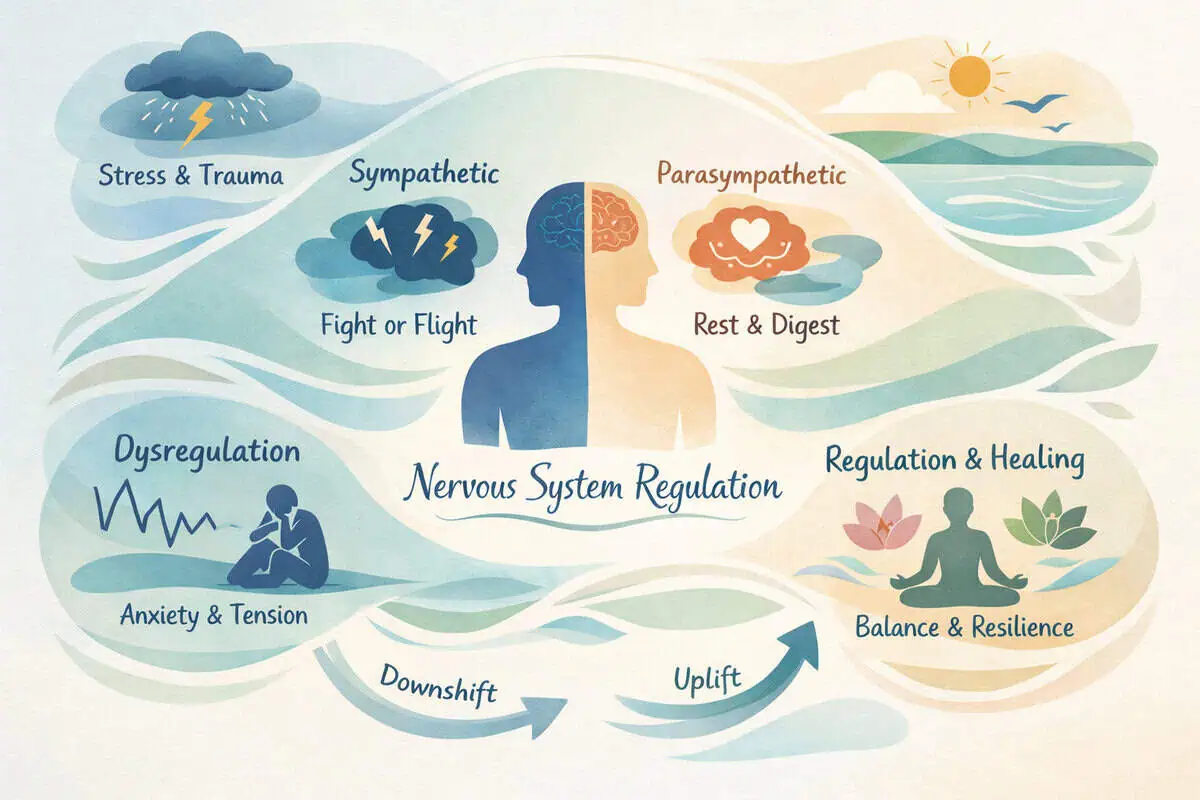
Performance is not purely muscular. The autonomic nervous system influences muscle tone, coordination, and recovery.
PEMF therapy is sometimes discussed in relation to nervous system balance, particularly parasympathetic activation. Supporting recovery may include:
- Encouraging relaxation after high-intensity sessions
- Reducing perceived muscle tightness
- Promoting consistent recovery routines
The Mayo Clinic emphasizes the importance of nervous system regulation in stress recovery, reinforcing why systemic balance matters for athletes.
In real-world training, a common challenge is “staying upregulated” after a late workout — elevated alertness, difficulty winding down, or restless sleep. Some users place PEMF sessions in the evening as part of a calming routine (dim lighting, hydration, breathing). While this is not a medical claim, it is a practical pattern that aligns with the goal of supporting recovery behaviors.
Performance readiness can be viewed as the combination of tissue recovery and nervous system steadiness. If PEMF supports a consistent cooldown habit, that behavioral consistency alone can matter. The best evaluation approach is conservative: observe whether PEMF use is associated with better routine adherence and steadier recovery week over week.
What the Research Actually Says

PEMF research related to muscle recovery spans multiple decades. Studies vary in:
- Frequency and waveform
- Intensity levels
- Session duration
- Population studied (clinical vs. athletic)
Some trials explore delayed-onset muscle soreness (DOMS), circulation markers, or subjective recovery ratings. However, outcomes are mixed and often context-specific.
For a deeper look at evidence limitations, visit our analysis of recent PEMF research articles to understand how to interpret study design and bias.
When reviewing research, it helps to distinguish between endpoints that are objective (circulation measures, biomarkers, range-of-motion testing) and endpoints that are subjective (self-reported soreness, perceived recovery). Both can be useful, but subjective outcomes can be influenced by expectations, routine changes, and concurrent recovery behaviors.
A conservative, consumer-friendly lens asks:
- Was the population similar to healthy, training adults?
- Were settings and exposure time clearly described?
- Was there a comparison group?
- Were outcomes measured over enough time to reflect adaptation?
This framing can prevent over-interpreting early findings and keeps PEMF positioned as a supportive tool rather than a stand-alone solution.
Realistic Expectations for Athletes

PEMF therapy should not replace foundational recovery pillars:
- Sleep
- Nutrition
- Hydration
- Periodized training
Instead, it may serve as a structured adjunct. Users often report subtle sensations — mild pulsing or warmth depending on the device — rather than dramatic or immediate effects.
Consistency, rather than intensity, tends to define typical usage patterns.
A practical expectation is that PEMF (if it helps) may show up as small improvements in day-to-day readiness: feeling slightly less stiff, returning to normal movement sooner, or maintaining a steadier routine across weeks of training. If you find yourself increasing training load at the same time you start PEMF, it becomes hard to attribute outcomes to any single variable.
Typical Session Structure for Recovery

While device specifications vary, a common structure includes:
- 20–40 minute sessions
- Post-training use or evening wind-down
- Full-body mat placement or targeted application
Session timing depends on training load and overall recovery goals. For detailed safety considerations, see our PEMF therapy safety guidelines.
Ownership reality matters here: the most sustainable routine is the one you will actually repeat. Many people do better with a consistent “default session” (for example, a 20–30 minute setting on non-training days) plus optional sessions after harder workouts.
If you are using a full-body mat, placement is typically straightforward (lying supine or prone depending on comfort). For localized devices, placement is more variable and can require experimentation to find a comfortable position that does not create pressure points. In all cases, avoid stacking multiple new recovery interventions at once if you want to evaluate what is actually helping.
Long-term considerations can include device storage, cleaning the surface according to manufacturer guidance, and ensuring you have a consistent time slot that does not compete with sleep. A practical approach is to treat PEMF like other recovery tools: it should reduce friction, not add it.
Who May Consider PEMF for Muscle Recovery
PEMF therapy for muscle recovery is often explored by:
- Strength athletes managing heavy training cycles
- Endurance athletes seeking structured recovery
- Active adults aiming to support normal mobility
It is not appropriate for everyone. Individuals with implanted electronic devices or specific medical conditions should review contraindications before use.
It can also appeal to people who want a low-impact recovery option on days when adding more physical work (extra cardio, extended stretching) feels counterproductive. The goal is not to “do more,” but to support recovery without creating additional training stress.
Limitations and Contraindications

PEMF therapy does not:
- Replace rehabilitation protocols
- Diagnose muscle injuries
- Treat acute trauma
Contraindications may include implanted electronic devices, pregnancy, or certain medical conditions. Always review safety information and consult a qualified healthcare professional when uncertain.
If pain is worsening, function is declining, or symptoms are unusual for normal training soreness, stop and seek professional evaluation. Conservative wellness tools should never delay appropriate care.
Integrating PEMF Into a Broader Recovery Plan

For those considering PEMF therapy for muscle recovery, integration should remain conservative:
- Start with lower intensity programs
- Track subjective recovery markers
- Maintain foundational recovery habits
If you are comparing systems, our Best PEMF Devices & Mats Buyer’s Guide outlines differences in full-body vs. targeted systems.
A simple integration plan is to define your baseline first (how you currently recover), then add PEMF consistently for a few weeks while keeping other variables steady. This approach is more aligned with evidence-based evaluation than changing multiple parts of your recovery stack at once.
If you want help choosing a device category for home recovery, the Buyer’s Guide is the best next step because it compares form factors, practical use cases, and the kind of routine each device supports.
Conclusion: A Supportive, Not Substitute, Modality
PEMF therapy for muscle recovery is best understood as a supportive modality grounded in cellular signaling and circulation research — not a shortcut to performance gains.
Athletic recovery remains multifactorial. When used conservatively and consistently, PEMF may complement structured training, sleep, and nutrition strategies. To explore device types and specifications, review our comprehensive 2026 Buyer’s Guide before making decisions.
If you decide to experiment with PEMF, prioritize safety, consistency, and realistic expectations. Track how you feel across several training cycles rather than judging results from a single session.