How to Use PEMF Therapy at Home

Understanding how to use PEMF therapy at home begins with realistic expectations, proper setup, and consistent routines. Pulsed electromagnetic field (PEMF) devices are designed to deliver low-frequency electromagnetic pulses that interact with the body’s natural electrical activity. At-home use focuses on general wellness support—not medical treatment, diagnosis, or cure.
This guide explains practical setup steps, session timing, positioning, safety considerations, and how to build a sustainable home routine aligned with conservative, evidence-informed principles.
What “Home Use” Really Means
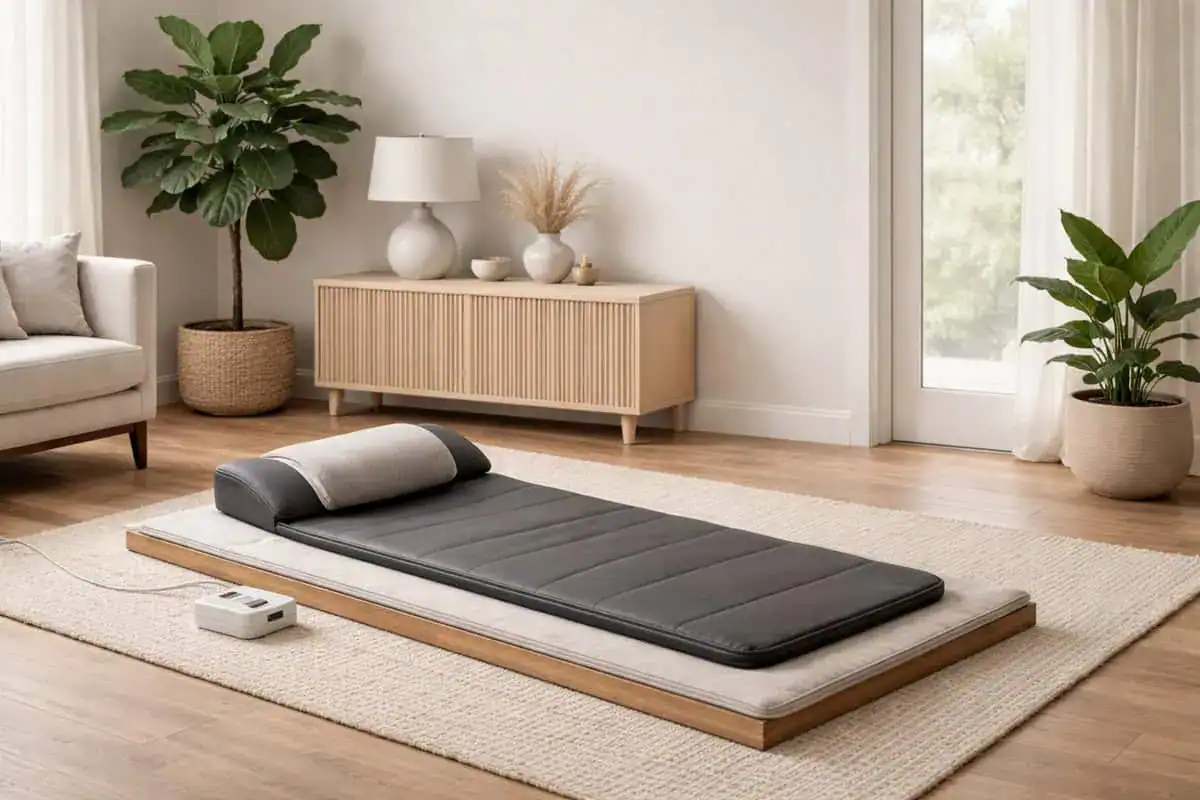
Home use refers to non-clinical wellness sessions performed with consumer-grade PEMF mats or systems. These devices are typically designed for:
- Full-body relaxation sessions
- Targeted placement over specific areas
- Daily or near-daily consistency
Unlike clinic-based platforms, home devices prioritize accessibility and routine integration. If you’re new to PEMF, reviewing our foundational overview of PEMF therapy benefits can provide helpful context.
In practical terms, “home use” usually means a simplified workflow: you select a program (or a general setting), choose a comfortable position, and run sessions that fit into daily life. Most people treat PEMF as a routine-based tool—similar to a stretching session or a relaxation practice—rather than something used sporadically.
It also helps to understand what home use is not. Home PEMF sessions are not intended to replace clinical care, and they should not be framed as a solution for any specific condition. A conservative approach focuses on comfort, tolerability, and structured habits.
Home devices vs clinic-based platforms
Clinic-based PEMF platforms may involve different designs, supervised protocols, and specialized settings. At home, the priorities typically shift to:
- Consistency: doing manageable sessions repeatedly over time
- Simplicity: minimizing program switching and “dial chasing”
- Safety: staying within manufacturer instructions and common-sense precautions
Basic Equipment Setup
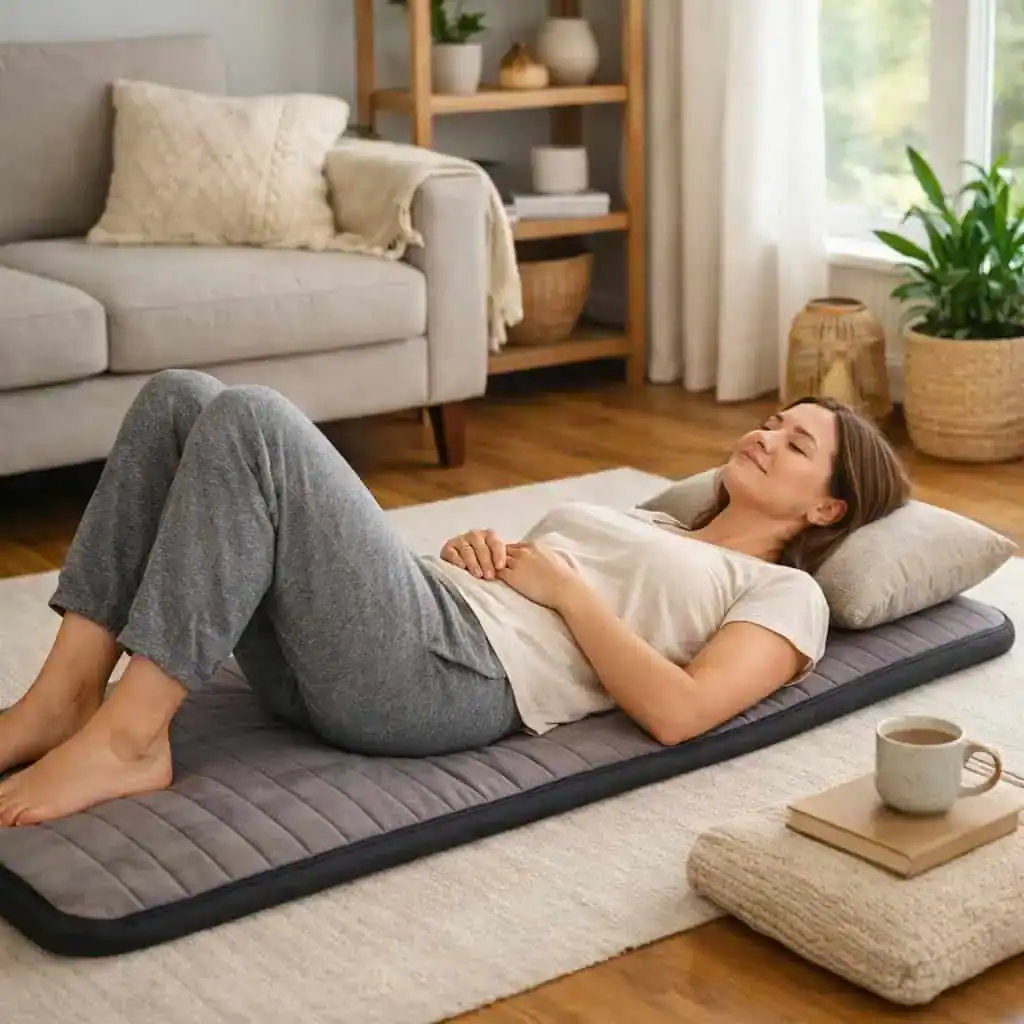
Most home PEMF systems include:
- A full-body mat or pad
- A control unit
- A power supply
Place the mat on a firm, flat surface such as a yoga mat, carpet, or bed. Avoid folding the mat during operation unless the manufacturer explicitly allows it. Keep the control unit on a stable surface with adequate ventilation.
Ensure cables are securely connected before turning the device on. Start with the lowest available intensity setting if adjustable.
A simple pre-session checklist
A predictable setup reduces friction and helps you stay consistent. Before each session, consider a quick checklist:
- Environment: quiet space, comfortable temperature, minimal distractions
- Power and cables: no tension on cords, connectors fully seated
- Surface: flat and stable so the mat doesn’t bunch or shift
- Timing: choose a time you can repeat (morning routine or evening wind-down)
If your device has multiple programs, a conservative approach is to pick one general program and keep it steady for a couple of weeks. This makes it easier to assess tolerability without constantly changing variables.
Positioning and Body Placement
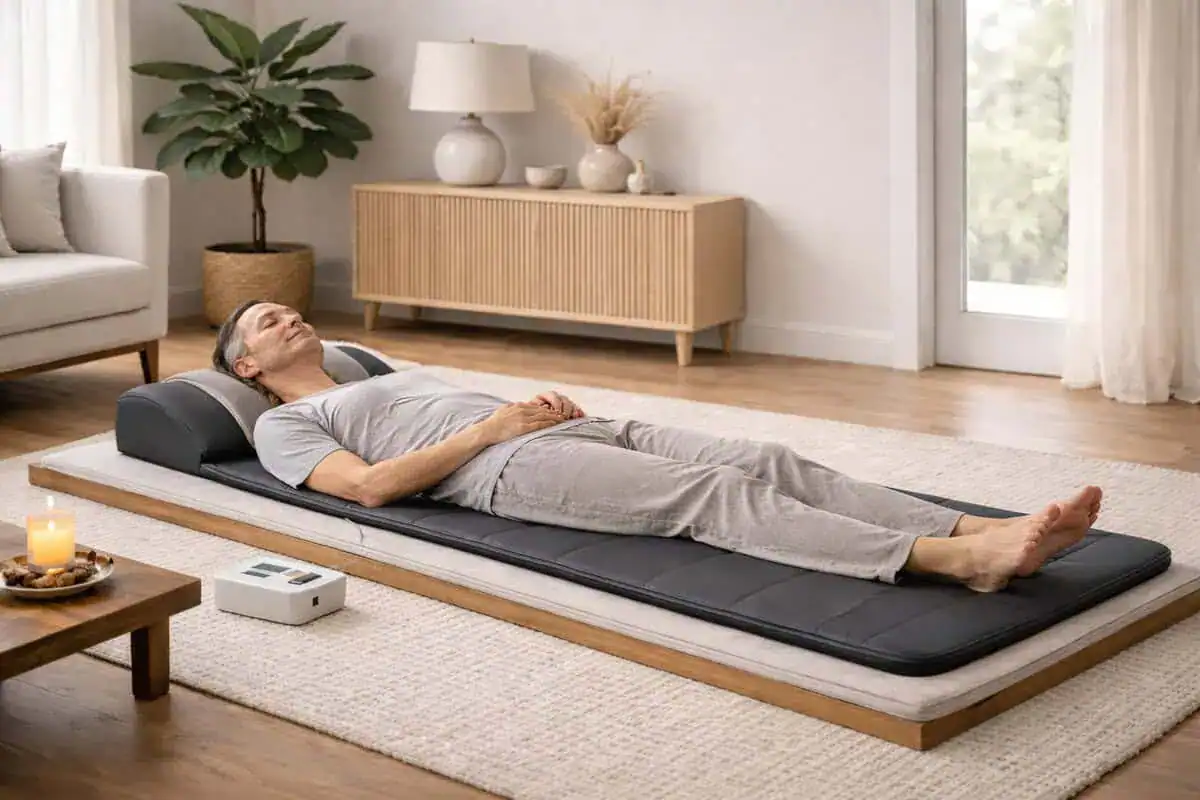
For full-body sessions, lie flat on your back in a relaxed position. Some users place a small pillow under the head or knees for comfort. Targeted sessions may involve placing a smaller applicator pad over a specific area.
PEMF pulses are not typically felt as strong sensations. Users often report subtle warmth or gentle pulsing. Lack of sensation does not mean the session is ineffective.
Comfort-first positioning for repeatable sessions
For home routines, the most important “positioning” principle is comfort and repeatability. If you’re uncomfortable, you’ll move more, shorten sessions, or avoid using the device consistently. Many users prefer one of these stable positions:
- Supine (on your back): neutral and easy to maintain
- Side-lying: helpful if lying flat is uncomfortable
- Seated placement: used with smaller pads when full-body mats aren’t practical
Small adjustments can improve comfort without turning setup into a complicated process. A pillow under the knees can reduce low-back strain. A thin folded towel can support the neck. The best position is the one you can repeat day after day.
Targeted placement basics (non-medical framing)
Some home users prefer “targeted” sessions with a smaller applicator pad. In conservative wellness education, targeted placement is described in simple terms—placing the applicator over an area you want to focus on for comfort and localized routine use. Keep expectations realistic and avoid treating placement as a precise medical protocol.
If you change body placement frequently, consider documenting what you did (for example: “full-body mat, 15 minutes, low setting, evening”). Basic notes can help you stay consistent and avoid unnecessary experimentation.
Session Duration Guidelines

Typical home sessions range from 10 to 30 minutes depending on device settings and user tolerance. Conservative starting guidelines:
- Begin with 10–15 minutes
- Gradually increase if well tolerated
- Avoid extended sessions initially
For a deeper discussion of timing variables, see our detailed guide on PEMF therapy session duration & frequency.
Why “start low and build” is the safest default
With most wellness tools, the safest habit is to introduce the stimulus gradually. That means shorter sessions before longer sessions, and simpler programs before complex program switching. Starting with 10–15 minutes lets you observe tolerability without stacking too many changes at once.
If your device offers adjustable intensity, keep intensity and duration stable for a short period before increasing either. Increasing both at the same time makes it harder to identify what changed if you feel unusually stimulated, restless, or just “off” after a session.
Time of day considerations
Some people prefer morning sessions because they’re easier to protect on the calendar. Others prefer evening sessions because the quiet environment supports relaxation practices. A conservative rule is to avoid assuming any specific effect and choose the time that best supports consistency and comfort.
How Often Should You Use It?

Consistency matters more than intensity. Many home users follow one of these patterns:
- Daily sessions for general wellness routines
- 3–5 sessions per week for maintenance
- Short sessions integrated into evening wind-down routines
According to the National Institutes of Health, electromagnetic therapies studied in research settings often emphasize structured dosing patterns. While home use differs from clinical protocols, regularity remains a common theme.
Choosing a frequency you can actually maintain
A practical home-use goal is to pick a schedule that fits real life. For many people, “every day” is easier than an irregular plan, because it becomes automatic. For others, 3–5 sessions per week is more realistic. The best schedule is the one you can follow without constantly negotiating with your calendar.
If you want a conservative, low-friction starting plan, consider a two-week consistency test:
- Same time of day
- Same duration (10–15 minutes)
- Same program/setting
- Minimal other changes
This kind of controlled routine is not about proving an outcome—it’s about building a repeatable habit and confirming the sessions are comfortable and sustainable.
What Happens at the Cellular Level
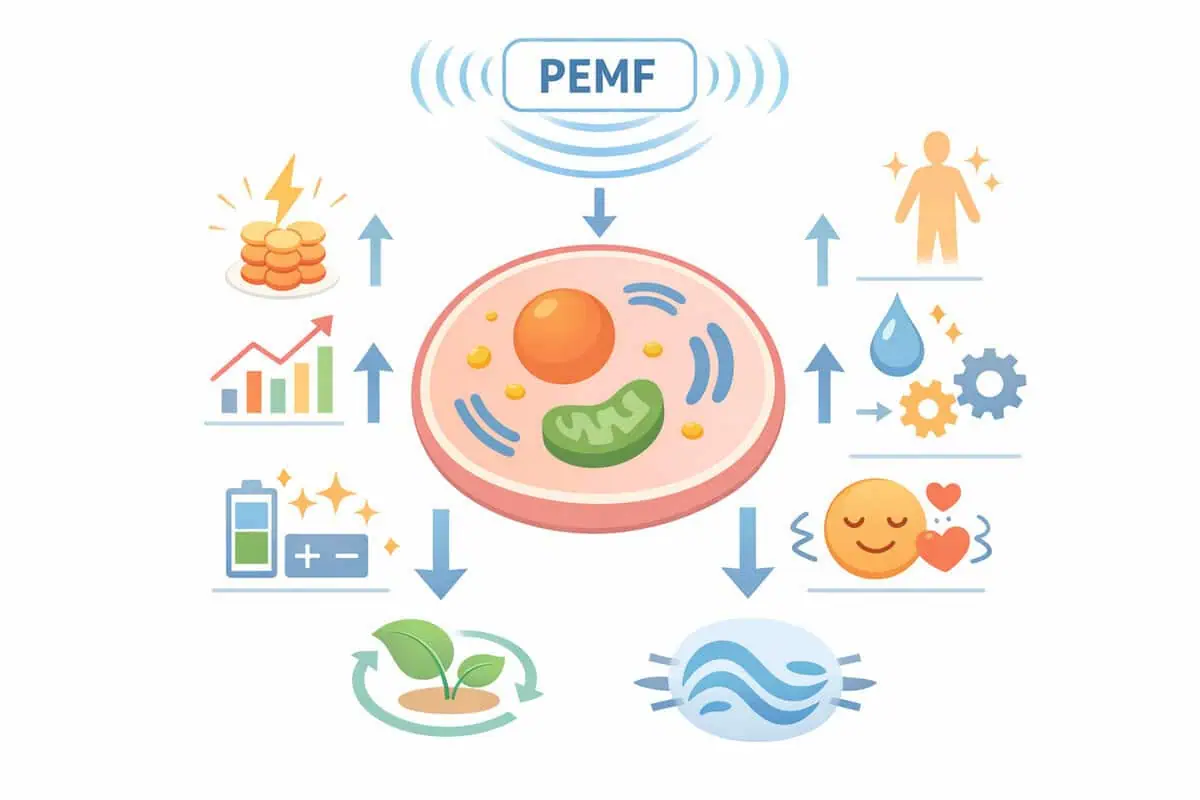
PEMF therapy interacts with the body’s natural bioelectrical processes. Research indexed in PubMed discusses potential influences on:
- Ion channel activity
- Cellular signaling cascades
- Microcirculation dynamics
These mechanisms are areas of active study. Home use should be framed as wellness support rather than medical intervention.
Mechanism framing in plain language
In conservative terms, PEMF research often explores how low-frequency electromagnetic pulses may act as a “signal” the body can detect at the cellular level. This is not the same as a drug effect, and it is not a guarantee of any specific outcome. Instead, the discussion usually focuses on plausibility—how electromagnetic fields could influence processes that are already electrical in nature.
Three common mechanism themes show up repeatedly in educational summaries:
- Electromagnetic signaling: cells use electrical gradients and signaling pathways to coordinate activity
- Ion exchange: ion channels help regulate movement of charged particles across membranes
- Circulation and microcirculation context: blood flow dynamics are a key “transport” system for oxygen and nutrients
Why ion channels matter (without overclaiming)
Ion channels are protein structures that regulate the movement of charged particles (ions) across cell membranes. They help maintain cellular electrical balance and support signaling. PEMF discussions sometimes reference ion channel activity because electromagnetic exposure can, in theory, influence electrical environments. In practice, home use education should keep this framing cautious: research explores mechanisms, but home routines should not be presented as clinical protocols.
Microcirculation as a “systems” concept
Microcirculation refers to blood flow through the smallest vessels that support tissue-level exchange. When microcirculation is discussed in PEMF education, it’s typically used as a systems concept—how tissues receive oxygen and nutrients and how metabolic byproducts are transported. This is one reason people associate PEMF with “recovery routines,” but the responsible framing remains: supportive wellness routines, not treatment claims.
Integrating PEMF Into Daily Routines

PEMF sessions are commonly paired with:
- Breathing exercises
- Reading or quiet reflection
- Post-workout recovery periods
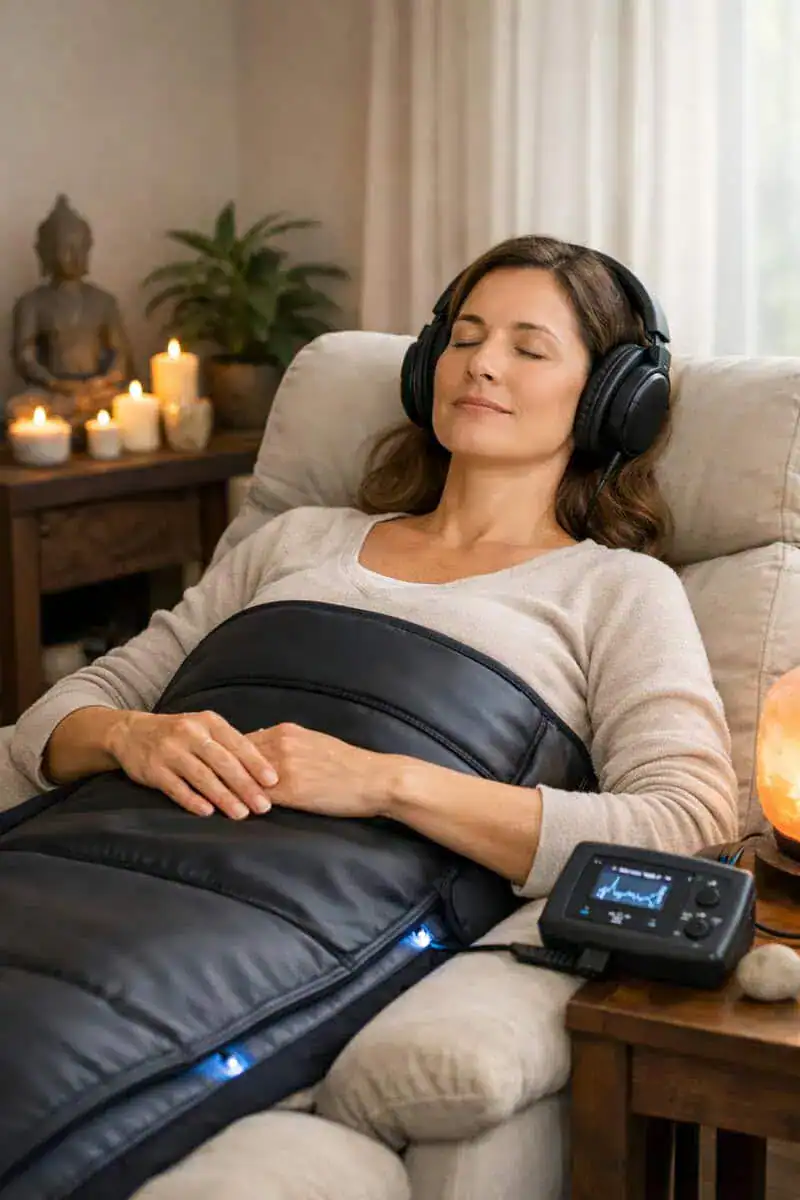
Creating a consistent environment—dim lighting, reduced screen exposure, comfortable positioning—may enhance perceived relaxation.
If you’re trying to make PEMF part of your routine, “habit stacking” is often more effective than willpower. For example: a session right after a short walk, right before journaling, or as part of a set bedtime routine. The goal is to reduce decision-making and make the session feel automatic.
Safety Considerations at Home

Most consumer PEMF devices are designed for low-intensity exposure. However, certain individuals should consult a qualified professional before use, including those with implanted electronic devices.
The Cleveland Clinic emphasizes caution with electromagnetic exposure in sensitive populations. Review our PEMF therapy safety guide for detailed contraindications.
Who should be especially cautious
A conservative safety posture treats “electromagnetic exposure” as a category that deserves extra caution for certain groups. The most common examples discussed in general safety guidance include:
- Implanted electronic devices: pacemakers, defibrillators, neurostimulators, and similar devices
- Pregnancy: out of caution, many manufacturers advise avoiding use unless cleared by a clinician
- Complex medical histories: if you’re unsure, defer to your medical team and the device manufacturer’s instructions
If you have an implanted device, treat “manufacturer clearance” as non-negotiable. Even if a home device is marketed as low intensity, the safest approach is to consult your clinician and follow device-specific safety information. General references on electromagnetic interference and implanted devices are available through major medical institutions such as Mayo Clinic, but your own device documentation and clinician guidance should take priority.
What “normal” can look like (and when to stop)
People vary in how they perceive a session. Some feel nothing, some feel subtly relaxed, and some feel mildly stimulated. If a session leaves you feeling uncomfortable, restless, dizzy, or unusually “wired,” a conservative response is to:
- Reduce session duration
- Reduce intensity (if adjustable)
- Increase time between sessions
- Stop and consult a qualified professional if symptoms persist
Safety is also about your environment. Avoid tripping hazards from cables, keep liquids away from the control unit, and store the device in a dry location. These practical factors matter for long-term ownership and safe daily use.
Long-term ownership, compliance, and maintenance
Home PEMF use is most effective as a routine you can maintain over months, not a short burst of experimentation. That means treating the device like other home wellness equipment:
- Follow the manual: use the device exactly as designed, especially regarding placement and session limits
- Track basic usage: a simple log can prevent accidental overuse and helps you stay consistent
- Inspect equipment: periodically check cords and connectors for wear
- Keep settings stable: avoid frequent program switching as a substitute for a stable routine
If you ever have questions about how PEMF Sage approaches safety or conservative claims, you can reach us through Contact PEMF Sage.
What to Expect in the First Few Weeks

Initial experiences vary. Some users report:
- Subtle relaxation during sessions
- A feeling of calm afterward
- No noticeable sensation at all
Gradual changes—if any—tend to align with consistent routine use rather than dramatic immediate effects.
A conservative mindset is to focus on process: did you complete the session comfortably, keep the routine consistent, and stay within safe parameters? If you’re changing multiple lifestyle inputs at once, it becomes difficult to attribute anything to PEMF specifically, so many users keep early routines simple and stable.
Common Mistakes to Avoid
- Using excessively long sessions at the start
- Frequently changing programs without consistency
- Expecting disease-specific outcomes
- Ignoring safety guidelines
Responsible home use means gradual implementation, documentation of sessions, and realistic expectations.
Another common mistake is treating “more settings” as “better.” For many people, the most sustainable plan is simple: one comfortable program, consistent timing, and a duration you can repeat. Complexity can come later—if it’s supported by the device manual and still feels easy to maintain.
When to Consider Upgrading or Learning More

If you’re evaluating device features—intensity range, waveform options, or full-body coverage—our comprehensive Best PEMF Devices & Mats (2026 Buyer’s Guide) explains how to compare systems conservatively and transparently.
For ongoing education, explore the PEMF Sage blog for research summaries and mechanism deep dives.
Selection logic that stays conservative
If you’re deciding whether to stick with a basic device or explore more robust systems, conservative selection criteria usually include:
- Build quality and durability: a device you’ll use consistently matters more than feature count
- Ease of use: simpler controls often lead to better adherence
- Coverage area: full-body vs targeted placement based on your routine preferences
- Support and documentation: clear manuals, service policies, and safety guidance
If your goal is to reduce uncertainty, the buyer’s guide provides a structured comparison framework and emphasizes transparent, non-medical language so you can make an informed decision without relying on hype.
Conclusion: Building a Safe and Sustainable Home PEMF Routine
Learning how to use PEMF therapy at home involves more than simply turning on a device. It requires structured sessions, consistent routines, attention to safety, and realistic expectations. Home use is best viewed as part of a broader wellness framework that includes movement, sleep, stress regulation, and professional guidance when needed.
If you’re exploring device comparisons or advanced features, start with our cornerstone Buyer’s Guide to PEMF devices for structured evaluation criteria.