iMRS Prime PEMF Review

This iMRS Prime PEMF review provides a conservative, evidence-aligned overview of the iMRS Prime system and its positioning in the broader pulsed electromagnetic field (PEMF) landscape. Rather than focusing on bold outcome claims, this review evaluates system design, intended use environments, physiological plausibility, and how it compares to other full-body PEMF platforms.
iMRS Prime is commonly marketed as a professional-grade, full-body PEMF system. Here, we examine how it works, who it may suit, and where it fits relative to the broader PEMF device spectrum.
What Is the iMRS Prime System?
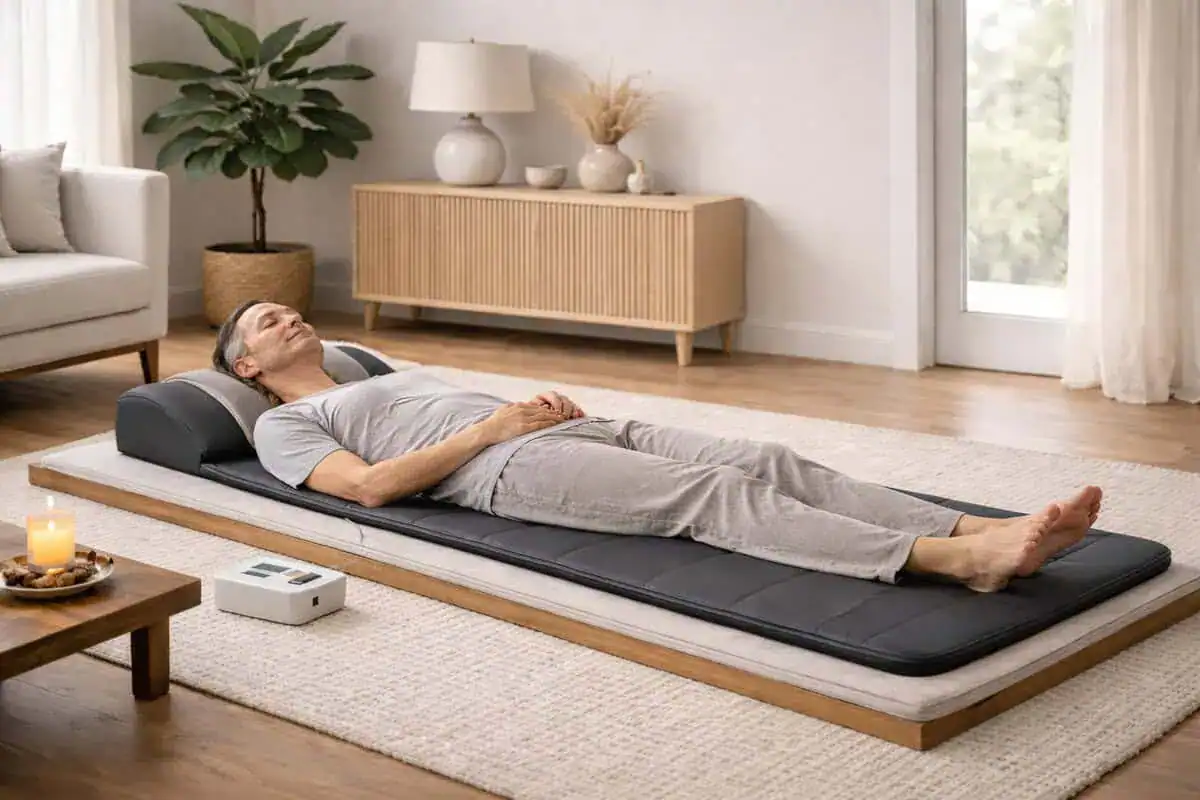
The iMRS Prime system is a full-body PEMF platform designed to deliver low-frequency electromagnetic pulses through a mat-based applicator. It is typically sold as a multi-component system, including:
- A full-body mat with embedded coils
- A control unit with programmable intensity and frequency settings
- Optional localized applicators (pads or probes)
Full-body systems are designed for passive use — individuals lie on the mat for a defined session period, often ranging from 8 to 30 minutes depending on settings. The pulsing is generally subtle and not physically intense, which aligns with the broader PEMF category.
If you are new to this modality, our foundational guide on Best PEMF Devices & Mats (2026 Buyer’s Guide) explains how systems like iMRS Prime compare to other full-body platforms.
In practical terms, “full-body” matters because it typically means larger coil coverage and a more uniform exposure pattern across the body compared to small pads or rings. That does not automatically mean “stronger” or “better,” but it can influence how a session feels (more diffuse, less focal) and how a user builds a routine (one mat session versus multiple localized sessions).
When evaluating a multi-component system, it can help to identify three layers of ownership:
- The applicator layer: the mat (and any optional local applicators), including coil layout and durability
- The control layer: the interface, presets, and how settings are adjusted
- The routine layer: how easily a user can repeat sessions consistently without friction
Many people underestimate the routine layer. For home users, a system that is “technically capable” but rarely used is often less meaningful than a simpler device that becomes part of a consistent weekly cadence. This is one reason this review emphasizes use environment and selection logic, not just parameter lists.
How the iMRS Prime May Work at the Cellular Level
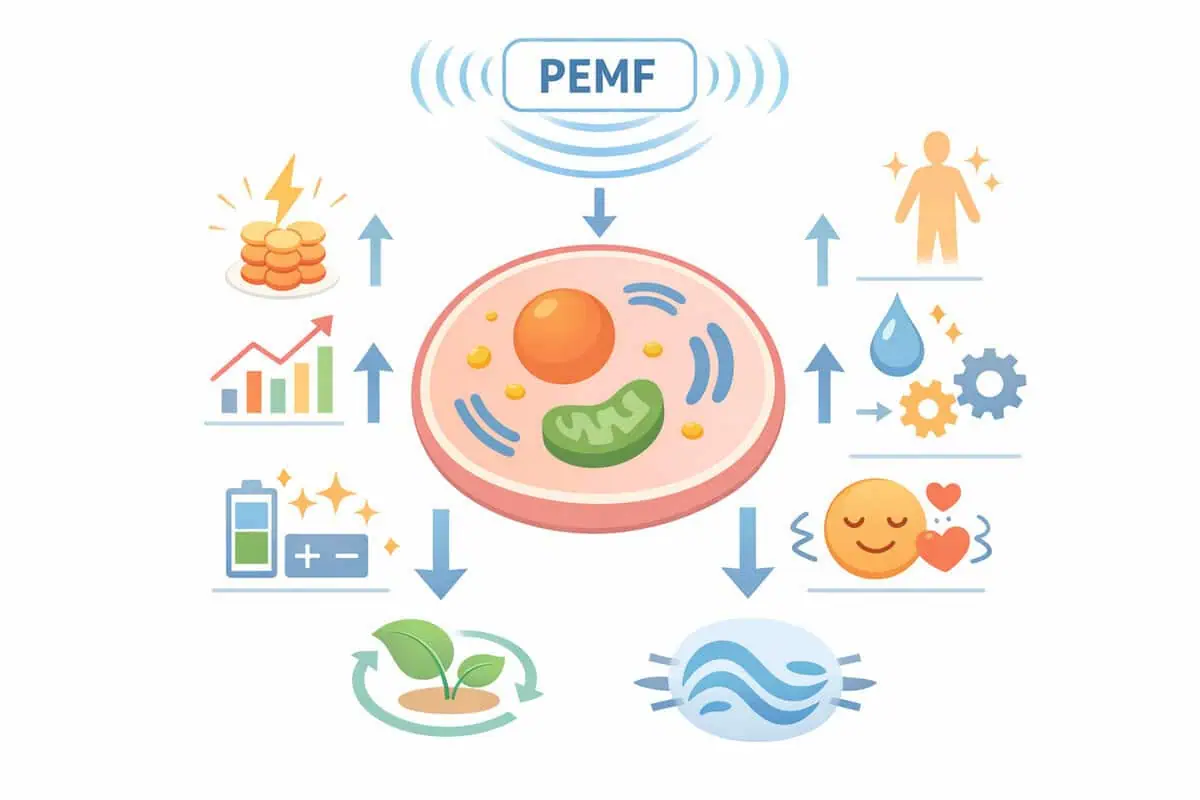
Like other PEMF systems, iMRS Prime is designed to emit low-frequency electromagnetic pulses that interact with tissues at the cellular level. Proposed mechanisms discussed in peer-reviewed literature include:
- Modulation of cellular signaling pathways
- Influence on ion channel dynamics
- Support for microcirculation
- Indirect effects on mitochondrial activity
Research indexed in PubMed has explored PEMF’s potential effects on cellular communication and tissue environments, particularly in musculoskeletal contexts. While evidence varies by application, the general physiological framework involves electromagnetic fields influencing ion exchange and membrane potential stability.
For a deeper exploration of these mechanisms, see our educational overview of PEMF Therapy Benefits (Science-Backed Overview).
A conservative way to think about “cellular mechanisms” is that PEMF is discussed in research as a signaling input rather than a medication-like intervention. The idea is not that a field “forces” a single outcome, but that it may influence conditions that cells respond to—such as ion movement across membranes or how certain signaling pathways behave in a given tissue context.
Two commonly referenced physiological concepts in PEMF discussions are:
- Membrane potential and ion exchange: Cells maintain electrochemical gradients (including sodium, potassium, calcium) across their membranes. Some research frameworks propose that pulsed fields may interact with ion channel behavior or related signaling dynamics, which can be discussed without implying disease treatment.
- Local tissue environment: Circulation, oxygen delivery, and waste clearance are part of the broader “environment” tissues operate in. PEMF research sometimes explores whether low-frequency exposure can influence microcirculation patterns or related vascular signaling.
It’s also important to acknowledge what this does not mean. A plausible mechanism does not prove that a specific device will deliver a specific clinical outcome for a specific condition. That is why PEMF Sage maintains conservative language and relies on general physiology framing rather than outcome promises.
Frequency, Intensity & Programmability

One distinguishing feature of higher-end PEMF systems like iMRS Prime is programmability. Users can typically adjust:
- Frequency (measured in Hz)
- Intensity levels
- Session duration
Low-frequency PEMF is commonly studied in the 1–30 Hz range, though exact ranges vary by device. According to general summaries from the National Institutes of Health (NIH), biological responses to electromagnetic exposure are frequency-dependent, meaning parameter selection matters.
The presence of programmable settings may benefit users who want structured routines or gradual intensity adjustments. However, increased complexity also requires careful adherence to manufacturer guidance.
In practical purchasing terms, settings only help if a user understands what they control. A conservative selection approach is to look for:
- Clear definitions of frequency ranges and what presets do (without outcome claims)
- Simple progression options for intensity, so users can start low and adjust gradually
- Time-based consistency (e.g., sessions that can be repeated daily without becoming cumbersome)
It can also be useful to remember that “intensity” is not a single universal measure across all manufacturers. Some systems describe levels in device-specific units or scales. Without standardized comparison across brands, a user should treat intensity claims as contextual—meaning it’s most reliable within the same device line rather than across different brands.
From a physiology standpoint, variability in frequency and waveform design is part of why PEMF research outcomes can be mixed. The NIH’s broader biomedical literature emphasizes that electromagnetic interactions are parameter-dependent, which supports a cautious stance: the details matter, and simple “more is better” narratives are rarely evidence-based.
If you want a structured comparison lens across device categories and common settings vocabulary, the 2026 Buyer’s Guide is the best starting point on PEMF Sage because it organizes systems by use case and practical ownership fit rather than marketing language.
Typical Use Environment

iMRS Prime is generally positioned for:
- Home wellness environments
- Chiropractic or integrative clinics
- Performance or recovery-focused settings
Sessions are passive. Individuals lie on the mat while the device runs through a programmed sequence. Many users describe the sensation as subtle pulsing or gentle warmth, though some feel very little physical sensation.
As with most PEMF systems, consistency appears to matter more than intensity. Daily or near-daily sessions are common among long-term users.
For home users, the “use environment” question often comes down to space, setup time, and friction. A full-body mat typically requires:
- A stable surface (floor, massage table, or dedicated mat area)
- A predictable place to store the mat and controller
- Enough time to complete sessions without interruption
Clinics and studios may value different features, such as durability across repeated use, multiple session presets, and a workflow that allows staff to set sessions quickly. That does not necessarily make a clinic-oriented system “better” for home; it simply means the device may have been designed with a different routine and user pathway in mind.
A conservative “routine reality check” for any full-body PEMF system is to plan for:
- Short, repeatable sessions you can actually fit into a week
- Comfort factors (lying position, support, temperature, and noise levels)
- Device accessibility (how quickly you can start and stop, and whether settings are easy to repeat)
If your intent is general wellness support rather than a tightly controlled performance protocol, ease of consistent use may matter as much as the existence of advanced settings.
Evidence Context & Research Alignment

Clinical research around PEMF has explored areas such as musculoskeletal recovery, joint mobility, and circulation support. The Cleveland Clinic notes that electromagnetic therapies have been investigated for tissue support, though strength of evidence varies by indication.
It is important to distinguish between:
- FDA-cleared therapeutic uses in specific contexts
- General wellness claims made in marketing materials
This iMRS Prime PEMF review does not evaluate disease treatment claims. Instead, it focuses on physiological plausibility and general wellness positioning.
A practical way to stay evidence-aligned is to ask: “What does the research actually measure?” Many PEMF studies evaluate outcomes under specific conditions (defined frequency ranges, scheduled exposure, and controlled measurement endpoints). That does not automatically translate to consumer expectations because:
- Devices can differ in coil geometry, settings, and exposure patterns
- Protocols vary widely in duration and frequency
- Study populations may not match typical home users
This is why PEMF Sage treats device reviews as a blend of engineering reality (how the device delivers pulses) and physiology plausibility (what PEMF is discussed as influencing at a general level), while avoiding “guaranteed benefit” language.
If you want to explore evidence directly, PubMed provides access to a wide range of PEMF studies across different applications. A conservative approach is to look for:
- Clear parameter reporting (frequency, intensity, schedule)
- Study designs that separate placebo effects from measurable endpoints
- Conclusions that match the data, not marketing summaries
For a site-wide overview of how PEMF Sage frames benefits with appropriate restraint, the PEMF Therapy Benefits (Science-Backed Overview) page provides context without implying that any single product is a medical solution.
Safety Considerations

PEMF therapy is generally considered non-invasive. However, individuals with implanted electronic devices (such as pacemakers), those who are pregnant, or those with certain medical conditions should consult a qualified healthcare professional before use.
The Mayo Clinic emphasizes that electromagnetic exposure safety depends on context, device strength, and individual health status.
For a detailed breakdown of risks and contraindications, review our dedicated PEMF Therapy Safety, Risks & Contraindications page.
Safety considerations can be thought of in three categories:
- Device interaction risk: potential interference with implanted electronics or medically necessary devices
- Population-specific caution: pregnancy, active medical supervision situations, or complex health profiles
- Session tolerance: individual comfort with sensation, positioning, and response to repeated use
Even when a modality is non-invasive, individual tolerance can vary. Some users report that they prefer to start with shorter sessions and lower settings to see how they feel, then adjust gradually. This is not a medical recommendation—just a practical pattern that aligns with cautious, routine-based device ownership.
A conservative home-use mindset also includes basic operational safety:
- Follow manufacturer guidance for placement and ventilation
- Avoid using the device in environments where cords or controllers create trip hazards
- Keep the control unit protected from spills and excessive heat
If you fall into a higher-caution category, the safest next step is to review the detailed contraindication notes on PEMF Therapy Safety, Risks & Contraindications and discuss PEMF use with a qualified clinician who understands your personal situation.
Comparison to Other Full-Body Systems

Compared to other full-body systems, iMRS Prime is typically categorized as:
- Professional-grade
- Multi-component
- Higher price tier
In contrast, some systems emphasize streamlined home use or simplified interfaces. Others are marketed primarily for clinic deployment.
To see how iMRS Prime fits within the broader category, explore our full comparison guide in the 2026 Buyer’s Guide.
A useful comparison framework for full-body systems is to separate:
- Coverage design: how much of the body the mat is intended to reach and how the coils are distributed
- Control complexity: whether settings are mostly preset-driven or highly adjustable
- Intended pathway: whether the system seems designed for home repetition or practitioner-guided sessions
Because parameters and hardware differ across brands, “best” is usually a function of fit, not a universal hierarchy. PEMF Sage’s conservative approach is to treat full-body systems as a category with tradeoffs: more options and components can increase flexibility, but they can also increase setup friction and learning curve.
Who the iMRS Prime May Suit

This system may suit:
- Individuals seeking structured, programmable sessions
- Practitioners wanting a branded full-body platform
- Users comfortable with multi-component systems
It may be less suitable for:
- Those seeking a minimal, plug-and-play device
- Users sensitive to complex interfaces
Beyond those broad categories, ownership fit often comes down to how someone prefers to make wellness decisions:
- “Routine builders” may value repeatable presets and a stable schedule more than frequent adjustments.
- “Tinkerers” may prefer systems that allow experimentation within reasonable safety bounds (without chasing extreme settings).
- “Clinically supervised users” may prefer devices that align with a practitioner’s protocol and documentation habits.
It may also suit users who already know they prefer full-body mat sessions because they find localized applicators inconvenient. Conversely, people who prefer short, targeted sessions (and do not want to lie down for a full mat session) may find a full-body platform less aligned with their daily rhythm.
If you’re still narrowing your options, the most efficient next step is typically to compare device categories first, then focus on brand differences. The Best PEMF Devices & Mats (2026 Buyer’s Guide) is designed to help you do that in a conservative, non-hype way.
Ownership also includes long-term practicality. Before committing to a multi-component system, it is reasonable to consider:
- Where the system will live (dedicated space versus frequent setup/teardown)
- Whether multiple household members will use it (interface simplicity matters)
- How comfortable you are with maintenance, storage, and transport
Limitations & Considerations

As with any PEMF device, outcomes vary. Factors influencing experience may include:
- Consistency of use
- Individual physiology
- Session parameters
Marketing language should always be evaluated carefully. A device’s price or brand positioning does not automatically translate to superior biological impact.
It’s also worth recognizing the difference between:
- Subjective experience signals (relaxation, perceived recovery support, routine satisfaction)
- Objective clinical claims (which require stronger evidence and specific contexts)
PEMF Sage stays focused on the former in reviews like this, especially for non-monetized, editorial systems. If you want a broader device-type view that prioritizes conservative selection logic, the 2026 Buyer’s Guide provides a structured comparison lens.
Cost Context (Editorial Only)

iMRS Prime is generally positioned in the higher price tier of the PEMF market. Cost reflects system complexity, brand positioning, and accessory bundles rather than guaranteed outcomes.
Because this review is non-monetized, no pricing links or purchase incentives are included.
In higher-priced categories, a practical way to evaluate value is to look beyond “feature counts” and ask whether the system supports:
- Repeatability: can you keep using it for months without it becoming a burden?
- Clarity: are settings and safety guidance clearly explained?
- Supportability: is the ownership experience likely to be stable (warranty clarity, replacement parts, service pathway)?
These questions do not require promotional language or purchase prompts. They are simply part of responsible, conservative decision-making in a high-ticket wellness category.
Where It Fits in the PEMF Landscape

In the broader PEMF category, iMRS Prime fits among multi-component, full-body systems designed for structured sessions and comprehensive coverage.
If you are comparing systems, we recommend reviewing:
- Programmability
- Coil layout
- Ease of use
- Safety guidance clarity
For a broader overview of device types and configurations, visit the PEMF Sage Blog.
At a high level, PEMF devices often fall into a few practical buckets:
- Full-body mats: designed for passive sessions and broad coverage
- Localized applicators: pads or coils intended for smaller areas
- Wearable / micro devices: typically lower output and focused on convenience
- Clinic platforms: systems designed for practitioner-guided protocols and repeated client use
iMRS Prime is generally discussed in the full-body/clinic-adjacent conversation because it is multi-component and marketed as professional-grade. For many readers, the key decision is not “Which brand is best?” but “Which bucket fits my real schedule and risk tolerance?”
If you want a centralized comparison hub across the PEMF Sage ecosystem, the Best PEMF Devices & Mats (2026 Buyer’s Guide) remains the primary authority page. It’s designed to reduce confusion by focusing on conservative selection logic rather than promotional narratives.
Conclusion
This iMRS Prime PEMF review presents the system as a structured, professional-grade full-body platform within the broader PEMF landscape. While it offers programmability and comprehensive mat coverage, outcomes remain individualized and dependent on consistent, appropriate use.
Before choosing any system, compare device categories carefully and align expectations with current research rather than marketing claims. For a full breakdown of how major systems compare, start with our Best PEMF Devices & Mats (2026 Buyer’s Guide).
If you prefer an evidence-first, low-hype approach, focus on routine fit, safety clarity, and conservative parameter use rather than chasing maximum settings or broad promises.