OMI PEMF Ring Review

This OMI PEMF Ring review provides a conservative, evidence-aligned look at how wearable, low-intensity pulsed electromagnetic field (PEMF) devices are positioned within the broader PEMF landscape. Unlike full-body mats or professional systems, the OMI ring is marketed as a compact, portable option intended for continuous or frequent daily wear.
Because wearable PEMF devices operate at lower power levels and target smaller areas of the body, it is important to evaluate them within realistic physiological boundaries. This review explains how devices like the OMI ring are designed to work, what types of support they may reasonably offer, and where their limitations begin.
As with any wellness technology, it helps to approach wearables with a framework: what the device can plausibly influence, what it cannot, and how to interpret “better” or “worse” experiences without turning routine fluctuations into conclusions. This is especially relevant for small-form devices, where the field exposure is localized and the research base is broader (PEMF in general) than product-specific (a particular consumer ring).
What Is the OMI PEMF Ring Designed to Do?

The OMI PEMF Ring is categorized as a low-intensity, localized PEMF wearable. Unlike full-body mats that deliver pulsed electromagnetic fields across a large surface area, a ring device focuses on a small, highly localized region—typically the finger—while transmitting pulsed electromagnetic signals through conductive tissue.
In practical terms, “localized” means the primary exposure happens near the ring and adjacent soft tissue. Any broader whole-body effects, if present, would be indirect and should not be assumed. With wearables, the most reasonable framing is that they may support a general wellness routine the way other low-burden habits do—subtle inputs over time—rather than functioning like a session-based intervention.
It also helps to define what “low-intensity” implies. In consumer PEMF, intensity is often discussed in relation to field strength and depth of penetration, but the key takeaway for a conservative reader is this: lower-intensity wearables are designed for comfort and convenience and are less likely to create noticeable, immediate sensations. That can be appropriate for daily wear, but it also limits the magnitude and scope of effect you should expect.
In general, wearable PEMF products are marketed around:
- Microcirculation support
- General wellness and recovery routines
- Subtle nervous system regulation
- Portable daily-use convenience
A careful way to interpret these categories is to treat them as “support” language rather than outcome claims. “Support” may refer to physiologic plausibility (e.g., microvascular signaling), but it does not guarantee symptom changes or specific measurable outcomes for a particular person.
From a physiological standpoint, PEMF devices interact with tissue through time-varying electromagnetic fields that may influence ion movement and cellular signaling. Research indexed on PubMed suggests that electromagnetic stimulation can influence cellular communication under certain parameters, though outcomes vary depending on intensity, frequency, and exposure duration.
That “parameters” caveat is central to evaluating a ring. PEMF is not one uniform exposure. Waveform, pulse width, duty cycle, frequency, field strength, and session length all influence what a device can plausibly do. Without product-specific clinical trials, the best approach is to map the ring into the “low-intensity wearable” category and evaluate it using reasonable expectations for that category rather than extrapolating from stronger devices.
If your primary goal is understanding how PEMF mechanisms are discussed conservatively across device types, it can help to keep the broader ecosystem in view via the cornerstone hub: Best PEMF Devices & Mats (2026 Buyer’s Guide).
How Wearable Low-Intensity PEMF Devices Work
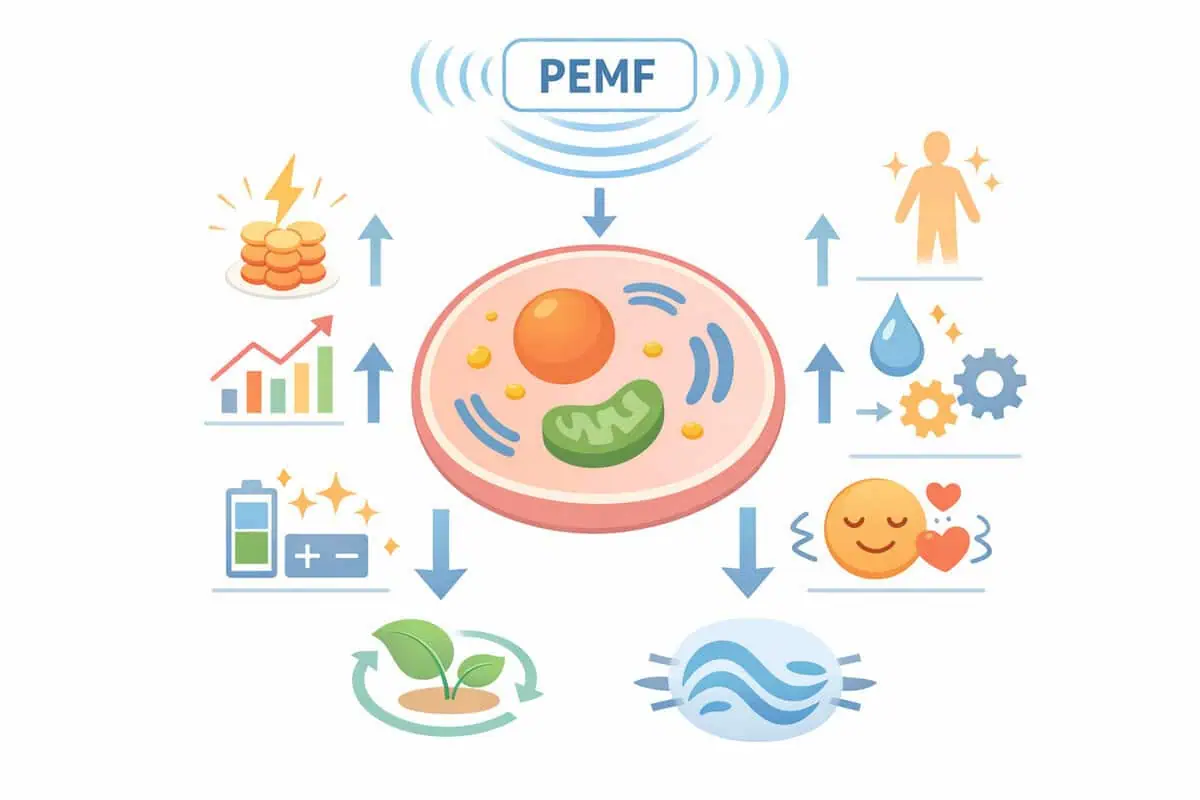
To understand the OMI PEMF Ring review properly, we must separate marketing language from biological mechanisms. PEMF therapy works by emitting pulsed electromagnetic fields that may interact with:
- Ion channels in cell membranes
- Transmembrane potential gradients
- Microvascular circulation patterns
- Cellular signaling cascades
A conservative mechanistic framing starts with cell membranes. Cells maintain electrical gradients across membranes, and ion channels help regulate how ions move in and out. PEMF fields are not “electricity in the body” in the way a shock would be; instead, the plausible interaction is that time-varying fields may influence signaling behavior in ways that are subtle and parameter-dependent.
This is one reason PEMF research often emphasizes dose and protocol. The same “PEMF” label can encompass very different exposures. Wearables sit on the lower end of intensity, which makes them easier to use and potentially more comfortable for extended wear, but it also means the physiologic signal—if present—is expected to be modest.
Low-intensity devices such as rings operate at significantly lower field strengths than clinical systems. Their effects—if present—are therefore expected to be modest and localized.
In addition to intensity, there is the question of “where the signal goes.” With a ring, the field is generated close to the finger. If the device is designed to couple the field into tissue, the primary interaction is local. Any general “whole-body” effects would likely be mediated indirectly (for example, by a relaxation routine that includes breathing, walking, sleep hygiene, or reduced screen time), rather than being purely a systemic electromagnetic exposure.
When readers see claims about “cellular energy” or “mitochondria,” it can help to interpret them carefully. Mitochondria are involved in energy metabolism, and some PEMF research explores how electromagnetic signaling might influence cellular function. However, consumer wearables should not be assumed to produce measurable mitochondrial outcomes in the absence of direct evidence. A safer framing is that PEMF mechanisms are studied in multiple contexts, and a wearable device is best evaluated as a low-intensity, routine-friendly input.
The National Institutes of Health (NIH) has documented research on electromagnetic field exposure in medical contexts, but wearable consumer devices should not be equated with prescription-level therapeutic equipment.
Finally, it is worth noting that “PEMF” is different from static magnets. PEMF devices use changing fields (pulses), which is why timing characteristics matter. Many consumer devices also incorporate additional concepts (e.g., microcurrent or other modalities) in their marketing. A conservative review keeps the focus on what the PEMF component can plausibly do and avoids treating adjacent features as established medical interventions.
Intended Use Patterns & Daily Wear Considerations

Wearable PEMF rings are typically promoted for extended daily wear. Unlike 20–30 minute mat sessions, these devices are often positioned as background wellness tools used during work, relaxation, or sleep.
A useful way to think about daily-wear devices is that they trade session intensity for consistency. Consistency can matter for many wellness habits (sleep schedule, walking, hydration, recovery routines), but the outcome is rarely dramatic on day one. Wearables, by design, often aim for “low friction” rather than “high impact.”
Daily wear also raises practical questions that do not apply to mats:
- Comfort and fit: a ring must feel natural for long periods, including typing, commuting, and daily tasks.
- Interruption patterns: taking the ring off for hand washing, sports, or workplace restrictions can reduce consistency.
- Signal timing: intermittent wear changes exposure duration, which matters when effects are expected to be subtle.
- Expectation management: small changes are more likely to be noticed over weeks than over hours.
Common user-reported experiences with low-intensity devices include:
- A subtle pulsing sensation
- No noticeable physical sensation at all
- Gradual incorporation into daily wellness routines
It is important to emphasize that lack of sensation does not confirm or deny physiological activity. Many electromagnetic interactions occur below conscious sensory thresholds.
If a person does notice a sensation, it is still not proof of a specific biological outcome. Sensations can be influenced by temperature, contact pressure, attention, hydration, stress level, and general variability in the nervous system. For a conservative evaluation, the best approach is to track routine consistency and general well-being markers (sleep regularity, perceived recovery, daily energy stability) without turning normal day-to-day variation into a “result.”
Mechanistic Plausibility: Circulation & Microvascular Effects

Some PEMF research suggests that electromagnetic stimulation may influence microcirculation. The Cleveland Clinic discusses circulation as a key component of tissue health, though it does not endorse specific consumer wearable devices.
A conservative way to interpret “microcirculation support” is that it refers to microvascular dynamics—small vessels and capillary-level perfusion—that contribute to normal tissue function. In the context of a ring, the most plausible interaction would be localized (finger/hand area) rather than global.
Because a ring device concentrates stimulation in a very small anatomical area, any potential circulatory support would likely be localized rather than systemic. This distinction is critical when comparing rings to full-body systems.
This also helps explain why wearable claims can be hard to validate subjectively. Microvascular shifts may not be consciously noticeable, and many factors influence circulation (ambient temperature, hydration status, activity level, caffeine intake). Wearables may fit best for people who value a “set it and forget it” tool as part of a broader recovery routine rather than as a standalone solution.
Nervous System & Relaxation Claims: What’s Reasonable?
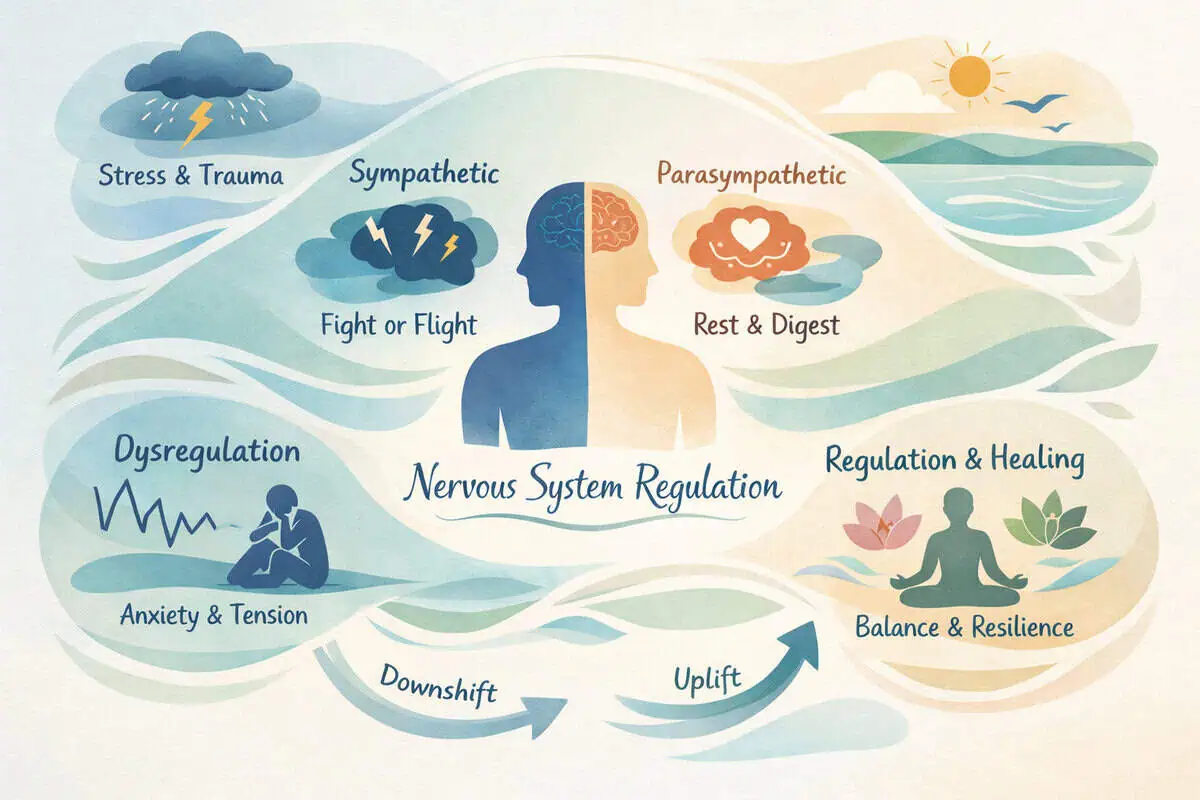
Wearable PEMF devices are sometimes marketed for relaxation or stress modulation. Scientifically, electromagnetic stimulation may interact with autonomic signaling pathways under certain parameters.
A conservative interpretation is that a wearable may support relaxation indirectly by pairing with behaviors that reliably support nervous system balance: paced breathing, consistent sleep timing, moderate movement, and reduced evening stimulation. In that sense, the device can become a “cue” for routine—something that reminds the user to practice the habits that actually drive outcomes.
The Mayo Clinic emphasizes that stress regulation is multifactorial, involving sleep, physical activity, breathing patterns, and overall lifestyle. No wearable PEMF ring should be viewed as a standalone solution.
At most, low-intensity devices may complement a broader relaxation routine when used alongside evidence-supported habits.
If stress support is a primary interest, it may also be useful to read a broader evidence-aligned overview of what PEMF is thought to support, while keeping claims conservative: PEMF Therapy Benefits (Science-Backed Overview).
Comparing the OMI Ring to Full-Body PEMF Systems
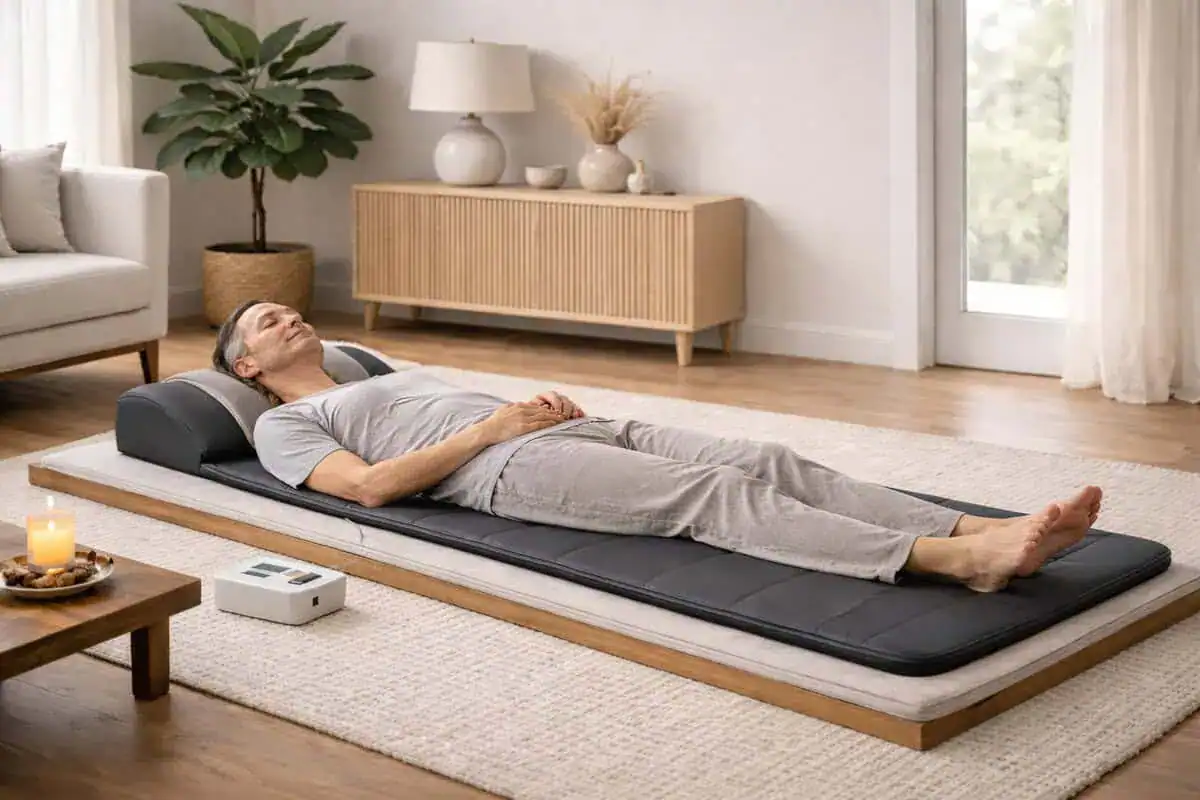
To properly contextualize this OMI PEMF Ring review, comparison is necessary.
- Coverage: Ring = localized; Mat = full-body.
- Intensity: Ring = low-intensity; Mats = variable intensity.
- Session model: Ring = extended wear; Mat = structured sessions.
A practical implication of this comparison is that mats are generally better suited for people who want a defined “session” with measurable exposure time, while rings may suit those who prefer lightweight, continuous routines. Neither approach is inherently “better,” but they serve different user preferences and expectations.
Another useful way to compare is by decision objective:
- Routine-friendly habit: wearable ring may fit better.
- Whole-body exposure: full-body mats and systems are designed for this.
- Protocol control: session-based devices may offer clearer frequency and duration structure.
For readers evaluating broader system options, our cornerstone guide — Best PEMF Devices & Mats (2026 Buyer’s Guide) — provides structured comparisons across categories.
Who Might Consider a Wearable PEMF Ring?

A wearable device may appeal to individuals who:
- Prefer discreet wellness tools
- Travel frequently
- Are curious about low-intensity electromagnetic exposure
- Do not want a large in-home setup
It may also appeal to people who want a low-commitment entry point into the PEMF category. Wearables are often simpler to store, easier to travel with, and less disruptive to daily schedules than session-based systems.
However, expectations should remain modest. Localized devices are unlikely to replicate the exposure patterns of larger systems.
If the goal is a clearer sense of how different device categories are typically used (and what they can reasonably support), the broader PEMF Sage ecosystem can help a reader self-triage. The blog index is a useful map for exploring categories without jumping straight into purchase framing: PEMF Sage Blog.
Limitations & Important Caveats

Key limitations to consider:
- Small treatment area
- Lower field strength
- Limited published research specific to consumer rings
In ownership terms, a ring device also introduces practical realities that are easy to overlook during comparison shopping:
- Consistency is the “main lever”: with low-intensity wearables, the value proposition often depends on regular wear more than short bursts.
- Maintenance and durability: daily wear exposes devices to moisture, impact, and abrasion.
- Charging and battery behavior: a device that requires frequent charging can reduce adherence over time.
- Fit and comfort drift: if a ring feels tight or loose across seasons, usage may become inconsistent.
Additionally, individuals with implanted electronic medical devices or specific health conditions should consult appropriate professionals before using any electromagnetic device. See our overview of PEMF Therapy Benefits (Science-Backed Overview) for a broader evidence context.
Finally, it is important to avoid “stacking” assumptions. If a person wears the ring, changes sleep, changes training volume, and changes caffeine intake at the same time, it becomes impossible to know what contributed to what. A conservative evaluation approach is to change one variable at a time, use the device consistently, and keep expectations modest.
How This Fits Within the PEMF Landscape
The OMI ring represents one end of the PEMF spectrum: highly portable, low-intensity, convenience-focused devices. At the other end are professional clinical systems delivering higher field strengths across larger anatomical regions.
Understanding this spectrum helps prevent unrealistic comparisons. A wearable ring should be evaluated within its design constraints.
In practical buyer terms, “fit” matters as much as features. Some users want a structured protocol and a clear beginning and end to sessions. Others prefer continuous, lightweight inputs that require minimal scheduling. Rings tend to align with the second group, while mats and systems align with the first group.
Alternatives Within Wearables & Systems
Other wearable devices and small-loop systems exist in the market, though many remain editorial-only and non-monetized at PEMF Sage. Readers seeking structured category breakdowns can explore the PEMF Sage Blog for related reviews and educational content.
For readers who want a broader view of device categories (wearables, mats, full-body systems, and professional platforms), the cornerstone comparison hub is often the most efficient starting point: Best PEMF Devices & Mats (2026 Buyer’s Guide).
Practical Decision Framework
Before purchasing a wearable PEMF ring, consider:
- Desired intensity level
- Coverage expectations
- Budget constraints
- Commitment to consistent use
You can also pressure-test the decision with a simple, conservative set of questions:
- Is portability the primary driver? If yes, a ring may be a reasonable category to explore.
- Do you want whole-body exposure? If yes, a ring is unlikely to match that objective.
- Are you comfortable with subtlety? Wearables often produce gradual, modest changes if any.
- Can you keep your routine stable? Stable routines make it easier to evaluate any wellness tool conservatively.
If broader systemic exposure is the goal, larger mat-based systems may warrant consideration. Our 2026 Buyer’s Guide outlines how to compare system types conservatively.
Conclusion: A Measured Perspective on the OMI PEMF Ring
This OMI PEMF Ring review highlights a device category designed for portability and convenience rather than intensity or full-body coverage. Low-intensity wearable PEMF devices may complement broader wellness routines, but expectations should remain grounded in physiological plausibility and current evidence.
For readers exploring structured comparisons across device categories, begin with our comprehensive Best PEMF Devices & Mats (2026 Buyer’s Guide) to understand how wearable rings fit within the larger PEMF ecosystem.