PEMF Therapy Myths & Misconceptions

PEMF therapy myths are everywhere—often presented as certainty, shortcuts, or “one setting fits all.” On PEMF Sage, we take a conservative approach: we describe what people commonly claim, what basic physiology might support in theory, and what you should verify before you interpret results as meaningful.
This guide is not medical advice. It’s educational context to help you think clearly about marketing language, research headlines, and user expectations—especially if you’re comparing at-home options.
Why PEMF Gets Misunderstood (and Why That Matters)

PEMF (pulsed electromagnetic field) is a broad category, not a single “treatment.” Devices can differ by waveform, frequency ranges, intensity, coil design, session duration, and how energy is delivered to the body. When that complexity gets flattened into a single promise, myths form quickly.
- Marketing compresses nuance into slogans (e.g., “one frequency fixes everything”).
- Research headlines can be overinterpreted beyond what a study actually tested.
- User experiences vary (relaxation, subtle pulsing, no immediate sensation), which can be misread as “it worked” or “it didn’t.”
If you’re still building a foundation, start with our overview of PEMF therapy benefits (science-backed overview) and browse the PEMF Sage Blog for topic-by-topic context.
Myth #1: “PEMF Is Proven to Treat or Cure Diseases”
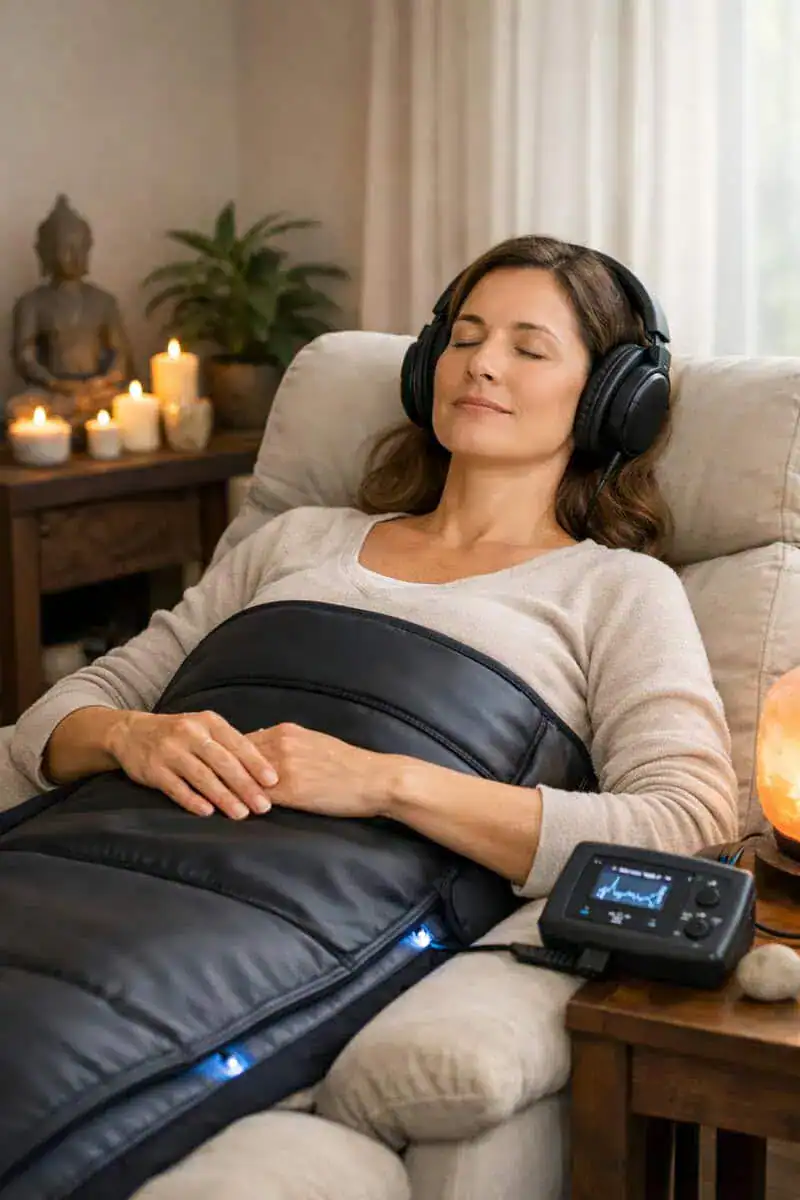
This is the most important myth to correct. Online content sometimes frames PEMF as a direct treatment for specific diseases. That language is not appropriate for a wellness education site and often goes beyond what consumer PEMF devices are designed or authorized to claim.
A conservative way to think about PEMF is that it may be studied in relation to biological processes (like cellular signaling or circulation) rather than as a guaranteed solution to a named condition. If you see disease-specific promises, treat that as a credibility red flag and verify claims against primary medical sources.
For examples of how major medical organizations frame electromagnetic or device-based therapies more cautiously, review reputable clinical education resources like Cleveland Clinic’s health library.
A useful “myth filter” is to look for how a claim is written. Disease-specific promises often have telltale patterns:
- Absolute language: “proven,” “guaranteed,” “works for everyone,” or “no exceptions.”
- Condition naming: claims that specify diseases without discussing limitations, safety screening, or clinical supervision.
- Overgeneralized citations: linking to research that does not match the device type, intensity, or protocol being marketed.
A conservative approach is to treat consumer PEMF devices as wellness tools that may be discussed in terms of comfort support, relaxation routines, and non-medical recovery support, while leaving diagnosis and treatment decisions to licensed clinicians.
If you want to sanity-check the tone and scope of medical claims you see online, start with a major clinical education source like Cleveland Clinic and compare how they describe therapies and outcomes: Cleveland Clinic Health Library.
For research reading, PubMed is the cleanest starting point because it lets you see the study population, protocol details, and outcomes directly (which often differ from marketing summaries): PubMed (NIH).
Myth #2: “If You Don’t Feel Anything, It Isn’t Working”

Many users report that PEMF feels subtle—sometimes like gentle pulsing, warmth from the mat’s surface, or simply relaxation from lying still. Others feel nothing noticeable at all. Sensation is not a reliable proxy for “effect,” because the experience can be influenced by:
- Intensity and coil placement
- Whether you’re using a full-body mat or a localized applicator
- Ambient factors (room temperature, posture, muscle tension)
- Expectations and attention (if you’re “checking for sensations,” you may notice more)
A more grounded approach is to track neutral, non-medical outcomes that are easier to observe without overinterpreting—like consistency of routine, comfort during use, and whether the device fits into your schedule. If you want practical guardrails, see our PEMF therapy safety page for conservative considerations around use and expectations.
Myth #3: “Higher Intensity Is Always Better”

It’s tempting to treat intensity like horsepower: more must be better. But PEMF devices are not simple “more is more” tools. In practice, intensity is only one variable among many—frequency, waveform, session time, coil design, and user tolerance all matter.
Why this myth persists: intensity is easy to market and compare. But physiology is rarely that linear. Conservative device selection usually prioritizes:
- Clear specs (so you know what you’re buying)
- Comfort and usability (so you can use it consistently)
- Practical protocols (so you’re not guessing at settings)
If you’re shopping, use a structured comparison framework rather than assuming intensity alone decides value. Our primary hub for this is the Best PEMF Devices & Mats (2026 Buyer’s Guide).
Another reason intensity comparisons get misleading is that intensity can be reported in different ways (and sometimes at different distances from the coil). A conservative consumer approach is to look for:
- How the brand reports intensity: do they explain measurement distance and context, or only present a big number?
- Whether intensity is adjustable: so you can choose a comfortable level rather than “maxing out” by default.
- Whether the brand provides conservative usage guidance: including cautions for sensitive users.
In real-world ownership, “better” often means “the device you can use consistently without discomfort or confusion.” That usually comes from good documentation, sensible programs, and a safety-first posture—not from intensity alone.
Myth #4: “One Frequency Works for Everyone”
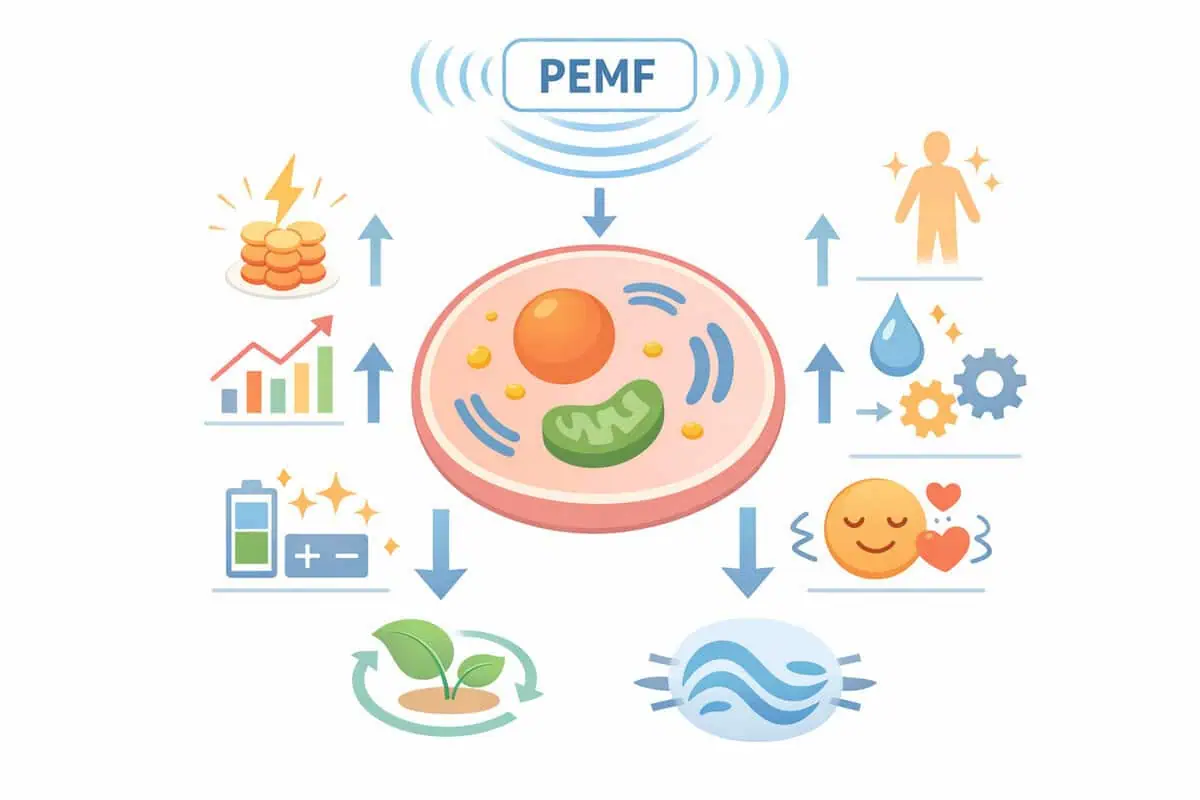
Frequency is often marketed like a “magic number,” but real-world use is more contextual. Different frequency ranges are commonly discussed for different wellness goals (relaxation routines vs. recovery routines), but individual responses can vary and research is not uniform across devices and protocols.
A conservative stance:
- Be skeptical of claims that a single frequency “solves everything.”
- Prefer devices that explain how settings are intended to be used (without disease claims).
- Consider comfort, routine fit, and safety guidance as first-order factors.
For deeper background on how reputable medical sources interpret “frequency-based” wellness claims more broadly, explore NIH and PubMed summaries rather than relying on marketing pages.
It also helps to understand that “frequency” is rarely the only setting that matters. Two devices could list the same Hz range but differ meaningfully in:
- Waveform characteristics (pulse shape and how it is delivered)
- Program structure (steady pulses vs intervals or ramping patterns)
- Coil geometry (how evenly the field is distributed across the mat)
- Session recommendations (short, frequent sessions vs longer, less frequent routines)
A conservative way to shop is to prioritize devices that provide an understandable “why” for their programs (without making medical promises), and to avoid systems that rely on secrecy or mystique around “special frequencies.”
If you want a reliable entry point to search for peer-reviewed summaries and study abstracts, use the NIH’s PubMed platform: PubMed. For broader consumer health framing and conservative language expectations, NIH’s health information portal can also be a useful reference point: NIH Health Information.
Myth #5: “PEMF ‘Detoxes’ Your Body”

“Detox” is one of the most overused words in wellness. In medical physiology, detoxification is primarily associated with organs like the liver and kidneys, and the concept is not typically framed as a quick device-driven process.
When people say “detox” in PEMF conversations, they may be referring (loosely) to:
- Feeling relaxed after sessions
- Improved routine consistency (sleep schedule, hydration habits)
- A subjective sense of “reset” from lying down and unwinding
Those experiences can be real and meaningful, but they are not the same as a verified detoxification mechanism. If you want evidence-aligned language, focus on general wellness routines and conservative mechanisms (like comfort, relaxation, and non-medical recovery support) rather than detox claims.
A practical way to “translate” detox language into conservative, testable ideas is to ask: what is the person actually noticing?
- Less tension: they may be using the session as a calm reset in a busy day.
- Better bedtime routine: the session becomes a consistent wind-down cue.
- More hydration awareness: they drink water because they’re intentionally doing a wellness routine.
None of those require a detox claim to be meaningful. They’re routine effects that can support well-being without implying a medical mechanism that hasn’t been clearly established for consumer PEMF use.
Myth #6: “PEMF Replaces Exercise, Sleep, or Physical Therapy”

This myth shows up when PEMF is marketed as a shortcut. In reality, most people who incorporate PEMF into a routine treat it as adjunctive—a “stackable” wellness practice that may complement foundational behaviors like sleep, movement, and stress management.
A conservative way to position PEMF:
- Add-on to a recovery routine, not a replacement
- Supportive of comfort and relaxation, not a standalone fix
- Routine-friendly if it improves consistency with rest and downtime
If you’re comparing modalities, use the Buyer’s Guide as the commercial hub but keep your expectations grounded: see the 2026 PEMF Buyer’s Guide.
Myth #7: “All PEMF Mats Are Basically the Same”

PEMF mats can look similar in photos, but meaningful differences may include:
- Coil layout (how the field is distributed across the body)
- Waveform and program design (how pulses are delivered over time)
- Frequency options (broad vs narrow ranges, preset programs)
- Build quality and support (warranty, guidance, documentation)
If you want to compare how different full-body systems are positioned for home use, see our best PEMF mats roundup.
For conservative buyers, documentation matters. Devices that clearly explain intended use (without disease claims) are typically easier to evaluate responsibly. If you want structured comparisons and terminology explained in plain language, use the PEMF Sage hubs:
- Benefits overview (educational)
- Blog index (topical exploration)
Myth #8: “PEMF Works Instantly (or It Doesn’t Work)”

Expecting a dramatic immediate result can push people toward overinterpretation. With at-home wellness tools, changes—if they happen—are often subtle and may be better evaluated over time with consistent use rather than “one session verdicts.”
A conservative tracking approach:
- Commit to a routine window (e.g., 2–4 weeks) if the device is safe for you and your clinician has no concerns.
- Track neutral markers (sleep routine consistency, relaxation before bedtime, comfort during rest).
- Avoid attributing every good or bad day to the device.
For research context, PubMed can help you see what was actually studied (population, protocol, and outcomes) rather than relying on marketing summaries.
If you’re new to reading studies, a conservative habit is to scan for three details before you take a headline seriously:
- Who was studied: healthy adults, athletes, patients, or a very specific subgroup?
- What device/protocol: frequency, intensity, session length, and duration of follow-up.
- What outcome: a measured variable vs a self-reported feeling vs a lab marker.
That single step helps you avoid translating “a study exists” into “this product will do that for me,” which is one of the most common ways PEMF myths spread.
To browse abstracts and protocols directly, start here: PubMed.
Myth #9: “PEMF Has No Risks or Contraindications”

Any device that interacts with the body deserves a safety mindset—especially for people with implants, complex medical histories, pregnancy, or other special considerations. Risk varies by device type and user situation, and safety claims that sound absolute should be treated cautiously.
A conservative safety baseline:
- Read manufacturer guidance and avoid improvising settings.
- Discuss use with a licensed clinician if you have implants, are pregnant, or have a complex health history.
- Be wary of brands that make disease-specific promises (a common marker of low-quality claims).
For conservative, structured safety framing, use: PEMF therapy safety, risks & contraindications.
Mayo Clinic’s patient education approach is a good model for how to interpret wellness claims cautiously and prioritize safety in decision-making.
If you want a conservative standard for how medical information is framed for the public, Mayo Clinic’s general health education resources are a useful reference point for tone and restraint: Mayo Clinic Healthy Lifestyle.
How to Vet PEMF Claims (A Practical Checklist)

When you see PEMF marketing claims (or even enthusiastic testimonials), use this checklist to stay evidence-aligned:
- Claim type: Is it describing a general wellness goal (sleep routine support) or a disease-specific outcome (red flag)?
- Specificity: Does it cite a protocol (frequency range, session time) or use vague “secret frequencies” language?
- Source quality: Can you cross-check concepts via NIH/PubMed or major medical organizations?
- Device transparency: Are specs and guidance clearly stated, or hidden behind hype?
- Safety posture: Does the brand acknowledge contraindications and encourage clinician input when appropriate?
If you want a single place to compare devices using conservative criteria (documentation, usability, and structured selection), start with our primary hub: Best PEMF Devices & Mats (2026 Buyer’s Guide). If you have questions about how PEMF Sage evaluates claims, you can also reach us here: Contact PEMF Sage.
If you’re looking for a conservative “minimum bar” for external validation, prioritize primary medical and research sources over brand blogs:
- PubMed for study abstracts and protocol details
- NIH health information for cautious consumer framing
- Cleveland Clinic for plain-language clinical education
- Mayo Clinic for conservative public health education
This doesn’t “prove” a consumer PEMF device will produce a specific outcome—but it helps you avoid the most common myth pattern: borrowing the authority of medicine while skipping the restraint of medicine.
Conclusion: A Clearer, More Conservative Way to Think About PEMF
PEMF therapy myths tend to come from oversimplification: “one setting fits all,” “more intensity is always better,” “instant results,” or “no risks.” A more grounded approach is to treat PEMF as a wellness category with variable devices, variable protocols, and variable user experiences—and to avoid interpreting marketing language as medical certainty.
Next steps: if you’re considering a purchase, use our structured comparison hub to keep expectations and selection criteria conservative: Best PEMF Devices & Mats (2026 Buyer’s Guide).
If you’re unsure how to interpret a claim you’ve seen online, default to caution: verify against reputable sources, prioritize safety posture, and avoid any brand language that promises diagnosis or cure.