PEMF Frequencies Explained (Hz, Waveforms, Intensity)

Understanding PEMF frequencies can feel technical at first. Terms like Hertz (Hz), waveforms, and intensity are often highlighted in product descriptions, yet rarely explained in clear, conservative language.
This guide breaks down PEMF frequencies explained in practical terms. We’ll examine what frequency actually measures, how waveforms shape electromagnetic pulses, and why intensity is not simply “more is better.” Throughout, we stay aligned with physiology-based explanations of cellular signaling and microcirculatory support.
If you are evaluating device categories, our cornerstone Best PEMF Devices & Mats (2026 Buyer’s Guide) provides broader comparisons across home and professional systems.
What Does Frequency (Hz) Actually Mean?
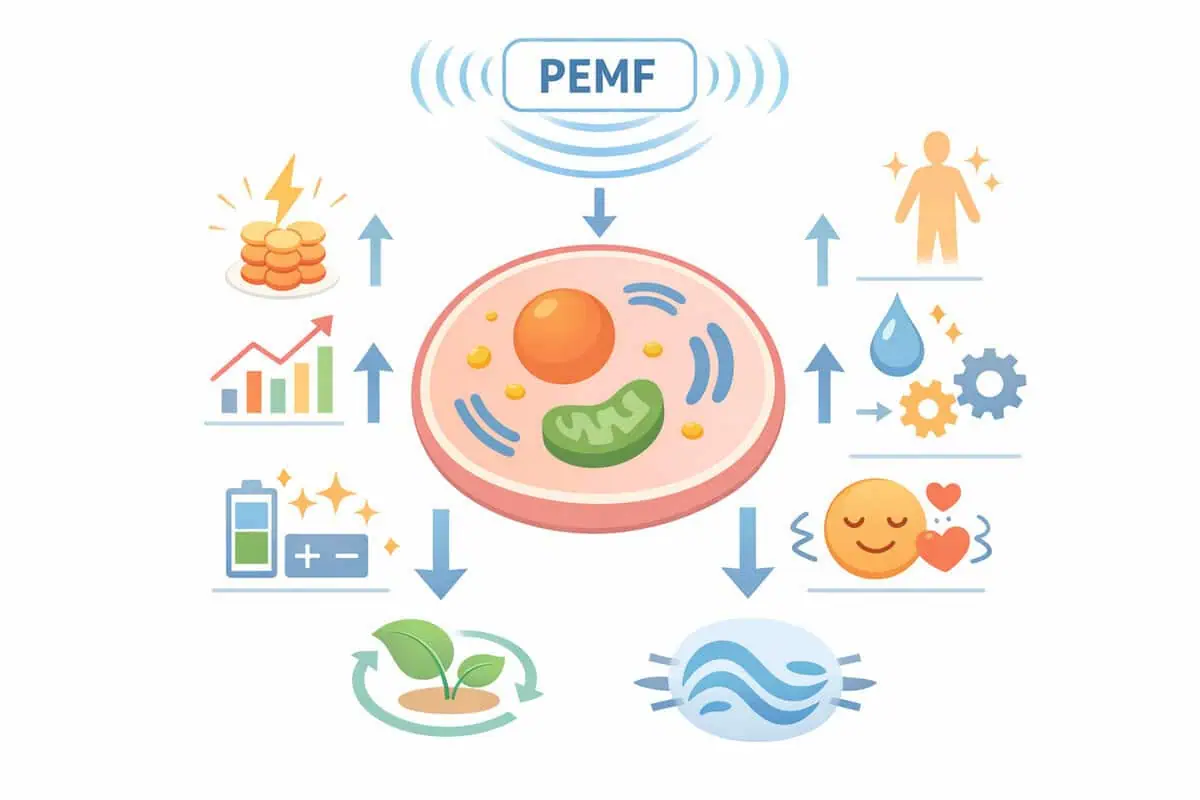
Frequency is measured in Hertz (Hz), which simply means cycles per second. If a PEMF device operates at 10 Hz, it delivers 10 electromagnetic pulses per second. At 50 Hz, it delivers 50 pulses per second.
This number does not describe strength. It only describes how often the field turns on and off each second. In pulsed electromagnetic field therapy, the “pulsing” is central. The alternating exposure may interact with biological systems differently than a constant, static magnetic field.
Research indexed through PubMed frequently references low-frequency ranges (often under 100 Hz) when examining cellular signaling and tissue-level responses. However, the presence of a frequency in a study does not imply disease-specific outcomes.
A helpful way to think about frequency is “timing.” Frequency sets the tempo of the pulses. In engineering terms, it is one piece of a signal recipe. The other pieces—waveform shape, pulse width, rise time, and intensity—help determine what the tissue is exposed to during each pulse.
You may also see frequency described as a “range” (for example, a program that sweeps from low to higher Hz). A sweep is still frequency; it just changes the number of pulses per second over time. This can make sessions feel different even when the peak intensity is unchanged.
In practical device use, frequency can affect how “busy” a session feels: slower pulsing may feel more subtle or rhythmic for some users, while faster pulsing may feel more continuous. These perceptions are subjective and should be interpreted as comfort and preference signals, not as outcomes.
Low vs Higher Frequencies in PEMF Systems

Most consumer PEMF devices operate in the extremely low frequency (ELF) range. Lower frequencies are often associated in the literature with subtle modulation of ion channels and membrane potentials.
Higher frequencies, within safe device limits, may create different signaling patterns. The key takeaway is not that one frequency is universally superior. Rather, devices are engineered around specific frequency ranges that aim to influence cellular communication pathways.
The PEMF Therapy Benefits (Science-Backed Overview) page discusses how these signaling concepts relate to circulation, recovery support, and nervous system balance.
It can also help to distinguish “consumer” versus “professional” contexts. Some professional platforms offer broader control over signal parameters (including frequency options), but those controls may exist because clinicians need flexibility for workflow and comfort—not because every higher setting is inherently better.
From a physiology framing perspective, low-frequency pulsing is often discussed in relation to bioelectrical signaling. Cells maintain electrical gradients across membranes, and ion channels respond to changes in that electrical environment. PEMF research explores whether repeated pulsing can influence those signaling processes without introducing pharmaceuticals.
When reading device documentation, watch for clarity about what the frequency number actually represents. Some brands list “carrier frequencies,” “modulation frequencies,” or “program names” that sound like frequency but are not always expressed as a simple Hz value. Clear manufacturers will specify Hz ranges for each program or setting.
What Are PEMF Waveforms?

Waveforms describe the shape of each pulse. While frequency measures how often pulses occur, waveform describes how the electromagnetic signal rises and falls over time.
Common waveform types include:
- Square waves
- Sinusoidal waves
- Sawtooth waves
- Proprietary modulated waveforms
Each waveform produces a distinct electromagnetic pattern. In theoretical terms, waveform shape may influence how cells perceive and respond to pulsed signals, particularly in relation to membrane dynamics and ion transport.
Waveform is where many systems become “non-comparable” on a spec sheet. Two devices could both list 10 Hz, but if one uses a smooth sinusoidal pattern and another uses a sharp square pulse with a fast rise time, the electromagnetic exposure profile is different even at the same pulse rate.
Some waveforms are described using technical terms such as pulse width (how long each pulse lasts), duty cycle (how much of the time the signal is “on”), and rise/fall time (how quickly the field ramps up and down). These details are not always published, but they help explain why frequency alone does not capture the full signal.
From a conservative interpretation standpoint, waveform descriptions should be read as engineering choices. They may influence comfort, perceived sensation, and how a device distributes energy through the coil design. However, waveform labels are not proof of specific benefits, and proprietary names can be used more for branding than clarity.
Why Waveform Shape Matters
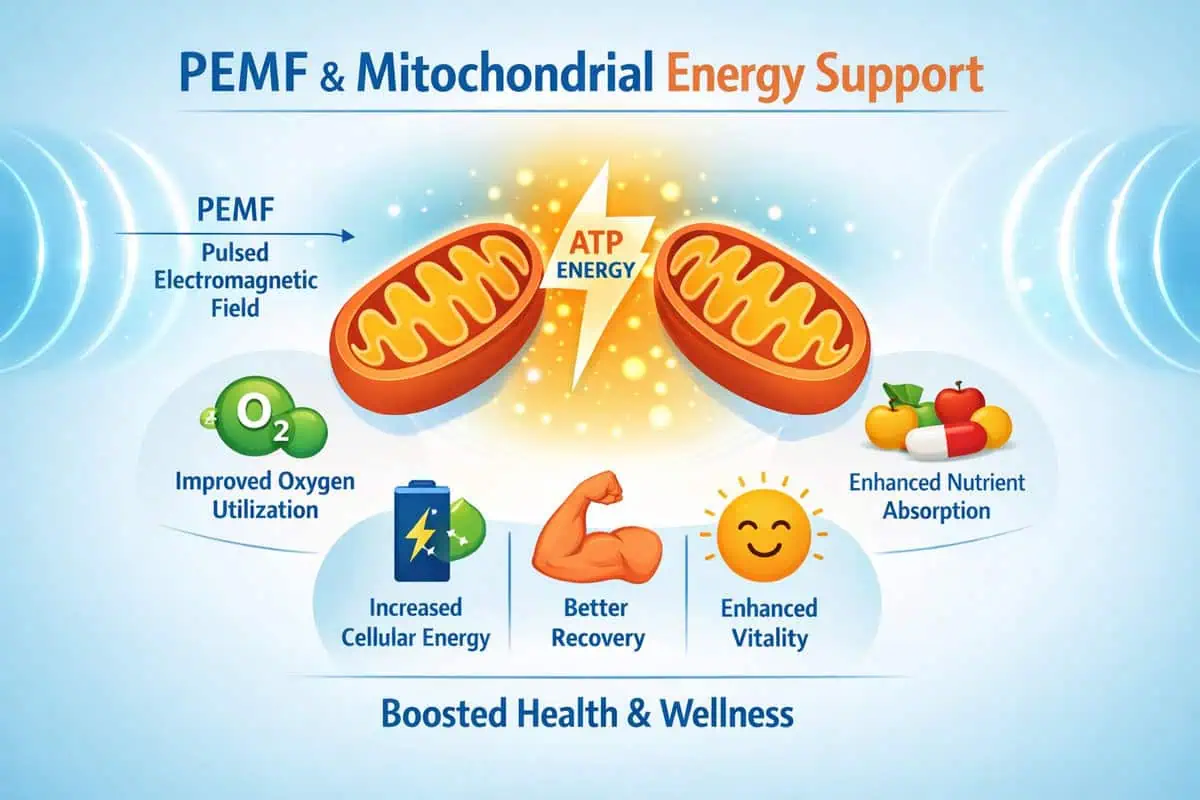
Waveforms affect how quickly a magnetic field reaches peak intensity and how abruptly it drops off. Rapid rise times may theoretically produce stronger induced electrical effects within tissues.
Some device manufacturers design proprietary waveforms intended to mimic naturally occurring electromagnetic rhythms. While such claims should be evaluated conservatively, waveform engineering is a legitimate design variable in PEMF systems.
The NIH has published research exploring electromagnetic field interactions at the cellular level, particularly related to mitochondrial signaling and bioelectric processes.
In practical terms, waveform shape influences how “pulsed” the signal truly is. A sharply defined pulse can create a clearer on/off transition, while a smoother waveform may feel more continuous. Users sometimes describe this difference as a change in “feel” during a session, especially when the device is paired with relaxation or breathwork routines.
Waveform may also interact with coil geometry and session setup. For example, a full-body mat distributes exposure across a larger surface area, while a localized applicator concentrates exposure over a smaller region. Those design differences can affect what a user perceives, even if the listed waveform name is identical.
If you want a device-selection framing that stays conservative and avoids “magic numbers,” the Best PEMF Devices & Mats (2026 Buyer’s Guide) is the appropriate next step, since it compares systems by intended use environment and overall engineering transparency.
What Is Intensity in PEMF Therapy?
Intensity refers to the strength of the magnetic field, often measured in Gauss or Tesla. Unlike frequency, intensity reflects how powerful each pulse is.
Higher intensity does not automatically translate to better outcomes. Biological systems are sensitive to subtle signaling cues. In some contexts, lower-intensity fields may be appropriate for gentle modulation, while higher-intensity systems are typically used in professional environments.
Conservative guidance is essential, especially for individuals with implanted electronic devices or specific health conditions. The PEMF Therapy Safety, Risks & Contraindications page outlines important considerations.
Intensity is also the area where marketing claims can become most confusing. Some brands cite “peak” intensity at the coil surface, while others cite an average value, and not all brands disclose how intensity changes with distance from the applicator. Because magnetic field strength typically drops with distance, “depth” claims should be approached carefully unless the manufacturer provides test methodology.
A conservative way to interpret intensity is as a dosing component: it contributes to how much electromagnetic exposure is delivered per pulse. But the body’s response is not linear in the way a “bigger number = better result” narrative implies. Comfort, tolerance, and safety constraints matter, and individual sensitivity can vary.
If a system includes multiple intensity levels, a reasonable starting approach is to begin with lower settings for acclimation and comfort, then adjust gradually. This is not medical advice—just a practical way to avoid overinterpreting early session sensations.
Frequency vs Intensity: Not the Same Thing

It is common to confuse frequency and intensity. They measure completely different aspects of electromagnetic exposure.
- Frequency: How often pulses occur per second.
- Intensity: How strong each pulse is.
Two devices could operate at the same frequency but deliver vastly different field strengths. Conversely, devices with identical intensity could pulse at entirely different rates.
When evaluating device categories, focus on overall system design rather than a single specification number. Our Blog explores these design differences across multiple system types.
A useful comparison mindset is to treat frequency and intensity like “pattern” and “amplitude.” Frequency defines the timing of pulses; intensity defines the strength of each pulse. Waveform then defines how that strength changes within each pulse.
Because these variables combine, a single-number comparison often fails. Two systems might list similar frequency ranges, but differ dramatically in coil design, duty cycle, or waveform shape. That is why conservative device selection tends to emphasize build quality, documentation transparency, and safety compliance over isolated specs.
If you are deciding between categories (full-body mats vs localized devices vs professional systems), the most practical first question is not “What Hz is best?” but “What setup fits consistent use?” Consistency often matters more for routine-based wellness approaches than chasing the “perfect” setting.
How Frequencies Interact with the Body

At the cellular level, pulsed electromagnetic fields may influence ion exchange across membranes and microcirculatory dynamics. These processes are part of normal physiological regulation.
The Cleveland Clinic notes that circulation and cellular energy production are tightly regulated biological systems. PEMF research investigates how electromagnetic pulses may interact with these natural processes without introducing chemical agents.
Importantly, frequency selection in devices is intended to remain within established safety ranges.
A conservative way to frame frequency-body interaction is to focus on signaling rather than “force.” PEMF is not typically described as “pushing” something through the body; rather, it is studied for whether pulsed fields can nudge biological signaling pathways that already exist, including membrane potentials and ion channel behavior.
Microcirculation is another common discussion point. The body’s smallest vessels support oxygen and nutrient delivery and waste removal at the tissue level. Research explores whether pulsed exposure may influence vascular tone and local circulation dynamics, but those concepts should be treated as general physiological interest—not condition-specific claims.
Why Devices Offer Multiple Frequency Settings

Some home systems include preset programs with varying frequency ranges. These are typically designed to create different pulsing patterns rather than to target specific medical conditions.
Users often report perceiving differences in sensation or relaxation depending on frequency settings. These subjective experiences should not be interpreted as clinical outcomes.
The Mayo Clinic emphasizes the importance of evidence-based evaluation for any therapeutic technology. Frequency adjustments are part of device engineering, not a substitute for medical care.
From an ownership reality standpoint, multiple presets can also serve practical goals: they give users variety, help avoid overthinking settings, and can support different routines (morning session vs evening wind-down) without requiring a technical background.
Another practical reason is comfort management. Some users prefer slower, more rhythmic pulsing for relaxation routines, while others prefer faster pulsing when using a device as part of a post-activity recovery routine. This is preference-based and should be framed as usability, not efficacy.
Long-term considerations matter here. If a device has complex menus, unclear preset naming, or limited documentation, owners may stop using it consistently. When comparing systems, consider whether the interface is simple enough to support repeated use for months and years, not just the first week.
Compliance and maintenance are part of “settings” too. Look for clear manufacturer guidance about cleaning, storage, cable strain, and coil care. A system that is easy to maintain (and supported by responsive customer service) can be more valuable long-term than a system with impressive-sounding frequency lists but unclear support.
If you want to stay within PEMF Sage’s conservative review methodology, you can also reference our standards page for how we interpret specs and program claims: Editorial Standards & Review Process.
Are Higher Frequencies Stronger?

No. Frequency measures speed of pulsing, not strength. A 5 Hz pulse at high intensity may deliver a stronger magnetic field than a 50 Hz pulse at low intensity.
This distinction is essential when comparing marketing claims. Specifications should always be interpreted in context of total system design.
Practical Takeaways for Evaluating Frequency Claims

When reviewing PEMF specifications:
- Avoid assuming higher numbers are better.
- Look for transparent disclosure of Hz ranges and intensity levels.
- Prioritize safety standards and manufacturer documentation.
- Evaluate the system holistically.
If you want a structured comparison of system categories, visit our Buyer’s Guide for a broader overview.
Also consider how a brand explains limitations. Conservative manufacturers are typically clearer about intended use, contraindications, and reasonable expectations. If a page implies guaranteed outcomes based solely on frequency, that is a signal to slow down and look for stronger documentation.
How Frequency Fits Into the Bigger PEMF Picture

Frequency is only one variable in PEMF therapy. Waveform shape, intensity, session duration, coil design, and total exposure time all influence how a system functions.
For foundational context, see What Is PEMF Therapy? and our science-aligned Benefits overview.
If you’d like to continue exploring the practical side of routines and session planning, the Blog will remain the best place to find step-by-step educational posts as they are published.
Conclusion: PEMF Frequencies Explained Simply
PEMF frequencies describe how often electromagnetic pulses occur per second. Waveforms describe the shape of those pulses. Intensity describes how strong they are. Each plays a distinct role in overall device design.
Rather than focusing on a single number, evaluate PEMF systems based on safety, engineering transparency, and alignment with conservative physiological principles.
For structured comparisons across home and professional systems, visit the Best PEMF Devices & Mats (2026 Buyer’s Guide).